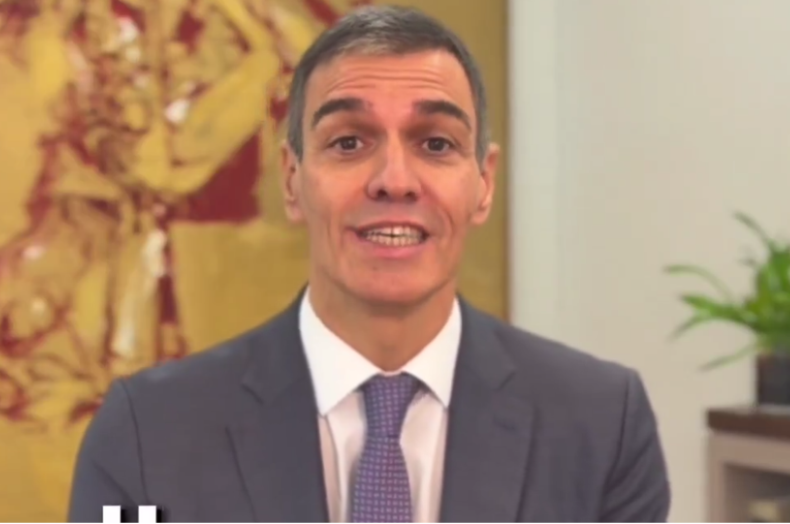

Pedro Sanchez has shared a video reviewing what his government achieved in 2025, setting out what he described as the most significant measures introduced each month of the year.
- January: Pensions and housing
- February: Minimum wage rise
- March and April: Education and school meals
- May: Tourist rentals
- June: Defence spending
- July: Parental leave
- August and September: Emergencies and foreign policy
- October: Care and disability
- November and December: Transport and public sector pay
- Looking ahead to 2026
In the clip shared on social media, the prime minister said the aim was to explain ‘how this government has improved people’s lives month by month’, arguing that Spain’s economy is now growing at a historic pace.
January: Pensions and housing
The PSOE (Socialist) leader began with measures introduced at the start of the 2025, highlighting increases to minimum pensions and the approval of a package of 12 measures aimed at improving access to housing.
He framed these policies as a response to rising living costs, placing particular emphasis on household finances and housing affordability.
February: Minimum wage rise
In February, the government again raised the minimum wage. According to Sanchez, the current minimum wage is now 61% higher than it was in 2018, when his government first came to power.
March and April: Education and school meals
March focused on education, with Sanchez pointing to more than €2.5 billion invested in grants and scholarships – around €1 billion more than under previous administrations.
In April, the government introduced a guarantee of five healthy meals per week in school canteens. Sánchez said access to good nutrition should not depend on where a child lives or their family’s income.
May: Tourist rentals
In May, Sanchez highlighted action taken against illegal tourist accommodation, stating that the government forced Airbnb to remove around 65,000 unlawful listings.
He argued that this measure freed up housing for residents and reduced speculative use of homes.
June: Defence spending
June’s key moment, according to the prime minister, was Spain’s refusal to meet NATO’s demand to raise defence spending to 5% of GDP.
Sanchez said the government would not cut funding for healthcare, education or climate policy to meet that target, insisting that public services remain the priority.
July: Parental leave
In July, the government extended paid parental and care leave to 19 weeks. Sanchez presented this as a step towards better work-life balance, allowing families more time to care without added pressure.
August and September: Emergencies and foreign policy
August saw the approval of aid for people affected by wildfires, which Sanchez described as proof that the state responds when citizens face emergencies.
In September, he referred to new measures aimed at responding to the war in Gaza, saying Spain continued to show solidarity with the Palestinian people.
October: Care and disability
October’s highlight was the approval of the ELA Law, alongside €500 million in funding for round-the-clock care.
Sanchez said the measure was designed to ensure that people with serious illnesses are not left to cope alone.
November and December: Transport and public sector pay
In November, the government approved the Sustainable Mobility Law, which Sanchez said would make transport more accessible, cheaper and cleaner.
The year ended, he said, as it began – with measures aimed at boosting purchasing power. In December, the government approved pay rises of up to 11% for more than three million public sector workers.
Looking ahead to 2026
Despite the positive assessment, Sanchez acknowledged that challenges remain.
He concluded by saying that in 2026 his government would continue working to improve the everyday lives of ordinary people.