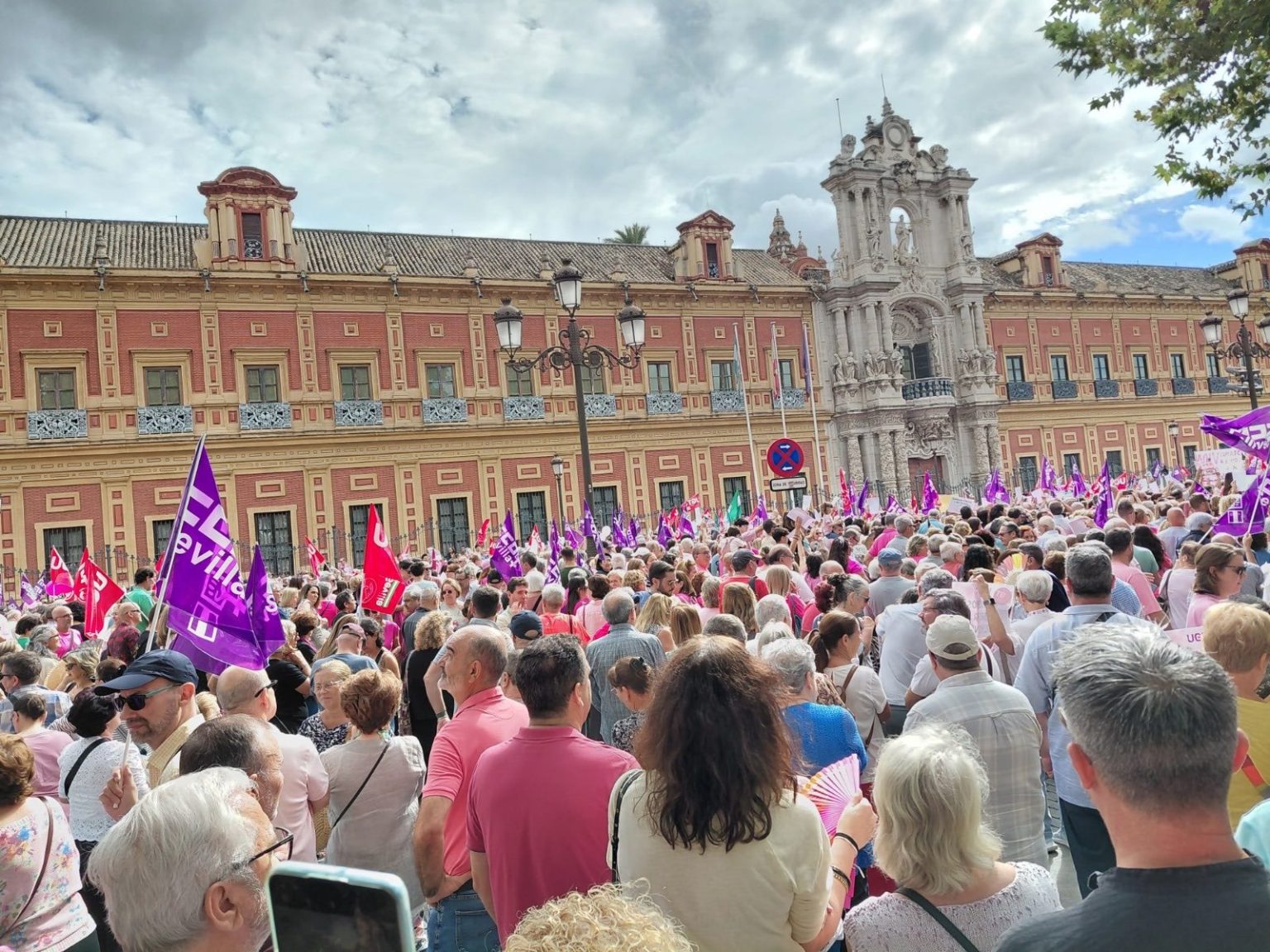

Thousands of women took to the streets of Sevilla on Sunday to demand answers over failures in the breast cancer screening system that have affected more than 2,300 women in Andalucia.
The protest, organised by the breast cancer association AMAMA, began at noon outside the Palacio de San Telmo, the seat of the Junta de Andalucia (regional government).
It marks the second major demonstration since the scandal came to light earlier this month.
Under the banner ‘Our lives can’t wait’, marchers filled the city’s main avenues in a sea of pink and placards, calling for political accountability and urgent reform of the public health system.
Speaking at the protest, Angela Claverol, president of AMAMA, told the crowd: ‘There are thousands of women affected. We demand a public health system that does its job, this is not about party politics.’
She continued: ‘We don’t care what political party anyone supports. What matters to us is this: the lives of women.’
Claverol also accused the Junta of prioritising political survival over human lives.
She said: ‘A political survival cannot come before human survival. This is the most terrible thing that has happened to the Andalusian people.’
She added that different organisations have told her they fear close to 20,000 women may be affected.
‘We don’t have the absolute figure with absolute certainty, but we are going to launch a campaign to find out who they are, where they are, and how we can help them,’ she said.
‘This is getting worse and worse, because even today women continue to come to AMAMA.’
The protest drew widespread support beyond Sevilla, with buses chartered from towns and cities across the region.
Organisers said the turnout proved that the issue extended far beyond the 2,317 confirmed cases of women whose screenings were delayed or mismanaged.
The demonstration follows weeks of growing public outcry over the screening failures, which first emerged after a report by Cadena SER revealed delays in informing women about suspicious mammogram results – some overdue by months or even years.
The vast majority of the affected women were patients at Hospital Universitario Virgen del Rocio in Sevilla.
The regional health minister, Antonio Sanz, has since pledged to work with AMAMA in what he called a ‘clear, sincere and humble dialogue.’