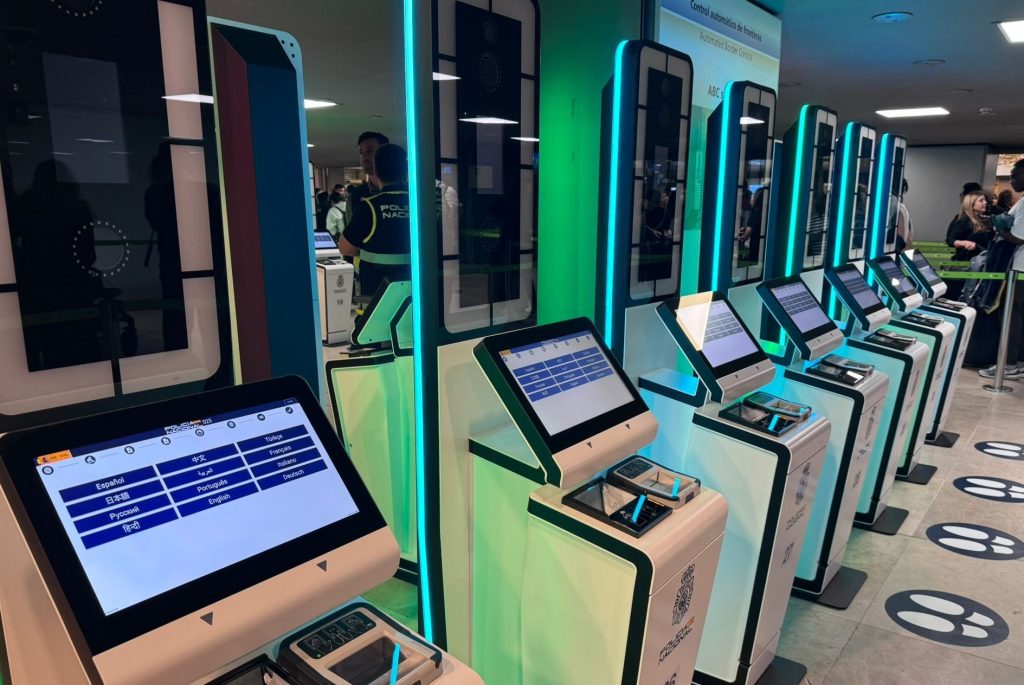
Spanish authorities declared the initial rollout of the EES system a success on Sunday morning.
In a post on X, the Interior Ministry shared photos of non-EU nationals using the biometric scanners at Madrid Barajas airport.
The travel hub is the first in Spain to trial the EU’s Entry/Exit System, which must be implemented at all Schengen Area entry points by April 2026.
The Interior Ministry said: ‘Spain has successfully activated today, at Madrid-Barajas Airport, the Entry Exit System, the new European border control system for citizens from outside the Schengen Area.’
It added that 1,819 travellers had been registered between 6am and 10am alone, with many more expected throughout the day.

What is the EES?
The EES is replacing manual passport stamping with an automated digital process.
On arrival at a Schengen external border, non-EU travellers will have their face and fingerprints scanned, and their entry and exit times recorded in a shared EU database.
The system aims to tighten border security and enforce the 90-days-in-180 rule that applies to tourists and short-term visitors.
It will also help flag overstays and monitor visa-free travel more accurately across all member states.
Who has to use it?
The EES applies to all non-EU nationals entering the Schengen Area for short stays – including British holidaymakers, second-home owners and other visitors who don’t hold EU residency.
If you fly into Malaga, Alicante, or Madrid from the UK, for example, and you’re not a legal resident, you’ll need to use the new machines to register your biometrics before entering.
Read more Spain travel news at the Spanish Eye.