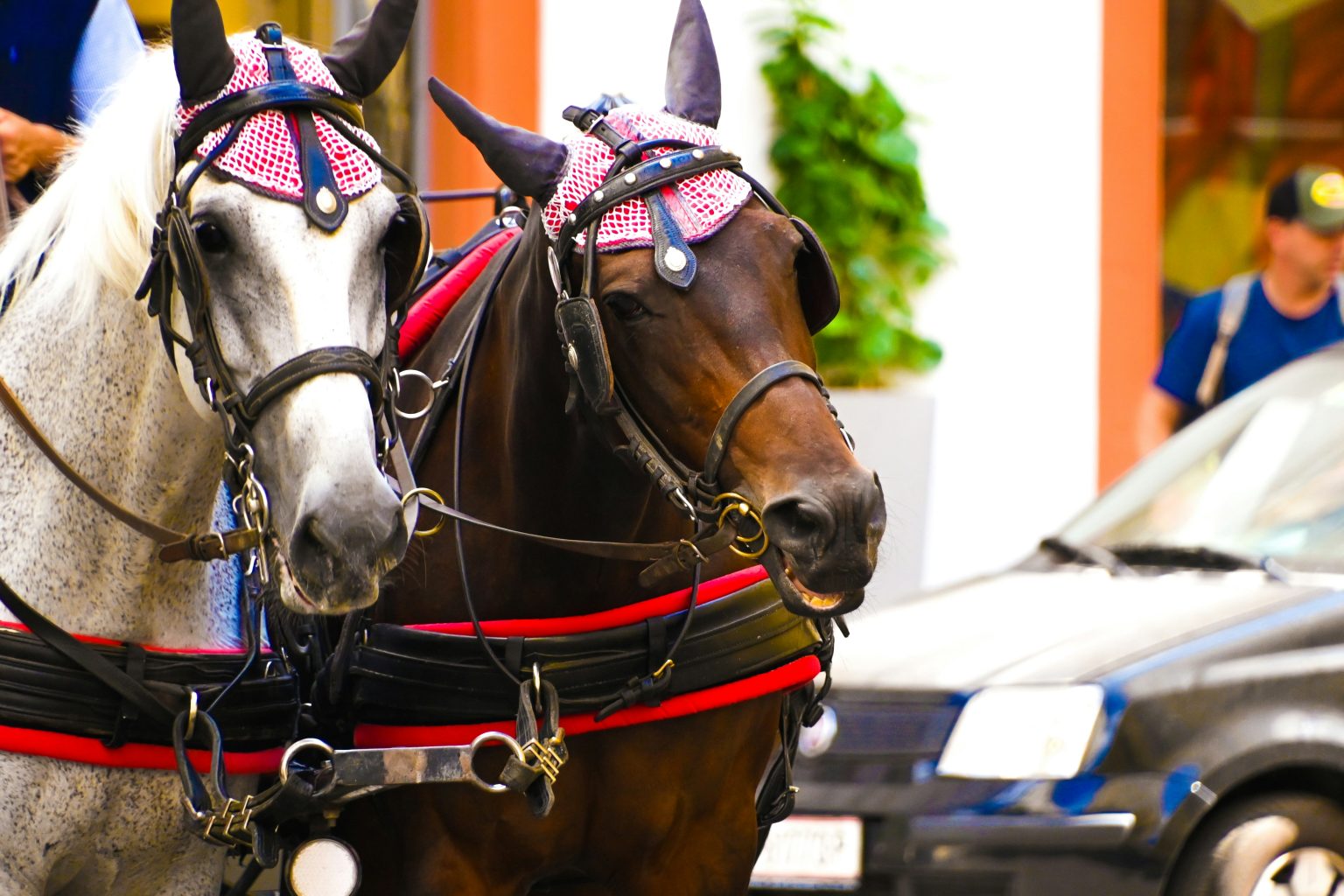

Malaga has brought an end to the city’s horse-drawn carriages – a fixture of its historic centre for decades – after officially revoking the remaining 25 operating licences this week.
From Monday, the carriages, once a familiar sight around Calle Larios, Plaza de la Marina and the port, will no longer be permitted to circulate as tourist transport.
The announcement was made by Mayor Francisco de la Torre in a video shared on the council’s official Instagram account, where he said the decision was taken ‘in the interest of animal welfare and public safety.’
The move, carried out by the city’s Mobility Department, closes a process that began several years ago and which the mayor first outlined during the State of the City debate in January.
Malaga’s municipal transport ordinance of 2015 allowed a maximum validity of 20 years per licence, due to expire in 2035.
However, the council has opted for early termination, arguing that the service had become ‘incompatible with the city’s model of sustainable mobility and with the health and safety of both residents and animals’.
Of the 55 licences that existed in 2018, some 30 were voluntarily surrendered between 2016 and 2020 in exchange for compensation.
The current revocation affects the remaining 25, which have now been fully extinguished.
Each licence holder has received €125,380 in compensation, according to an independent valuation report prepared by R&L Auditores in February.
‘This marks the end of a historic chapter for Malaga and the beginning of a more sustainable way to explore the city,’ De la Torre said in his message.
‘Malaga has evolved and the best way to see it is on foot, enjoying its streets.’
A decision years in the making
The debate over the future of the coches de caballos has long divided opinion. Earlier this year, several drivers told local media of their frustration and fear that a way of life was disappearing.
One veteran coachman, Domingo, who had spent more than 20 years driving tourists through the centre, previously told Malaga Hoy: ‘This is our life, and they’re taking it away.’
The father of four described early mornings and long days waiting for customers in the heat: ‘If there was enough work, the streets would be full of carriages again.’
Others insisted that the animals were well cared for and called for fair compensation or alternative employment. ‘If it ends, we deserve to be paid for our licences and given other work,’ said Pepe, another long-time driver.
For many families, the trade was part of their identity. Antonio, whose relatives had worked with horses for four generations, described it as ‘a piece of our heritage that shouldn’t be erased overnight.’
Read more Andalucia news at the Spanish Eye.