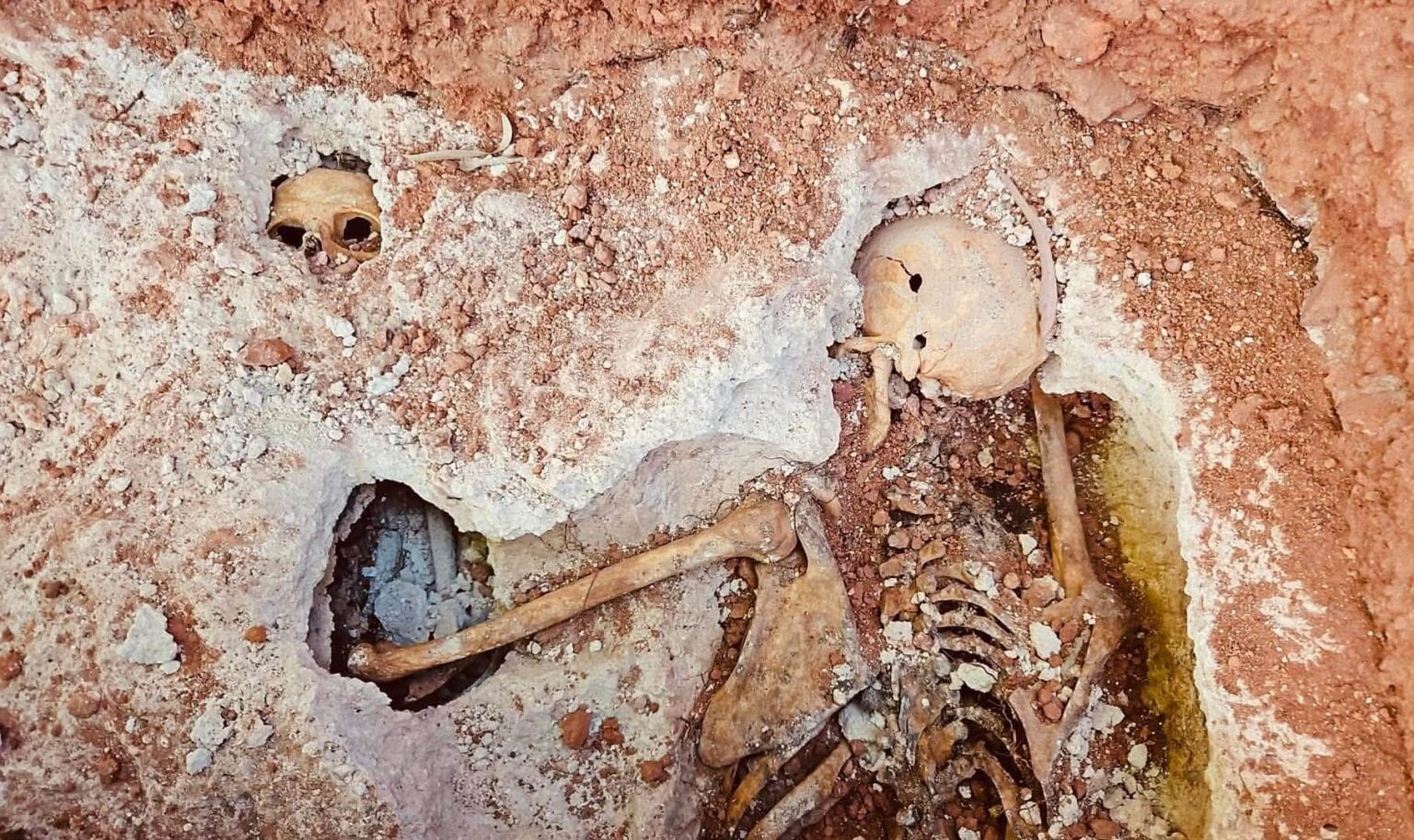

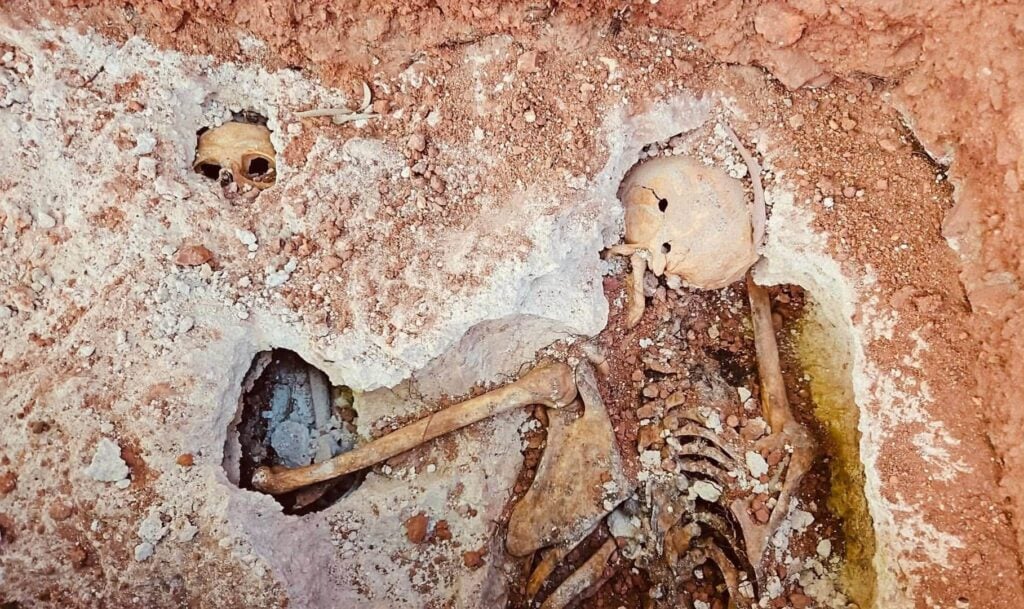
The remains of 157 people killed during Francoist repression have been recovered from mass graves in a former mining town in Andalucia.
Minas de Riotinto Town Hall, in Huelva province, said the years-long excavation programme at Santa Barbara Municipal Cemetery was now approaching its conclusion.
One final small grave remains to be excavated before the physical work at the site is completed.
Meanwhile, genetic testing is continuing to identify the remains and return them to surviving relatives.
The project has combined archaeological excavations with anthropological examinations, historical research and DNA analysis.
‘Behind every figure is a person, a family and a story that spent decades waiting to be recovered,’ the council said.
Guardia Civil officer identified
Among the victims already identified is Guardia Civil corporal Luis Ortega Godoy, known locally as Cabo Godoy.
His remains were formally returned to his family in April, more than 80 years after his execution.
Godoy, originally from Zafarraya in Granada, was shot on August 26, 1936, after remaining loyal to Spain’s Republican government following the military uprising that began the Civil War.
During the opening weeks of the rebellion, he trained a group of miners to defend Minas de Riotinto.
He became the first person executed in the town and was buried in a communal grave at Santa Barbara cemetery.
Genetic and forensic work eventually allowed specialists to identify his remains. Evidence found during their recovery in 2022 showed that he had been killed while still wearing his Guardia Civil uniform.
His granddaughter, Maria Itati Palacio Ortega, received the remains on behalf of the family during a ceremony attended by Territorial Policy and Democratic Memory Minister Angel Victor Torres and senior Guardia Civil officials.
Godoy had received the Silver Cross of Military Merit and the Morocco Peace Medal during his service.
Permanent memorial under construction
The exhumation work is now being accompanied by construction of a Monument to Memory at the cemetery.
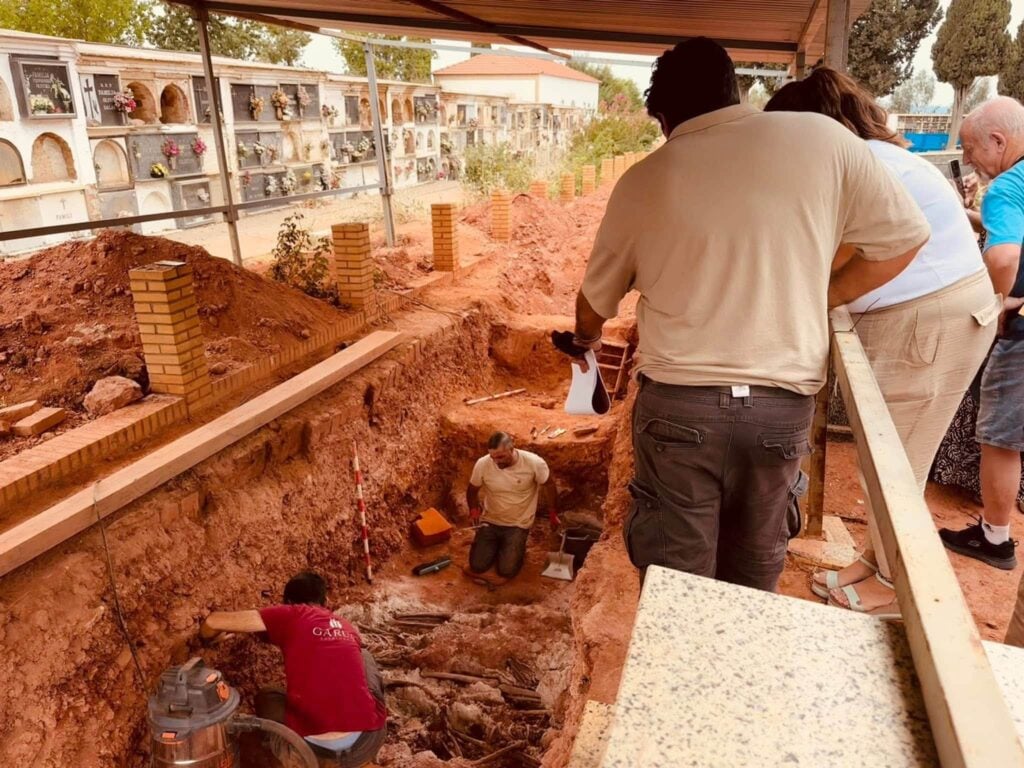
The council said the permanent memorial would provide a place of ‘remembrance, respect and tribute’ for the people subjected to repression in the Riotinto mining area.
It described the project as one of the most important and sensitive ever undertaken in the municipality.
The council also thanked the excavation teams, collaborating institutions, researchers Alfredo Moreno and Gilberto Hernandez and the victims’ families for their trust throughout the lengthy process.
‘After so many years of silence, Minas de Riotinto has decided to recover its memory, dignify it and pass it on to future generations,’ the authority said.
‘We open the earth to close wounds. We recover memory so that nobody falls into oblivion again.’
Read more Andalucia news at the Spanish Eye.