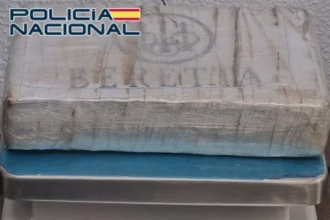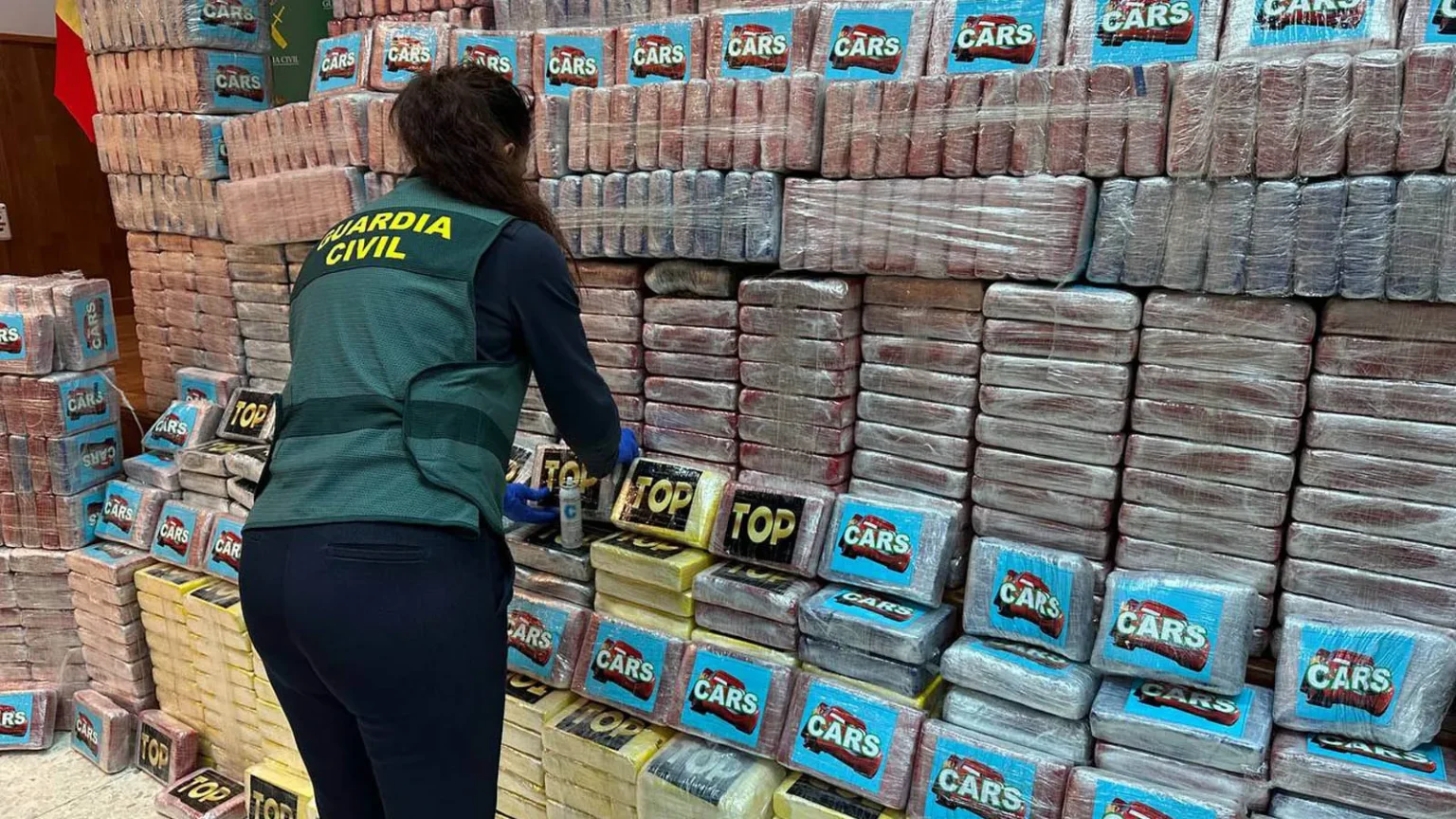

At least 13 tonnes of cocaine have been seized in Huelva province so far this year as traffickers increasingly exploit routes traditionally used to smuggle hashish.
The provisional total represents a 293% increase on the 3,307kg confiscated throughout the whole of 2025.
The figure is based on the largest operations announced by the Policia Nacional and Guardia Civil, rather than a final official statistic, and there are still more than three months of 2026 remaining.
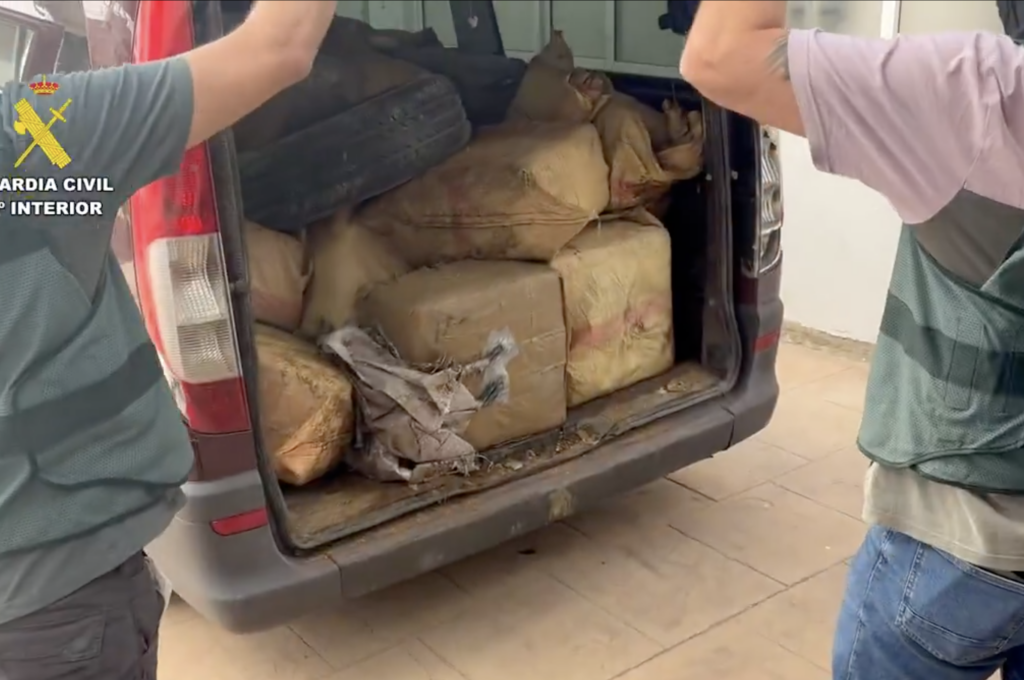
The latest seizure came on Thursday, when officers intercepted a van carrying 34 bales containing more than 1.2 tonnes of cocaine near the mouth of the Huelva estuary.
A suspected lookout vehicle and a fully loaded firearm magazine were also recovered after the occupants fled.
The scale of the transformation became particularly evident during the spring.
One gang allegedly landed five tonnes of cocaine on the Huelva coast before storing it inside stash houses in Gibraleon and Utrera.
Ten people were arrested and five weapons were seized, including four Kalashnikov assault rifles.
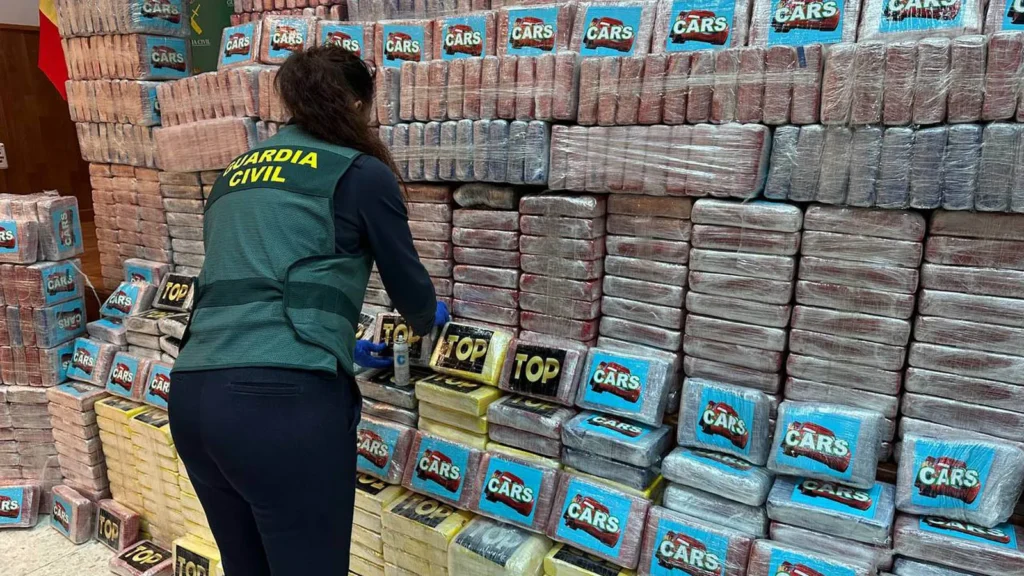
Days later, on April 16, the Guardia Civil intercepted a speedboat carrying another six tonnes of cocaine at sea.
A further 800kg was recovered off Punta Umbria in August after traffickers aboard a four-engine semi-rigid boat threw 27 bales into the water while fleeing.
Combined with Thursday’s 1.2-tonne seizure, those four operations alone account for at least 13 tonnes.
Authorities cannot estimate how much cocaine successfully passed through the province without being detected.
Official figures compiled by Spain’s Intelligence Centre for Counter-Terrorism and Organised Crime show the trend had already begun accelerating.
Seizures increased from 530kg in 2023 to 2,664kg in 2024 and 3,307kg in 2025 – a rise of 524% in two years.
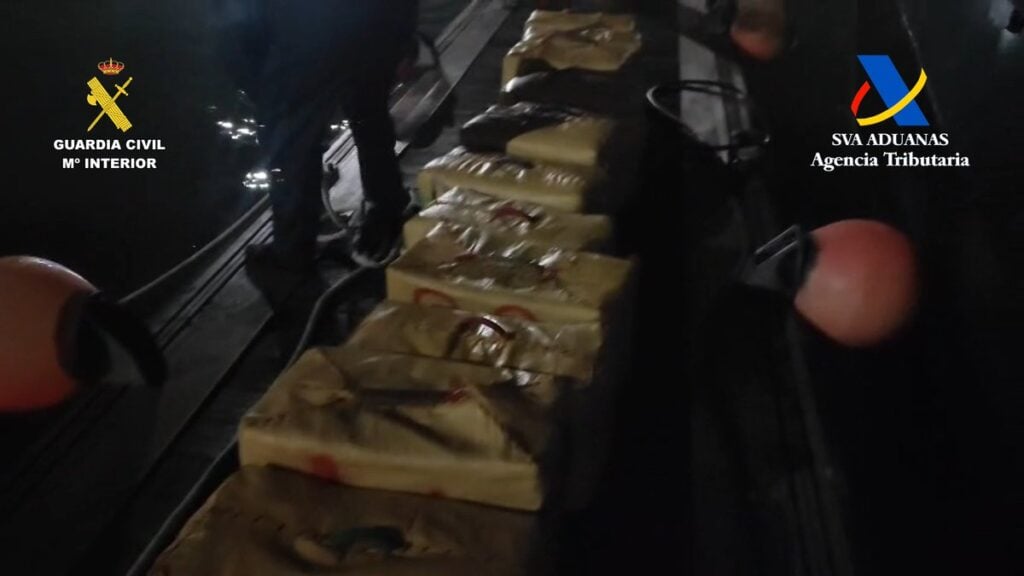
Huelva’s senior anti-drugs prosecutor, Ana Isabel Laso Mota, has described the province as ‘one of Europe’s largest logistics centres dedicated to narco-transport’.
Why traffickers are moving to Huelva
Huelva province offers kilometres of coastline, estuaries, channels and isolated landing points, as well as proximity to Portugal and the A-49 motorway.
Criminal organisations can collect cocaine following transfers in international waters, bring it ashore using high-powered boats and move it quickly towards storage and distribution centres.
Increased police pressure around the Campo de Gibraltar has also displaced some activity westwards.
‘It works like a balloon,’ said Julio Serrano Checa, the Guardia Civil commander in Huelva. ‘If you apply pressure in one place, it moves somewhere else.’
Existing hashish-smuggling infrastructure has made that transition easier.
However, cocaine’s far greater value has also brought heavier weapons and escalating violence.
Recent operations have uncovered assault rifles, paramilitary clothing and balaclavas, while investigations have involved kidnappings, torture, internal revenge attacks and robberies between rival organisations.
Drug traffickers have opened fire on Guardia Civil officers in Huelva on at least two occasions during 2026.
‘The cocaine is much more expensive, and that makes them protect the merchandise more,’ Serrano said. ‘We are seizing weapons of war.’
Huelva has evolved from an entry point for relatively small shipments into a major storage, transport and redistribution centre.
Read more Andalucia news at the Spanish Eye.