
A new generation of amateur contract killers is transforming Malaga’s criminal underworld, a veteran detective has warned.
Juan Jose Gomez Millan spent more than 25 years with the Policia Nacional’s UDYCO unit in Malaga, participating in hundreds of operations against international drug gangs.
He witnessed the arrival of Eastern European, Turkish, Swedish, British, Dutch and Albanian organisations, and says their methods have changed dramatically.
‘Before, they had a certain order and an internal code,’ he told Malaga Hoy.
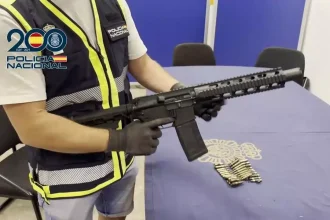
‘Now we see gangs of kids aged between 18 and 25 with a submachine gun, offering to kill people. Then they are caught quickly. Some are already using explosives.’
A contract shooting on the Costa del Sol can reportedly now cost between €5,000 and €10,000.
The traditional professional hitman, who was highly trained and expensive to hire, is increasingly being replaced by young recruits brought in to complete individual jobs.
‘They are less professional, very crude and clumsy, but at the same time extremely violent,’ Gomez said.
‘A kid with a Kalashnikov has no brain.’
Their lack of experience also increases the danger to innocent members of the public.
Police say 20-year-old Nacho, who was fatally shot this month while sitting on a bench in Malaga’s Barcenillas neighbourhood, had no connection to organised crime.
Investigators believe three Swedish suspects mistook him for somebody else. All three have been remanded in custody.
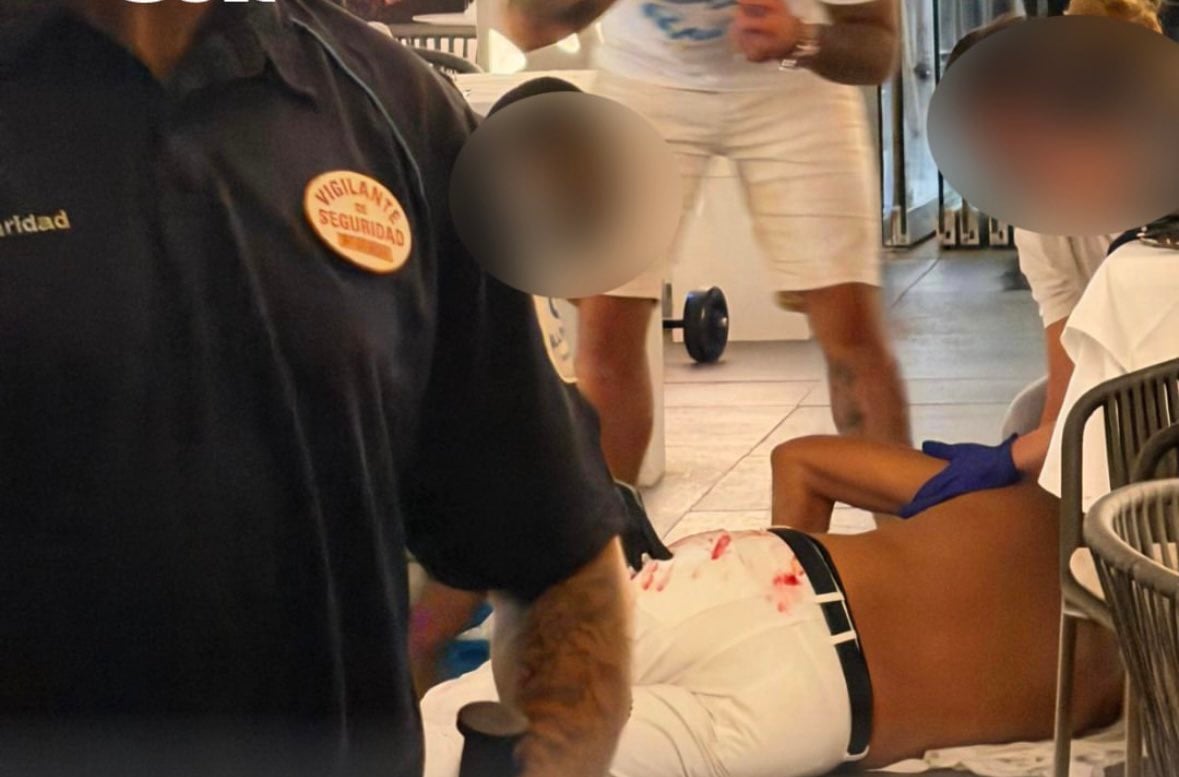
By contrast, Gomez described the recent shooting of Turkish ultra leader Umit Yalcin at Malaga’s Muelle Uno as appearing more professionally organised.
Yalcin was shot in the face while dining on a restaurant terrace but survived.
The former detective believes the gunman was accompanied by a marcador, the name given to a spotter responsible for identifying and following the intended victim.
‘One marks the victim so there is no mistake, and the other is the shooter,’ he explained.
He believes the attackers may have studied where Yalcin planned to eat and warned that a well-funded gunman could have escaped Spain immediately afterwards aboard a private flight.
Gomez said Turkish criminal groups have operated around the Costa del Sol since at least the 1980s, with each dismantled generation eventually replaced by another.

‘We have every gang here: Turks, Albanians, Swedes, Dutch and British,’ he said.
‘Not one leaves completely. A representative always remains.’
Swedish networks have become a particular concern because of their use of extremely young recruits.
In 2025, the Policia Nacional prevented a suspected assassination in Malaga after arresting six people linked to a Swedish criminal organisation.
Two alleged hitmen, one a minor, had arrived in Spain just three days earlier. The organisation allegedly used social media and encrypted platforms to advertise criminal assignments connected to killings.
Gomez fears the eventual end of the war in Ukraine could bring additional firearms and military-trained recruits into Spain.
‘Young people with no roots could come here offering their services to drug traffickers as hitmen or drivers,’ he warned.
Local police representative Oscar Camacho said Malaga city itself was also becoming increasingly attractive to criminals because it offers greater anonymity than smaller Costa del Sol resorts.
Camacho called for better intelligence-sharing between national and municipal forces, arguing that local officers are often the first to reach armed incidents.
‘Interior has to share the information with us,’ he said. ‘We are going in blind.’