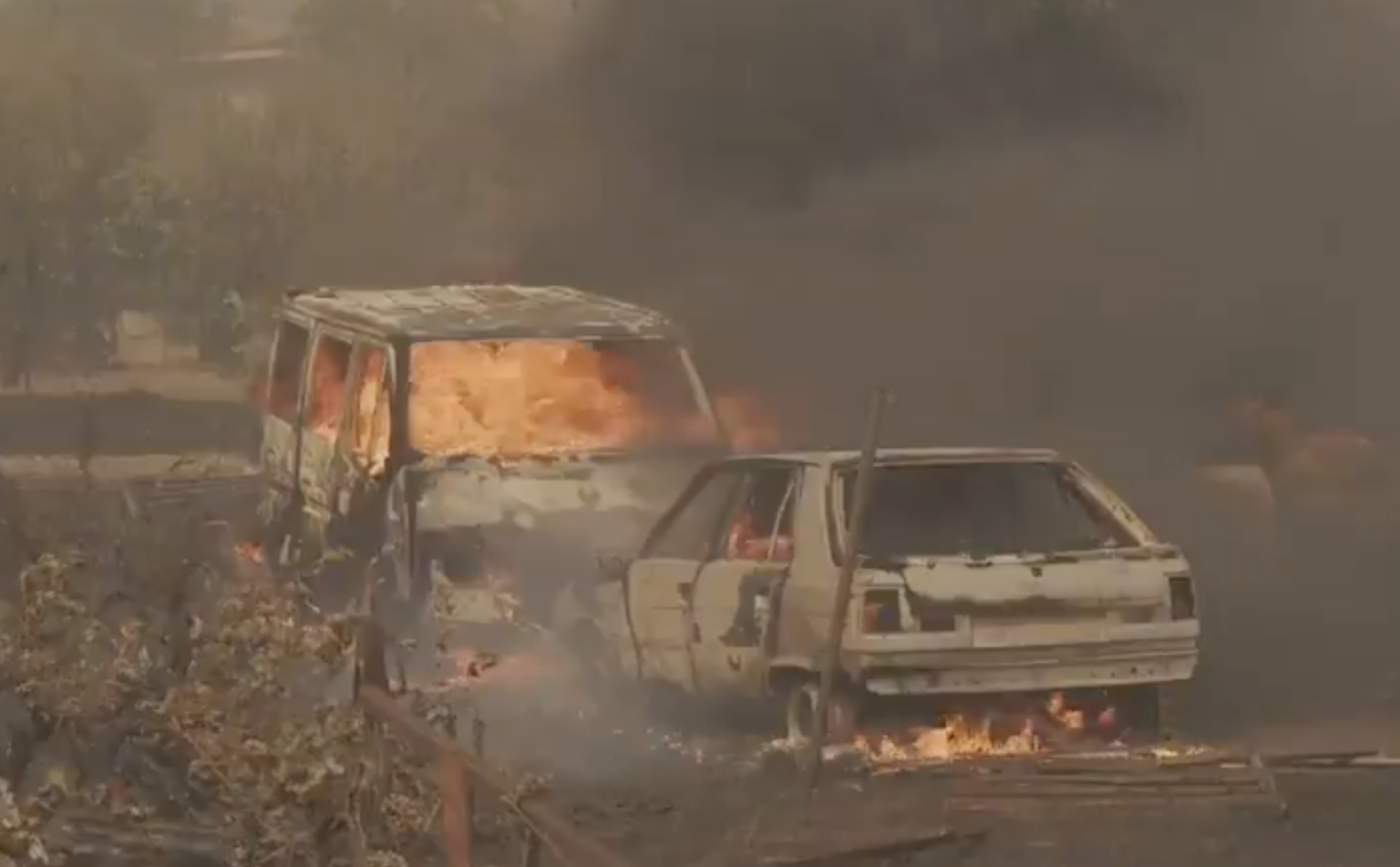

Around 60% of the forest fires recorded in Andalucia this summer still have no known cause, according to one of the country’s leading environmental prosecutors.
Javier Rufino, prosecutor for the Environment Ministry, said there is enormous difficulty in establishing exactly where wildfires began and identifying someone responsible when human activity is suspected.
He stressed that the figure does not mean the causes will never be established, with police and scientific investigations into many of the fires still ongoing.
But determining the precise ignition point can be extremely difficult, particularly after flames have swept through large areas of forest.
Investigators must then establish whether a blaze was deliberately started, caused by negligence or occurred accidentally and, where appropriate, gather evidence to identify and prosecute a suspect.
Speaking to Canal Sur Radio, Rufino said prosecutors were currently awaiting the results of a number of investigations, although preliminary figures already point to a ‘substantial increase’ in the number of people investigated, arrested and remanded in custody over wildfires across Andalucia.
Negligence slightly more common than arson
Among fires where a cause has already been established, negligence or recklessness appears to be slightly more common than deliberate arson.
Rufino said fires attributed to negligent behaviour account for around 10% of this year’s total, while the proportion deliberately started is ‘slightly lower’.
That distinction can have a major impact on the punishment imposed.
Anyone deliberately starting a forest fire which puts people’s lives or physical safety at risk can face between 10 and 20 years in prison.
Sentences for fires caused through negligence are considerably lower, although serious cases can still result in imprisonment.
Penalties can also be increased when a blaze causes substantial damage to natural resources, is motivated by economic interests or occurs under other particularly serious circumstances.
Those responsible can additionally face civil liability for the enormous financial and environmental damage caused by a wildfire.
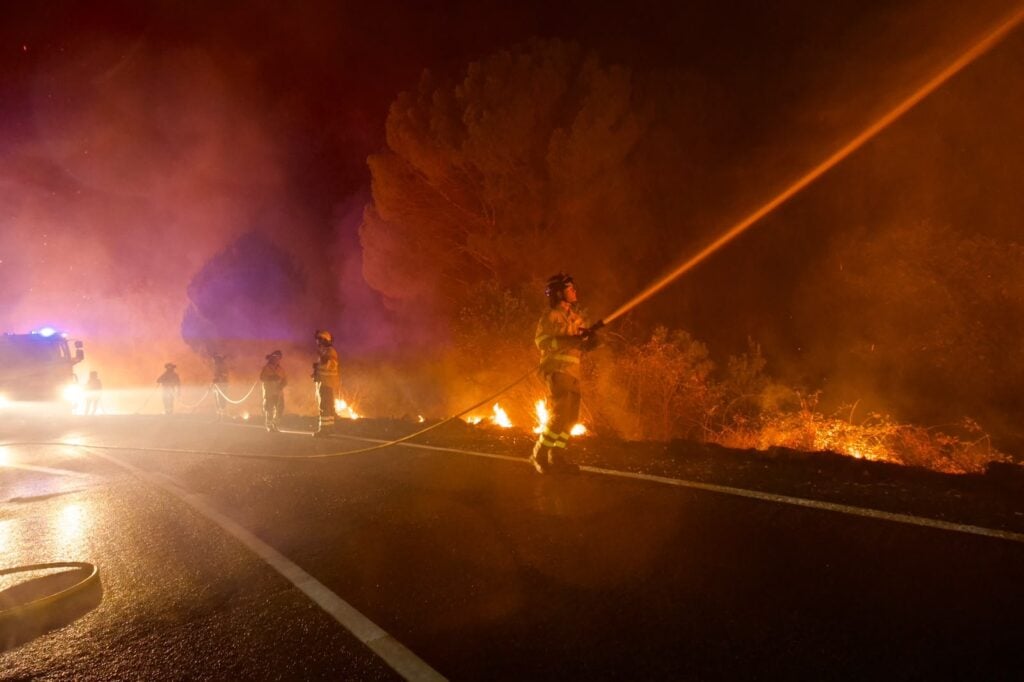
Rufino said prosecutors were not primarily concerned with ‘putting people in prison’, but with applying the law and ensuring that damage caused to individuals and wider society is repaired wherever possible.
That damage can extend far beyond destroyed homes.
Wildfires can devastate farms, livestock operations and forests, destroy biodiversity and potentially contaminate or damage aquifers through runoff following the blaze.
Councils could face investigation over failures
Rufino also issued a warning to local authorities responsible for areas at risk from forest fires.
Municipalities in vulnerable areas are legally required to have wildfire prevention plans – and actually implement them.
‘It is no good formally having a protection plan if it isn’t applied,’ Rufino warned.
If investigators conclude that a fire occurred fundamentally because an authority failed to establish or implement the required measures, prosecutors or courts could open an investigation into a possible negligent forest-fire offence.
The responsibility does not rest solely with public authorities.
Rufino pointed out that around 72% of Spain’s forest land is privately owned, meaning landowners also have obligations to adopt certain preventative measures.
Facilities including campsites are meanwhile required to maintain their own self-protection plans.
Every spring, environmental prosecutors coordinate a wildfire prevention campaign aimed at identifying particularly vulnerable areas and checking whether appropriate precautions have been taken.
The operation involves specialist prosecutors, the Guardia Civil, forestry officers and a network of approximately 800 local police officers across Spain.
Why wildfire prosecutions are so difficult
Even when investigators suspect a fire was caused by a person, securing a conviction can be challenging.
Wildfires frequently begin in remote or densely wooded terrain, making it difficult to establish the exact ignition point.
Investigators must then reconstruct how the blaze began and determine whether human intervention was involved before attempting to identify a suspect.
Even where evidence points towards a particular individual, prosecutors must prove the case to the required criminal standard.
In negligence cases, for example, they may have to demonstrate not simply that somebody made a mistake, but that their conduct amounted to sufficiently serious negligence.
Prosecutor hits back at wildfire ‘myths’
Rufino also rejected what he described as recurring ‘myths’ surrounding the motives behind Spain’s wildfires, particularly claims that land is routinely burned so it can subsequently be rezoned for development.
As a general rule, Spain’s Forestry Law prohibits changing the designated use of land affected by a forest fire, while restrictions also apply to exploiting timber left behind after a blaze.
The Criminal Code additionally allows courts to impose prohibitions on changing the use of land following a wildfire.
Rufino said claims that forests are deliberately burned simply so the land can subsequently be rezoned continue to circulate despite these restrictions.
‘No matter how much you say it, you keep hearing this myth,’ he said.
Read more Andalucia news at the Spanish Eye.