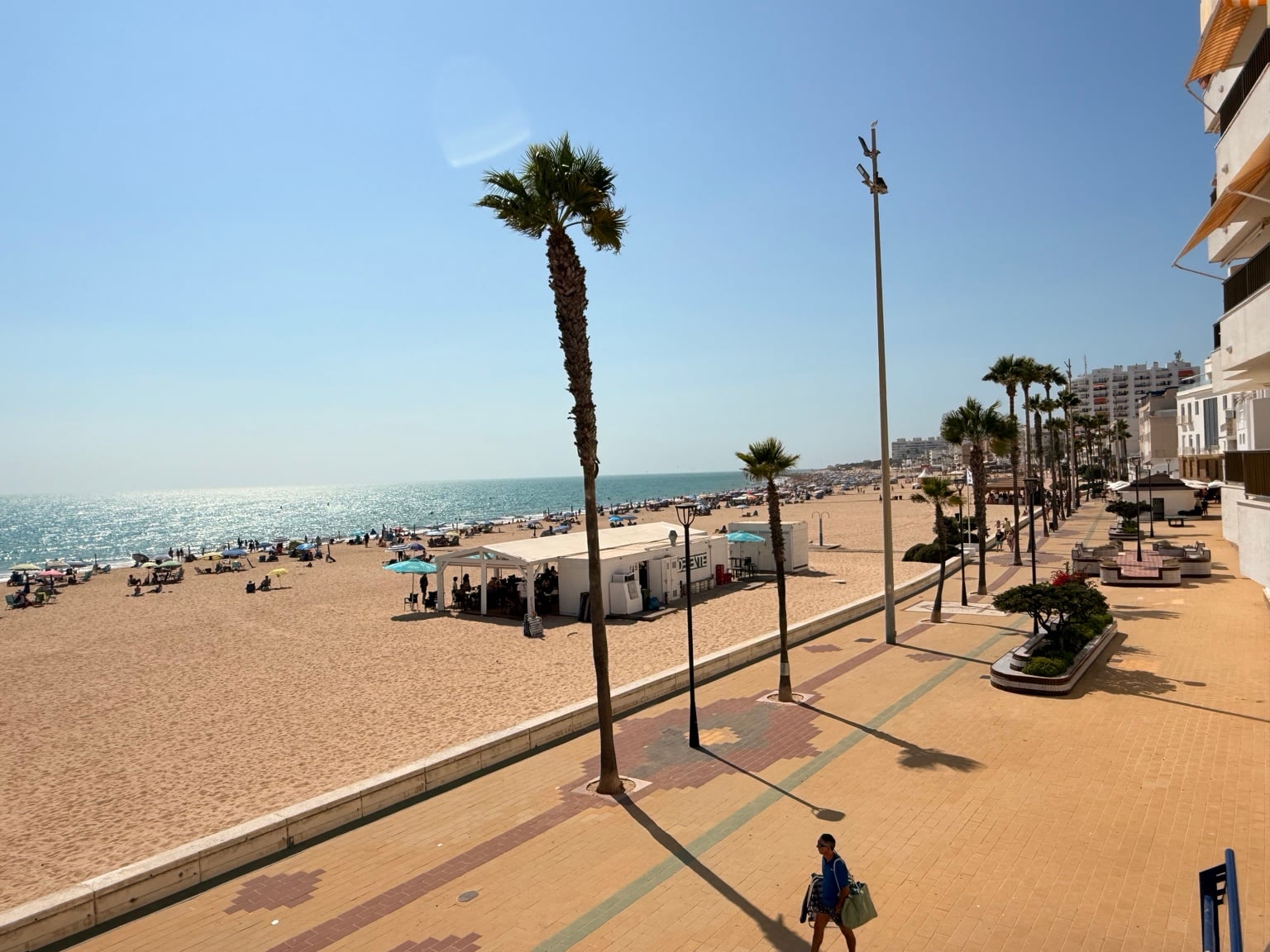

Beachgoers have been urged to exercise extreme caution on parts of Andalucia’s Atlantic coast on Wednesday due to conditions that could generate powerful rip currents.
State weather agency Aemet has issued a special marine bulletin for the Gulf of Cadiz, warning that a combination of swell and exceptionally high tides could create dangerous conditions for swimmers.
The warning specifically affects the western coast of Cadiz province and the Huelva coastline east of Punta Umbria.
Conditions are expected to become more hazardous from early Wednesday afternoon, when a westerly swell will begin arriving with a relatively long peak period of 11 to 12 seconds.
The waves themselves are not expected to look particularly dramatic, with significant wave heights of around one metre or slightly less.
However, Aemet says it is the combination of several factors that could make the sea dangerous, with local newspapers warning of ‘mini tsunamis’.
Powerful rip currents could form
One of the biggest concerns is the exceptionally high tidal coefficient.
It is forecast to reach 100 during Wednesday afternoon’s high tide, before rising further to 101 during the early hours of Thursday.
This will coincide with the longer-period swell, while beaches have also developed their typical summer profiles, which Aemet says makes them more sensitive to the incoming waves.
Together, these conditions could produce strong rip currents capable of putting swimmers at risk.
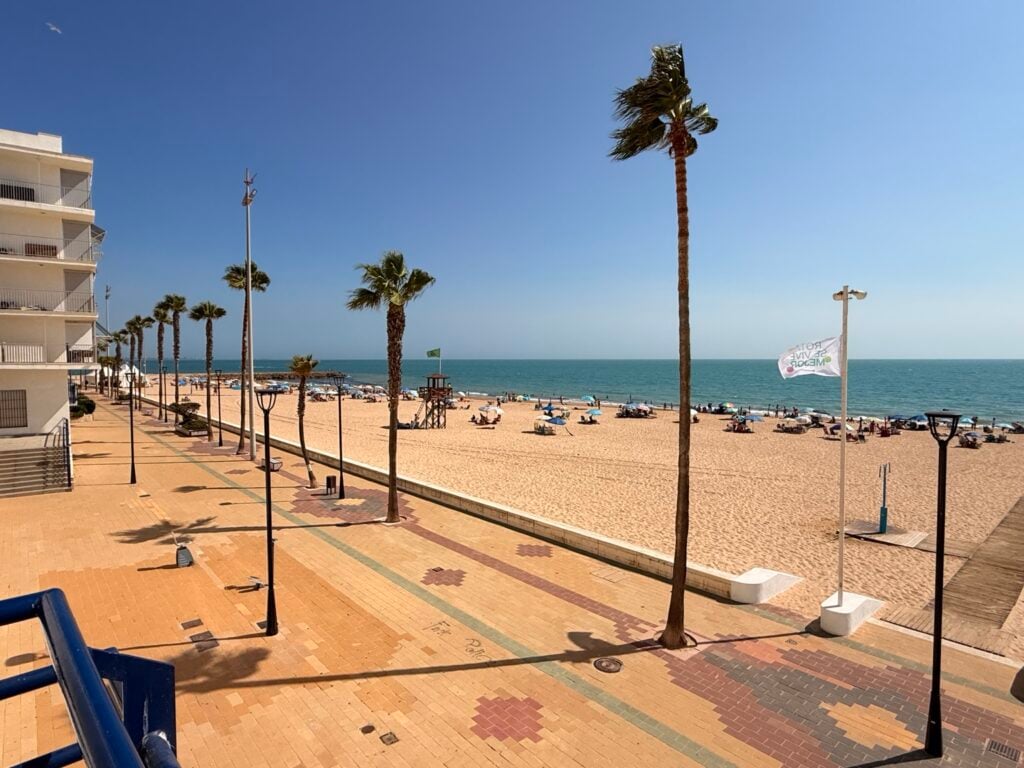
Rip currents are powerful channels of water moving away from the shore and can quickly carry swimmers out to deeper water.
They can be particularly deceptive because dangerous conditions are possible even when waves do not appear unusually large.
Greatest danger on Wednesday afternoon
Aemet expects the highest-risk period to coincide with high tide on Wednesday afternoon, at 4pm in mainland Spain.
It is during this period that the spring tide and longer-period swell are expected to combine.
Despite the warning for swimmers, Aemet does not expect the conditions to cause damage to coastal infrastructure.
The episode should begin easing during the early hours of Thursday, August 13, when the swell period is expected to fall below 10 seconds.
Aemet said it would update its special bulletin on Wednesday morning if changing conditions require further warnings.
Anyone visiting affected beaches should pay close attention to lifeguards, warning flags and local restrictions, and avoid entering the water where conditions are deemed unsafe.
Read more Andalucia news at the Spanish Eye.