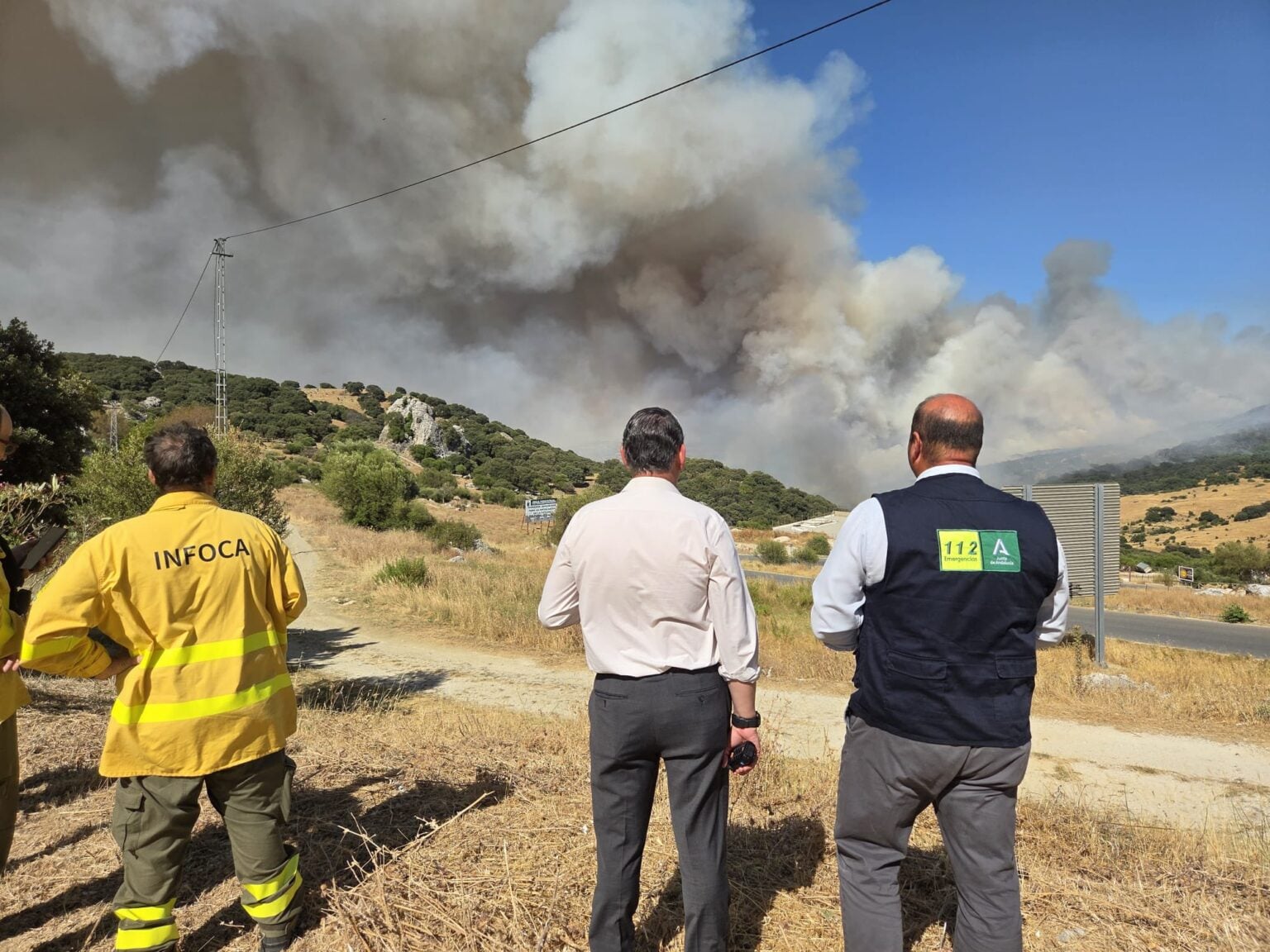

More than three quarters of Andalucia’s municipalities at high risk of wildfires are operating without an up-to-date emergency plan, it has emerged.
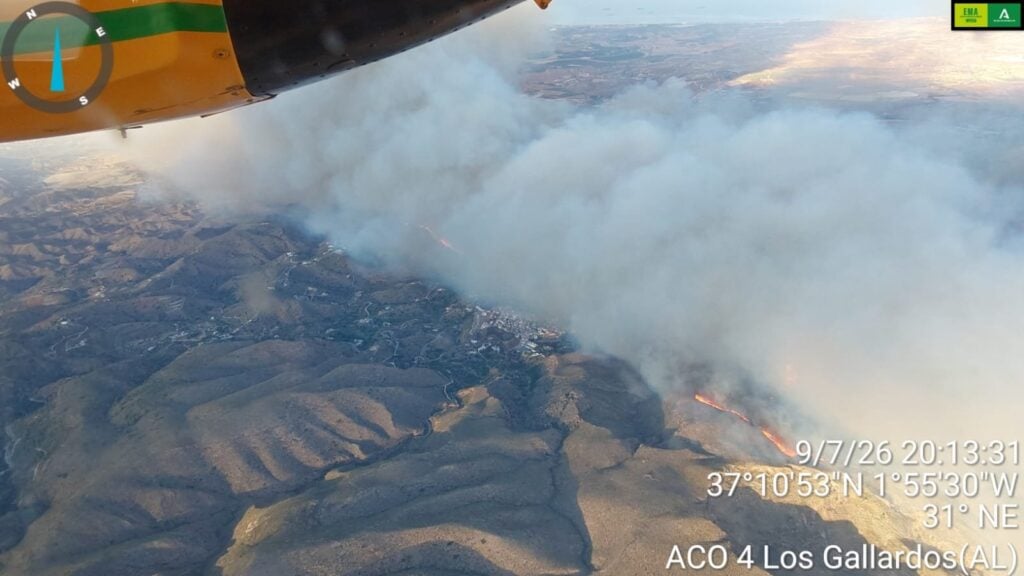
The findings come just days after the devastating wildfire in Los Gallardos, Almeria, which burned around 7,000 hectares and claimed 13 lives in one of the country’s deadliest forest fires in decades.
According to respected regional newspaper El Correo, a total of 593 municipalities across Andalucia are officially designated as high-risk areas for forest fires.
Yet only 138 have a Local Emergency Plan for Forest Fires (PLEIF), and more than half of those are out of date.
That means just 61 municipalities – around 7.8% of all high-risk towns – currently have a valid emergency plan in force.
The plans are mandatory under Andalucia’s INFOCA wildfire strategy and must be updated every four years.
They set out evacuation routes, command structures, emergency procedures and an inventory of resources available during a wildfire.
Without them, emergency responses become more complicated and authorities are forced to improvise during fast-moving incidents.
The stark figures have renewed scrutiny of emergency preparedness following the Los Gallardos disaster, where investigators are examining whether delayed evacuations contributed to the death toll.
Some residents reportedly attempted to flee along a route that became a deadly trap as the fire rapidly intensified.
The warning comes as Andalucia faces an increasingly dangerous wildfire season.
Heavy rainfall earlier this year has encouraged dense vegetation growth across the region, while weeks of extreme heat have left the countryside tinder dry, creating ideal conditions for large, fast-spreading fires.
The Los Gallardos blaze follows another major wildfire near Villanueva de los Castillejos in Huelva and a more recent fire in Moguer, highlighting the growing pressure on firefighting services across the region.
Speaking from the emergency command centre in Almeria this week, Andalucian president Juanma Moreno warned that three times more land has already burned this summer than at the same stage last year.
He blamed climate change for creating increasingly dangerous ‘new generation’ wildfires, describing them as more explosive and far less predictable than in previous decades.
By province, Granada has the highest number of municipalities classified as high-risk, with 146, followed by Almeria (101), Huelva (79), Malaga (75), Jaen (65), Cordoba (51) and Sevilla (49).
Huelva is the only province where every municipality in a designated danger zone has a wildfire emergency plan, although only 35 of those plans are currently valid.
Elsewhere the picture is far worse. In Cadiz, for example, only two municipalities have a wildfire emergency plan and neither is up to date.
The figures have intensified calls for local authorities to update their emergency planning before further fires threaten lives this summer.
Experts say properly maintained plans can make the difference between a coordinated evacuation and chaos when every minute counts.