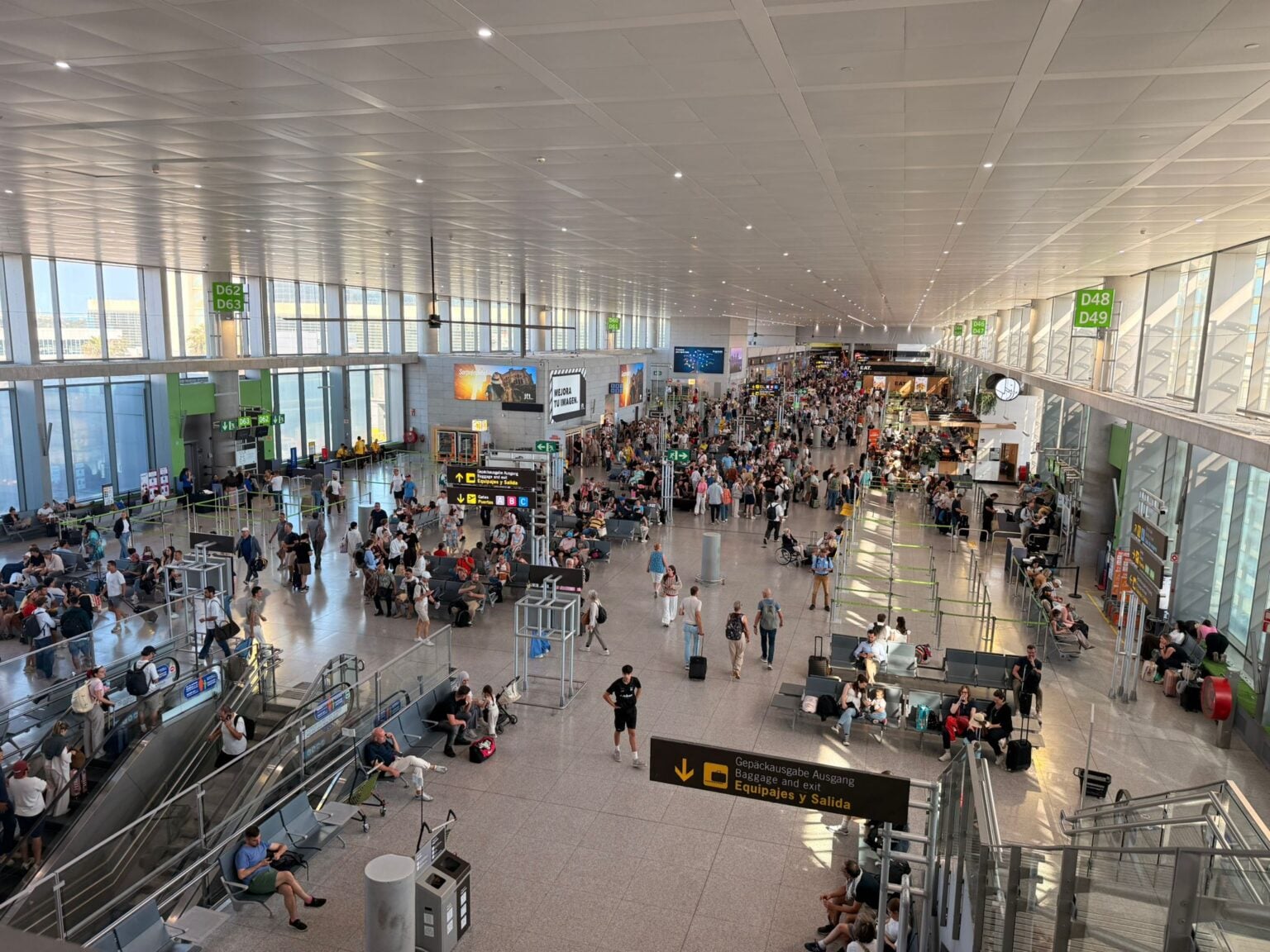

Passengers flying from Malaga Airport could soon be allowed to keep liquids and electronic devices inside their hand luggage when passing through security.
It comes as Aena is preparing to roll out next-generation screening technology.
The travel hub has been included in Spain’s next airport investment programme, which will see advanced security scanners installed between 2027 and 2031.
Once operational, the new Explosive Detection System for Cabin Baggage (EDSCB) scanners will allow travellers to leave laptops, tablets, mobile phones and liquids inside their cabin bags during security checks, dramatically speeding up the process.
Malaga had originally been due to receive the technology under Aena’s previous five-year investment plan alongside Madrid, Barcelona and Palma de Mallorca.
However, after the European Commission introduced new aviation security requirements in 2023, Aena prioritised installing the systems at Spain’s three busiest airports first.
Malaga’s rollout was postponed, but the airport is now among the next group selected for the upgrade.
Other airports due to receive the technology include Alicante-Elche, Valencia, Tenerife South, Tenerife North, Ibiza, Lanzarote, Bilbao and Menorca.
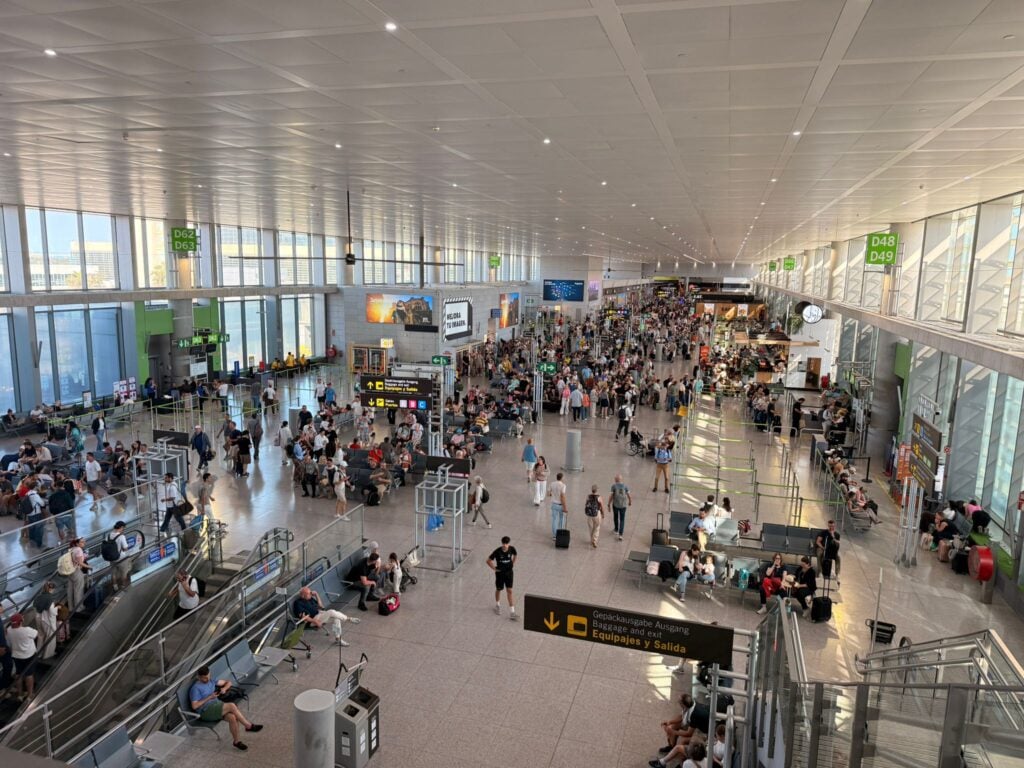
Part of €1.5 billion airport expansion
The installation forms part of Malaga Airport’s wider €1.5 billion expansion, which aims to increase annual passenger capacity from 30 million to 36 million.
Aena says the new scanners require significant building work and redesigned security checkpoints before they can be installed, which is why they are being incorporated into the airport’s next phase of development.
The investment programme, known as DORA III (2027-2031), is expected to receive final approval before the end of September.
Faster security checks
Alongside the new scanners, Malaga Airport is also set to introduce Automated Tray Return Systems (ATRS), allowing security trays to move automatically through checkpoints instead of being manually handled by passengers.
The airport will also adopt remote baggage screening, meaning security officers will analyse X-ray images from dedicated control rooms rather than standing directly at the checkpoint.
According to Aena, the combination of the new technologies will improve passenger flow, speed up security checks and make it easier to identify suspicious baggage.
The airport operator approved a nationwide contract worth almost €131 million in 2023 to supply around 160 advanced cabin baggage scanners, 170 automated tray systems and associated remote screening equipment across Spain’s airport network.
Read more Andalucia news at the Spanish Eye.