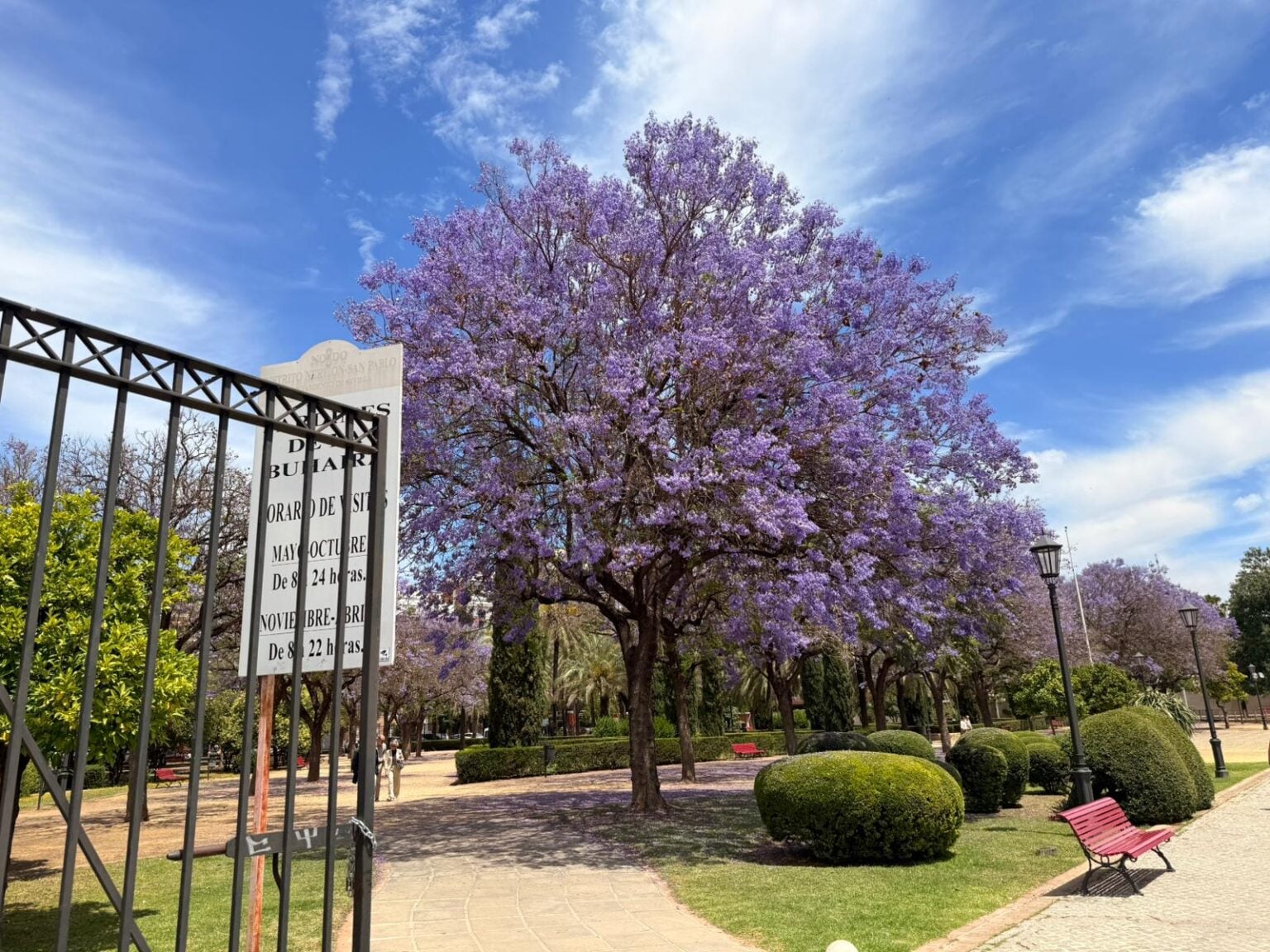

Every spring, streets across Andalucia burst into shades of vivid purple as jacaranda trees come into bloom, transforming cities like Malaga and Sevilla into some of the most photogenic spots in Spain.
Originally native to South America, the jacaranda tree arrived in Malaga during the 20th century and has since become one of the city’s most recognisable symbols.
Known for their spectacular violet flowers, jacarandas now line avenues, plazas and parks across much of southern Spain, typically flowering twice a year – once in spring and again in autumn.
The trees can grow between six and 20 metres tall, with wide canopies capable of stretching up to 20 metres across, making them popular as ornamental shade trees in Andalucia’s hot climate.
Experts say the jacaranda does more than simply beautify the streets.
Enrique Salvo Tierra, director of the Climate Change Chair at the University of Malaga and a botanist, previously told Malaga Hoy how the species also helps cool cities, absorb carbon dioxide and trap airborne dust.
‘The jacaranda provides more oxygen, helps reduce temperatures and retains particles suspended in the air,’ he explained.
He added that the trees also help stabilise soil in parts of Malaga where subsidence has become an issue.
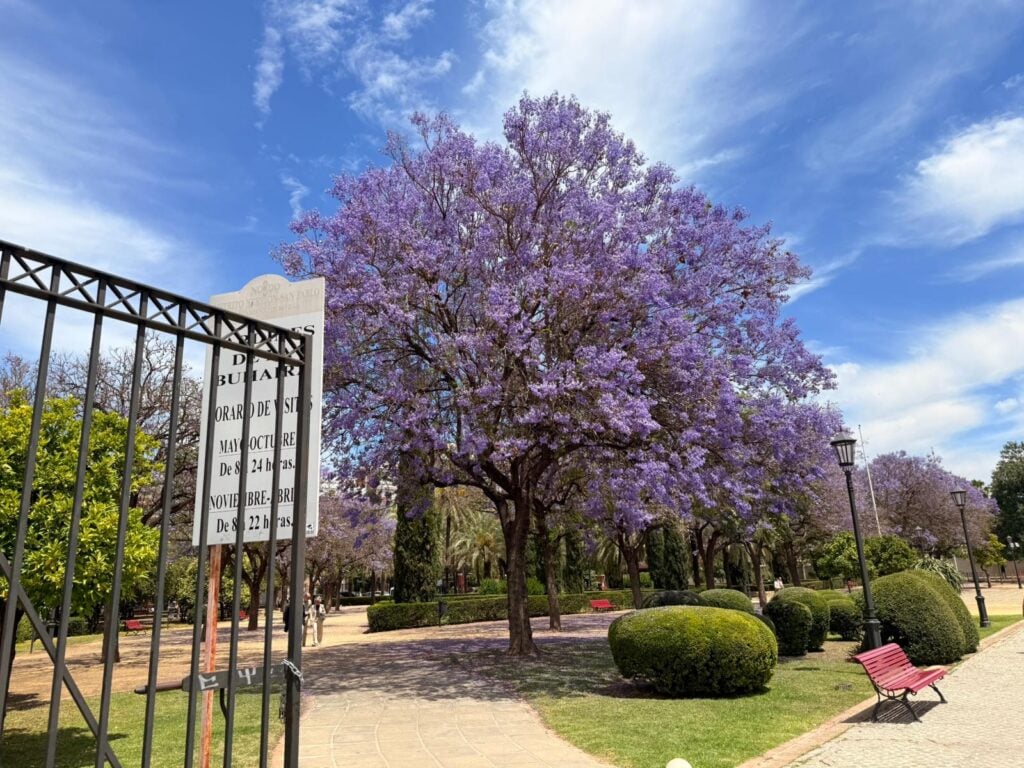
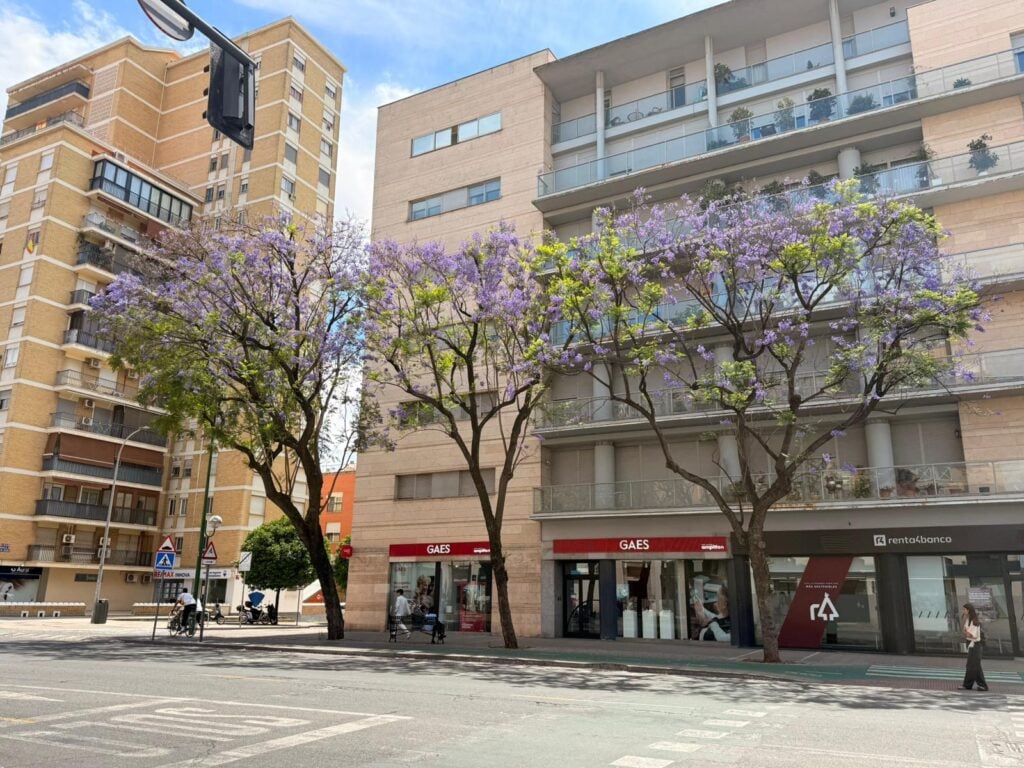
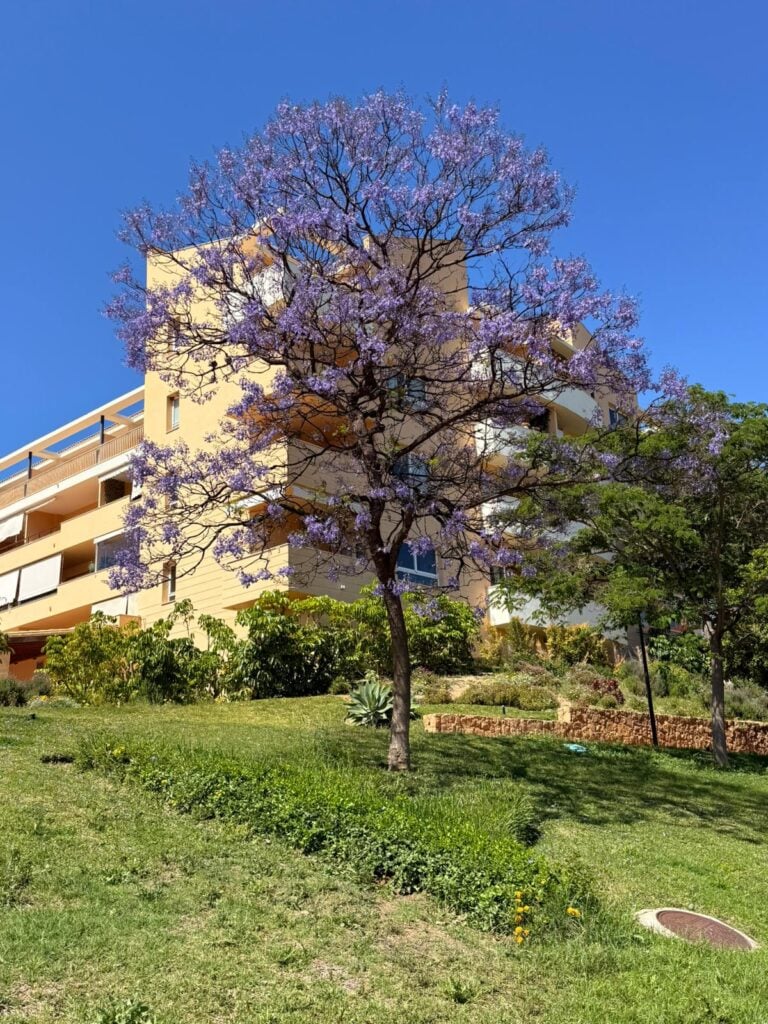
‘Trees are the most effective therapy in the world against climate change,’ he said.
Despite their beauty, the trees are not without controversy.
When flowering, jacarandas release a sticky resin that can coat pavements, parked cars and even shoes, becoming slippery underfoot.
The issue has become so common in Malaga that municipal cleaning company Limasam regularly increases street-cleaning operations during peak blooming periods.
The species is relatively delicate and poorly suited to frost, preferring the mild temperatures typical of the Costa del Sol and much of Andalucia.
According to Salvo Tierra, jacarandas likely entered Spain through historic trading ports including Sevilla and Velez-Malaga before spreading across the region.
Today, they have become one of the defining images of spring in southern Spain, attracting photographers, tourists and locals eager to catch the streets glowing purple for a few short weeks each year.
Read more Andalucia news at the Spanish Eye.