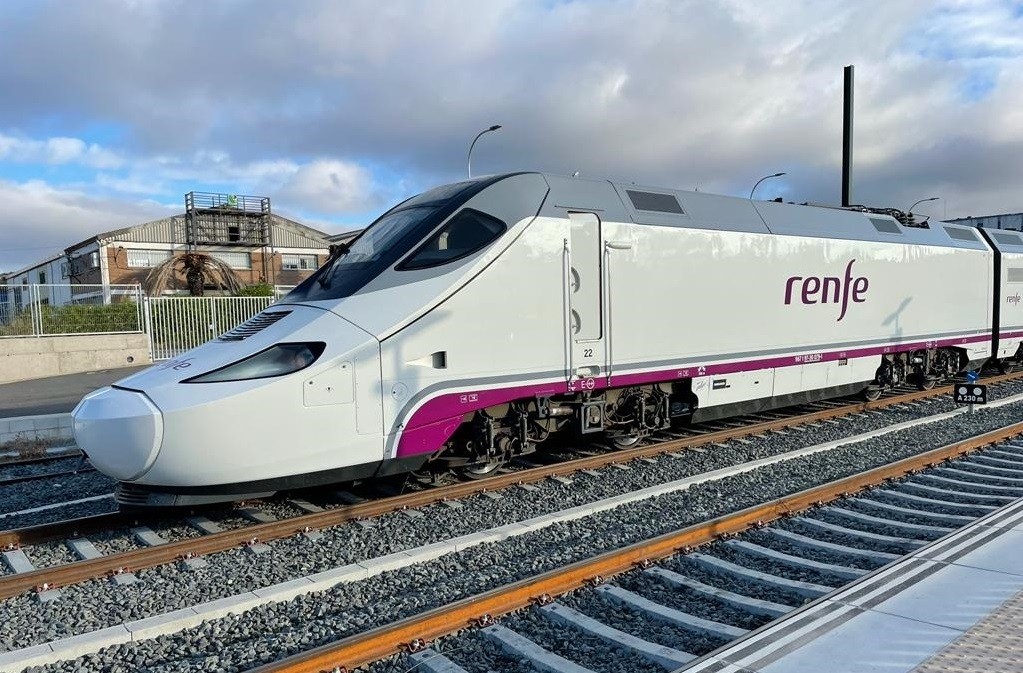

High-speed direct trains will return between Malaga and Madrid this Thursday – but normality won’t be fully restored.
Firstly, the daily frequencies will be slashed by more than half. Secondly, there will only be a single-track running on the stretch near the embankment in Alora.
The journey time between the two cities will also be slightly longer than the pre-disruption norm, exceeding the three-hour mark that makes it competitive with air travel.
Frequencies will drop from the 26 per direction seen at the start of the year, to just 15 services leaving from Malaga and 15 from Madrid.
Spanish operator Renfe will run the most, with nine trains per day in each direction, while private competitors will manage three at best, and sometimes as few as two.
The first Renfe AVE service will depart Malaga at 5.37am on weekdays (not this Thursday though, when the first service is at 12pm).
This will get passengers to Madrid by 9am, restoring a crucial timetable slot that was lost during the disruption.
For the return journey, Renfe’s last train of the day leaves Madrid at 7.50pm, reaching Malaga by 11pm, allowing day trips to the capital.
Private operator Ouigo may add an even later 8.30pm service on busier dates.
The enforced speed reductions, both at Alora and Adamuz, will push the journey time over three hours, 15 minutes more than the standard in recent years. And single-track running will continue at least until summer, when a vital piece of equipment for changing tracks is due to be restored.
Adif insists this shouldn’t cause major delays unless there’s an accident on the line. Single-track running has been in place since the closure of one of the Andalucia tunnels, which has now reopened.
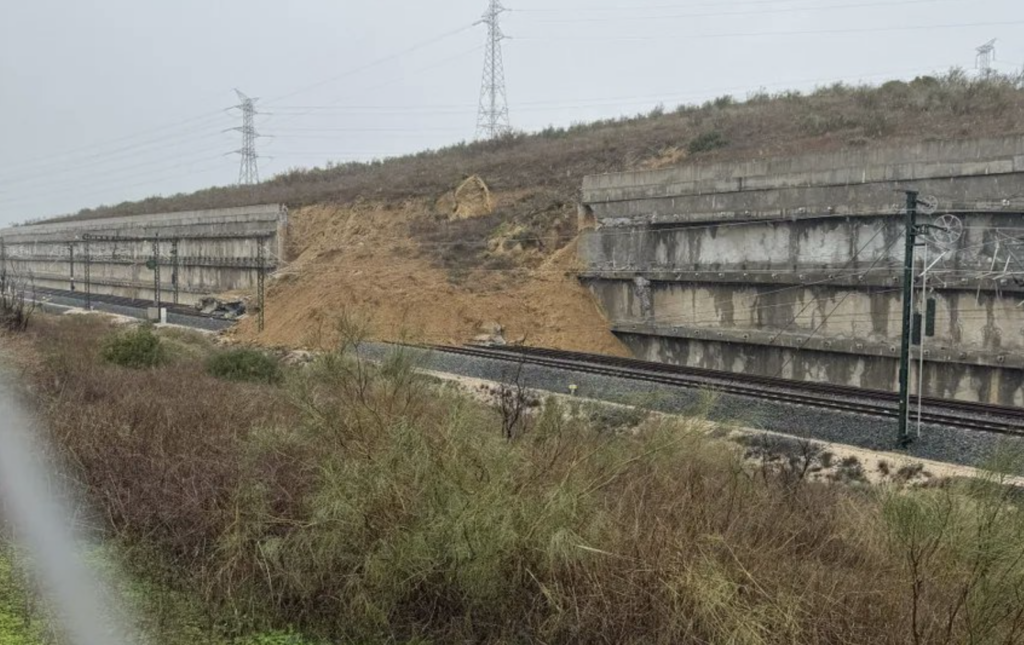
The works to recover the high-speed line through Alora have involved shifting earth equivalent to filling 80 Olympic swimming pools, or 28 football pitches. In plain figures, that’s 200,000 cubic metres of material.
The timeline began on February 4, when heavy rains from Storm Leonardo caused a 300-metre, 15-metre high retaining wall to collapse, burying the tracks in tonnes of earth.
It took 15-20 days before work could even start, as the area was unstable and covered in mud. Machinery finally moved in at the end of February to clear the debris, but the embankment still covered the rails on February 27.
Adif then ramped up the effort, with 24-hour shifts and 75 workers, using 28 machines of various types. By March 11, over a month after the collapse, the tracks were finally exposed.
But just as the April 23 deadline approached, inspectors found the remaining wall was unsafe, forcing its near-total demolition. This new delay, coming just before Easter, was a bitter blow for the province.
Work on dismantling the wall began on March 18. And in the last week, progress has been clear, with the ballast being laid and the tracks reinstalled. This 86-day project will finally be complete by April 30.