
Long queues, crashed websites and a mix of hope and confusion.
That’s how day one of Spain’s mass migrant regularisation unfolded across cities including Barcelona, Valencia, Almeria and Bilbao this week.
For thousands, it is a chance at life and better working conditions.
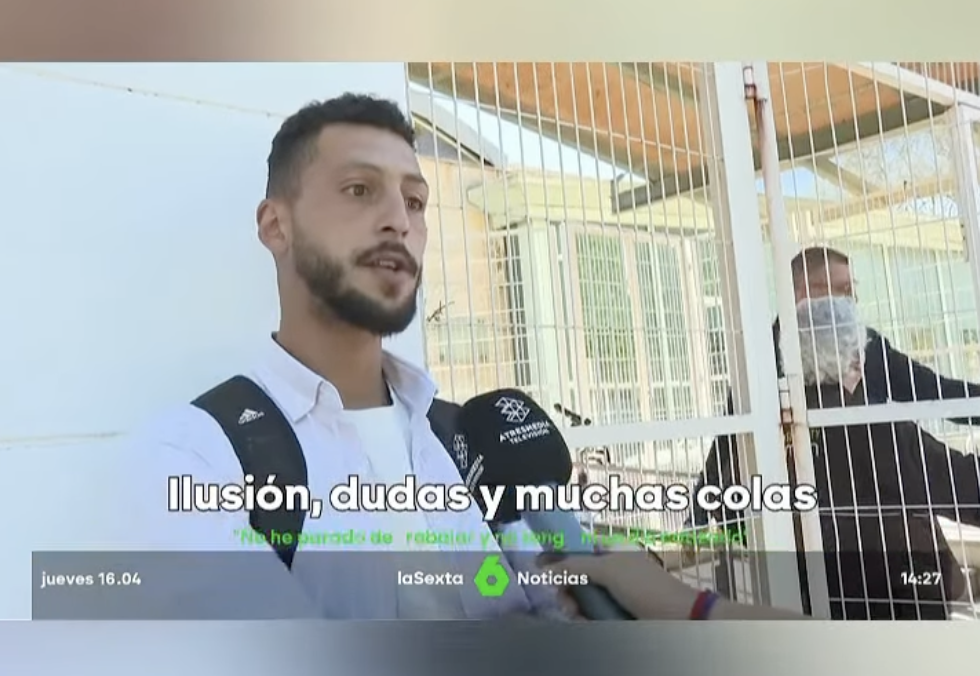
Among them is Medhi, 28, who says he has spent the last decade working in the fields of Andalucia without a single day officially registered.
‘I haven’t paid into the system once,’ he admitted to the La Sexta news channel.
A decade in the shadows
Medhi’s story is far from unique. Like many others lining up for appointments or refreshing overloaded booking systems, he has spent years in Spain’s shadow economy, working, but without rights.
Now, he’s trying to regularise his status under the government’s controversial plan, which could grant legal residency to hundreds of thousands of undocumented migrants.
He has already secured a criminal record certificate – one of the key requirements – but fears time is running out.
Confusion over new rules
While applications have opened, the process has already sparked confusion.
Migrants must meet at least one of several criteria: having had an employment contract, dependent children, or being able to prove a situation of vulnerability.
It’s this last condition that is causing the most uncertainty.
‘We don’t yet know what documentation people will need to prove vulnerability,’ said Maria Jesus Herrera from the Mujeres Pa’lante support network.
NGOs are now calling for deadlines to be extended and more resources to be deployed to handle the surge in demand.
Systems under pressure
In some areas, tensions have already flared.
Outside consulates – including in Valencia – applicants reported long waits and technical issues.
‘The websites are down,’ several people complained as they queued. Despite the chaos, there is a clear sense of cautious optimism.
‘We just want a normal life’
For many, legal status would unlock basic rights most take for granted: signing a work contract, renting a home, opening a bank account.
Ultimately, it’s about stability and escaping exploitation.
‘They just want to have rights,’ said one support worker.
For Medhi and thousands like him, the hope is that after years of working in the shadows, Spain will finally recognise the life they’ve already built.
Read more Andalucia news at the Spanish Eye.