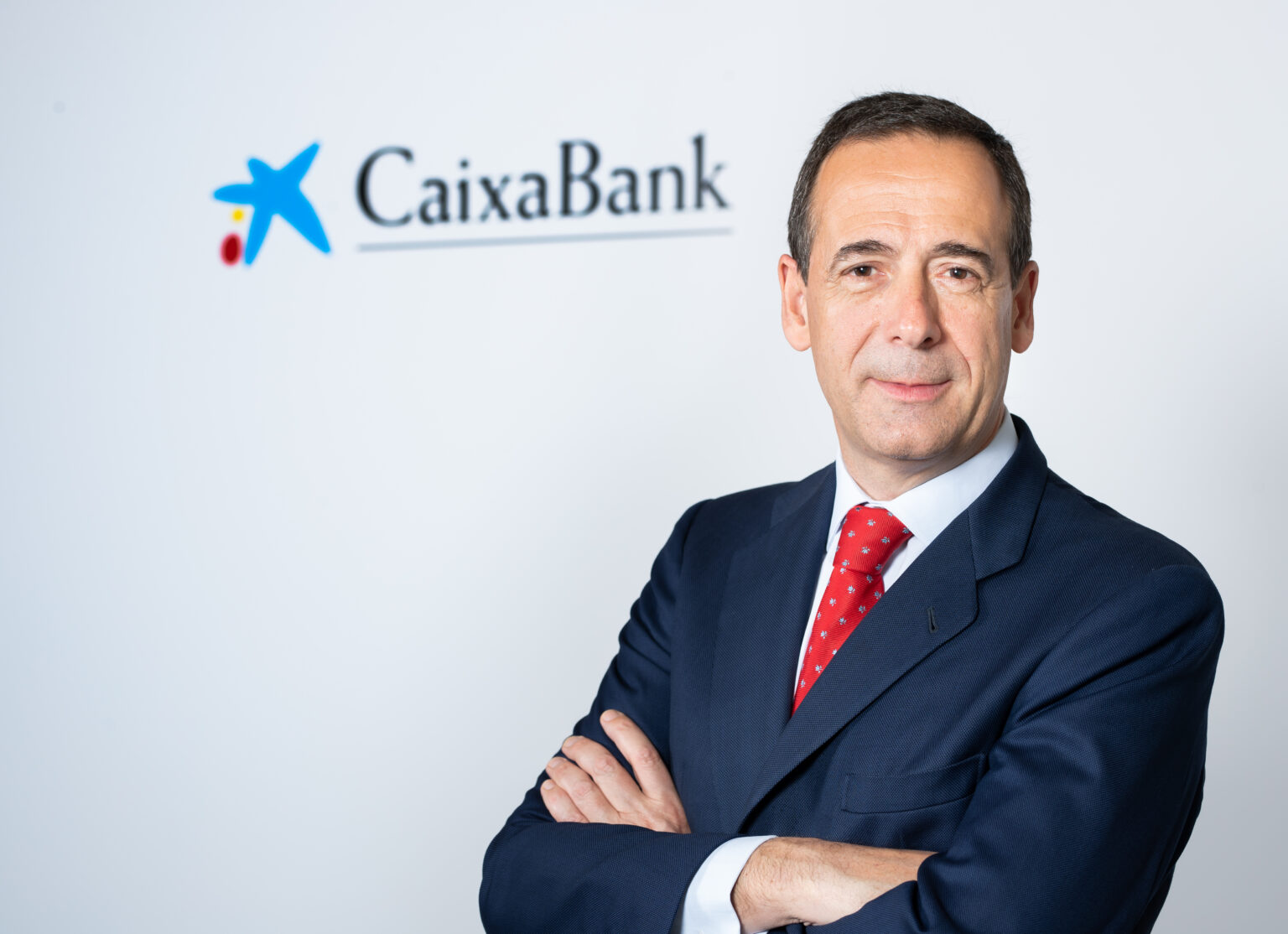

The European Central Bank (ECB) is likely to raise interest rates up to three times this year, potentially pushing them as high as 2.75%, according to Gonzalo Gortazar.
Speaking at an event organised by El Español and Invertia, the chief executive of CaixaBank said the current inflationary environment – driven in part by the conflict in the Middle East – makes further monetary tightening ‘logical’.
Market expectations, he explained, point to between two and three increases in 2026, taking rates from around 2% to somewhere between 2.5% and 2.75%.
Gortazar suggested the ECB is unlikely to repeat what he described as a key mistake during the inflation spike triggered by Russia’s invasion of Ukraine, when policymakers initially dismissed rising prices as ‘temporary’.
This time, he indicated, the central bank is more likely to act decisively.
His outlook aligns with forecasts from major financial institutions such as Bank of America, which is predicting two rate hikes in the early summer, while broader market pricing already reflects the possibility of three increases before the end of the year.
However, analysts do not expect any immediate move at the ECB’s next meeting on April 30.
What it means for mortgages in Spain
For homeowners and buyers in Spain, the impact is already being felt.
Gortazar noted that while the growing shift towards fixed-rate mortgages offers some protection, borrowing costs are rising as the Euribor climbs – now sitting around 50 basis points higher than before the latest geopolitical tensions.
That trend is feeding through into new mortgage deals, making property financing more expensive despite the relative stability for those already locked into fixed rates.
ECB watching ‘knock-on effects’
Also speaking at the forum, Luis de Guindos stressed that any policy response will depend heavily on the knock-on impact of higher energy and commodity prices feeding into broader inflation.
He admitted the ECB has limited ability to counter the initial shock caused by supply disruptions, underlining the importance of monitoring how those pressures spread through the economy.
Digital euro and banking overhaul
Beyond interest rates, Gortazar pointed to a ‘real revolution’ underway in the world of payments, highlighting both the opportunities and Europe’s slower pace compared to the United States.
He emphasised the importance of developing a wholesale digital euro and regulated “stablecoins” to enable faster, cheaper international transactions, revealing that CaixaBank is among a small group of banks working on such initiatives.