
Thousands of free drink-spiking detection wristbands will be handed out during the Feria de Malaga as part of a new pilot scheme designed to protect revellers from chemical submission.
The Colegio de Medicos de Malaga has joined forces with Malaga City Council and the Unicaja Foundation to distribute 3,000 of the wristbands free of charge during the city’s biggest annual celebration.
The devices allow users to test their own drinks for several substances associated with drink spiking, with a result appearing within just three seconds.
The initiative comes amid concern over sexual and gender-based violence in the province and the particular risks associated with large nightlife events such as the Feria.
According to figures from Spain’s National Institute of Toxicology and Forensic Sciences, 97 suspected cases of chemical submission were recorded in Malaga province during 2023 alone.
People aged between 18 and 34 account for around a third of suspected victims.
How do the wristbands work?
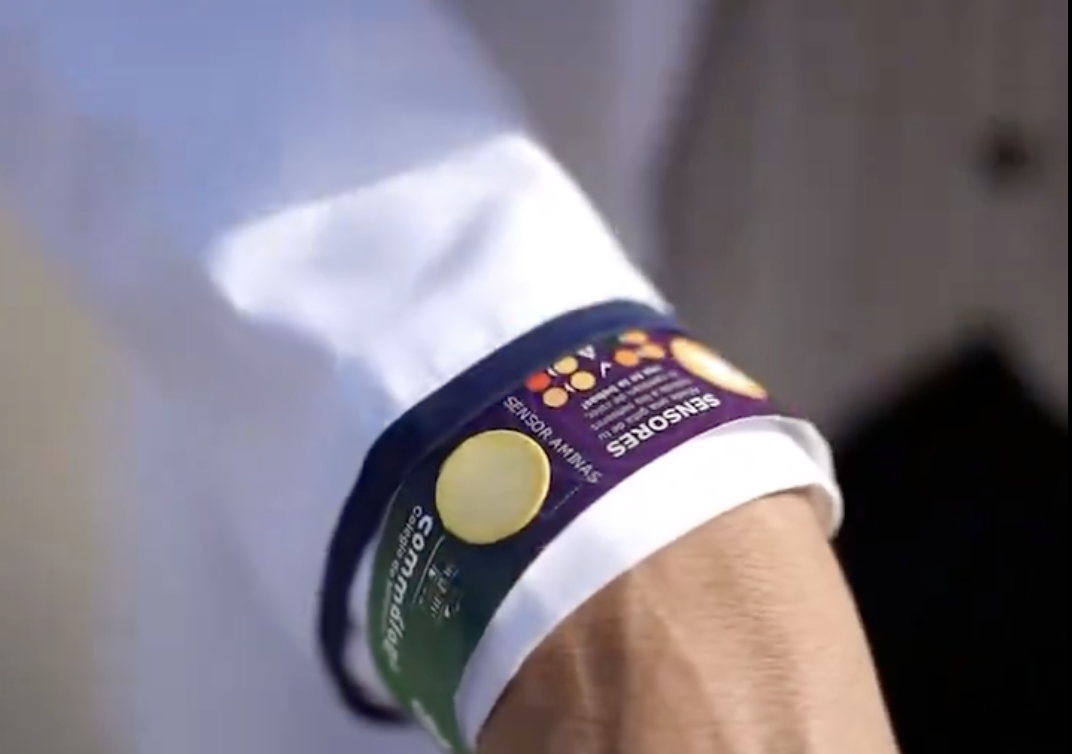
Each wristband contains two circular sensors.
Users place a drop of their drink onto each sensor and wait three seconds. If either sensor changes colour, it indicates that a substance associated with possible chemical submission may have been detected.
One sensor is designed to detect GHB – commonly known as liquid ecstasy – while the other can identify substances including ketamine, scopolamine and MDMA, among others.
Each wristband can be used up to five times, provided it has not previously returned a positive result or been contaminated by other liquids.
A QR code printed on one end provides access to instructions explaining how to use it correctly.
However, doctors have stressed that the technology should not be regarded as definitive proof that a drink has been spiked.
Pedro J. Navarro, president of the Colegio de Medicos de Malaga, described the wristbands as a ‘deterrent, preventive and warning measure’, rather than a replacement for clinical and toxicological testing.
Where can you get one?
The 3,000 wristbands will be distributed free of charge at the Feria’s ‘puntos violeta’, or purple points, which provide information and assistance relating to sexual harassment and violence against women.
Health professionals are urging anyone who receives a positive result – or suspects they have been spiked regardless of the wristband result – to seek medical attention as quickly as possible.
Emergency doctor and health and gender specialist Patricia Aleman warned that some substances disappear from the bloodstream very quickly, making prompt testing particularly important.
Police have also advised potential victims to keep their drink and its container, handle it as little as possible and keep the wristband on until emergency services arrive.
Lola Bermudez, an officer with Malaga Local Police, said preserving these items could be important after a suspected incident.
Read more Andalucia news at the Spanish Eye.