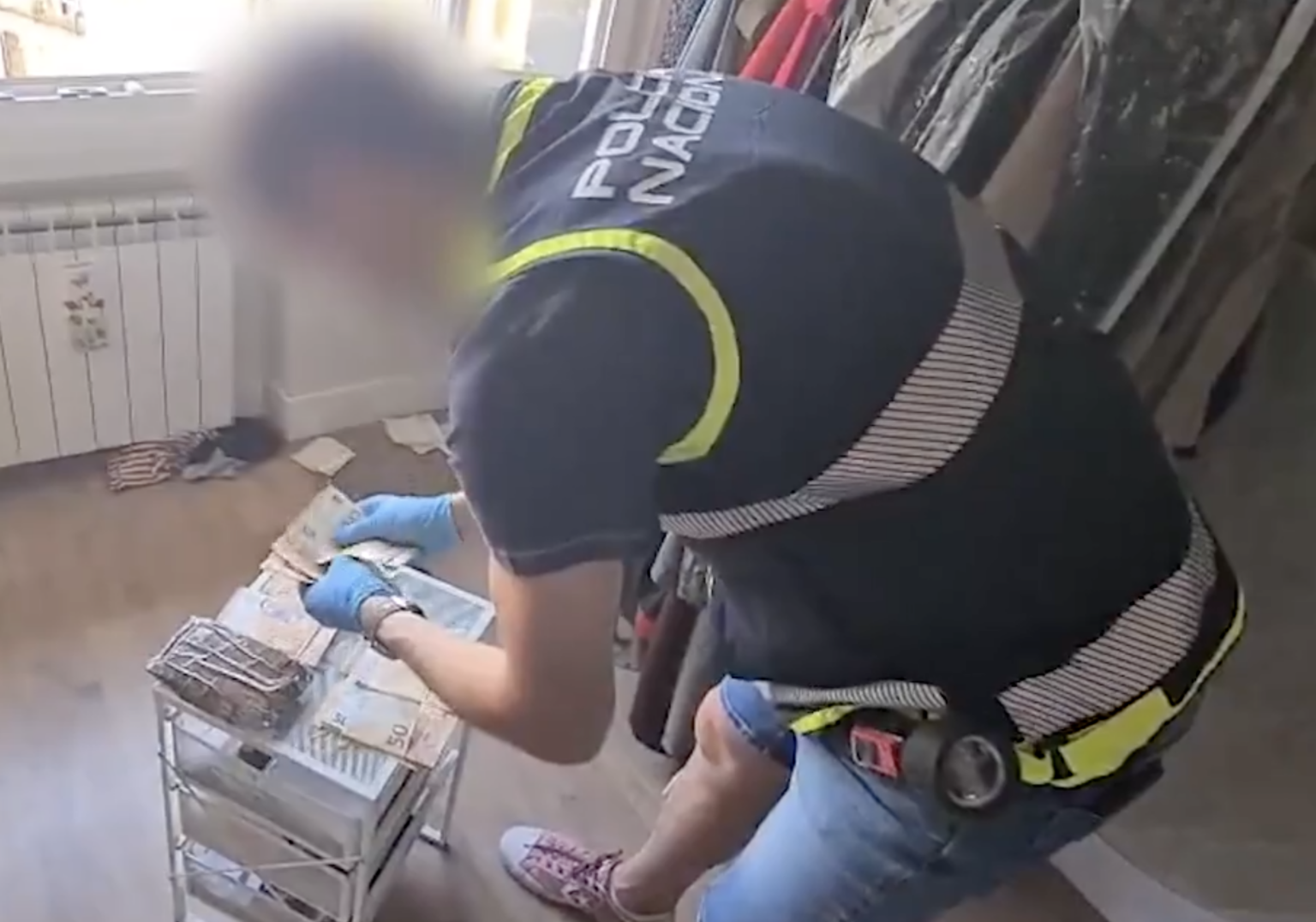

This is the moment a highly organised cocaine empire was dismantled in Spain, leading to the arrest of at least 27 people.
The group, with links to feared Colombian cartels, is accused of producing the drug in clandestine laboratories before supplying criminal groups across Spain.
The arrests – 23 in Spain and four in Australia – came after an intensive 18-month investigation.
The Policia Nacional said the organisation imported drugs into Europe concealed inside shipments including wood, fruit, scrap metal and cement.
Once the shipments reached Europe, the drugs were transported to Spain in vehicles fitted with secret compartments, before being taken to isolated rural properties containing clandestine cocaine laboratories.
Investigators ultimately dismantled four laboratories in Don Benito, Madrid, Leganes and Illescas.
Officers seized 163kg of cocaine, almost €98,000 in cash, a firearm, 12 vehicles and around 1,000 litres of chemical precursors, alongside equipment used to process and package the drug.
Cocaine hidden inside everyday cargo
The investigation began in February 2025 after police received information about a criminal organisation based in the Madrid region.
Investigators said the gang operated under a strict hierarchy with clearly defined roles and used sophisticated methods to evade detection.
Large quantities of drugs were imported by sea hidden in commercial products including wood, fruit, scrap metal and cement.
Containers travelled through European ports including those in Belgium, where police believe the organisation had at least one insider working on its behalf.
After reaching Europe, the shipments were driven into Spain using specially modified vehicles containing concealed compartments known as caletas.
The organisation then used laboratories established on remote rural properties to chemically extract cocaine hydrochloride from the materials in which it had been concealed.
The resulting cocaine was subsequently transported to a second network of laboratories inside private homes.
There, it was cut and adulterated with cheaper chemicals designed to resemble cocaine, increasing the weight of the finished product and therefore the gang’s profits.
The drugs were then moved to warehouses close to major cities before being distributed to buyers.
Gang boss known as ‘El Quemado’
Police identified the alleged leader as a highly experienced cocaine processor known by the nicknames ‘El Gordo’ and ‘El Quemado’ – ‘The Fat One’ and ‘The Burned One’.
The latter nickname reportedly came from burns he suffered to his face and hands during a cocaine extraction and adulteration process several years ago.
Investigators say he selected and rented the rural properties where laboratories were established and recruited the gang’s cocaine ‘cooks’, even training them in the chemical processes involved.
Police also claim he had developed a network of contacts with Colombian drug cartels, particularly the Cali cartel, and regularly travelled to Colombia to negotiate agreements.
He also travelled frequently to Panama and Belgium, where the organisation had established routes for moving its concealed shipments towards Spain.
The ‘Artist’ and the ‘Llanero’
Two of the alleged leader’s most trusted associates were known as ‘El Artista’ and ‘El Llanero’.
The former, the alleged boss’s nephew, earned his nickname because of his technical expertise in processing, adulterating and cutting cocaine.
‘El Llanero’, meanwhile, allegedly managed clandestine warehouses, dealt with suppliers of chemical precursors and collected proceeds from drug sales.
Below them were cocaine ‘cooks’ with the chemical knowledge needed to operate the laboratories and other members responsible for transporting and guarding shipments.
The gang also allegedly used the so-called GO-FAST method, moving drugs rapidly along roads in cars and larger vehicles equipped with hidden compartments.
11 raids and 27 arrests
Police carried out the operation in four phases, the last of which took place on June 23.
A total of 11 properties were searched, including seven in Madrid and others in Rivas-Vaciamadrid, Illescas, Denia and Don Benito.
Officers seized 163kg of cocaine, 100 grams of marijuana, 20 grams of synthetic drugs, 1,000 litres of chemical precursors and five kilograms of cutting agents.
They also recovered six presses, two packaging machines, four precision scales, cocaine moulds and stamps, 14 mobile devices, a firearm and almost €98,000 in cash.
Assets belonging to the organisation were frozen, including vehicles worth almost €115,000 and properties valued at €258,000.
Of the 23 arrests made in Spain, 14 were in Madrid, with further suspects detained in Rivas-Vaciamadrid, Recas, Almeria and Talavera de la Reina. Another four suspects were arrested in Australia.
All are being investigated for alleged drug trafficking and membership of a criminal organisation.
Three suspects identified as leaders of the network have been remanded in custody.
Police said the investigation remains open and further arrests have not been ruled out.
Read more Andalucia news at the Spanish Eye.