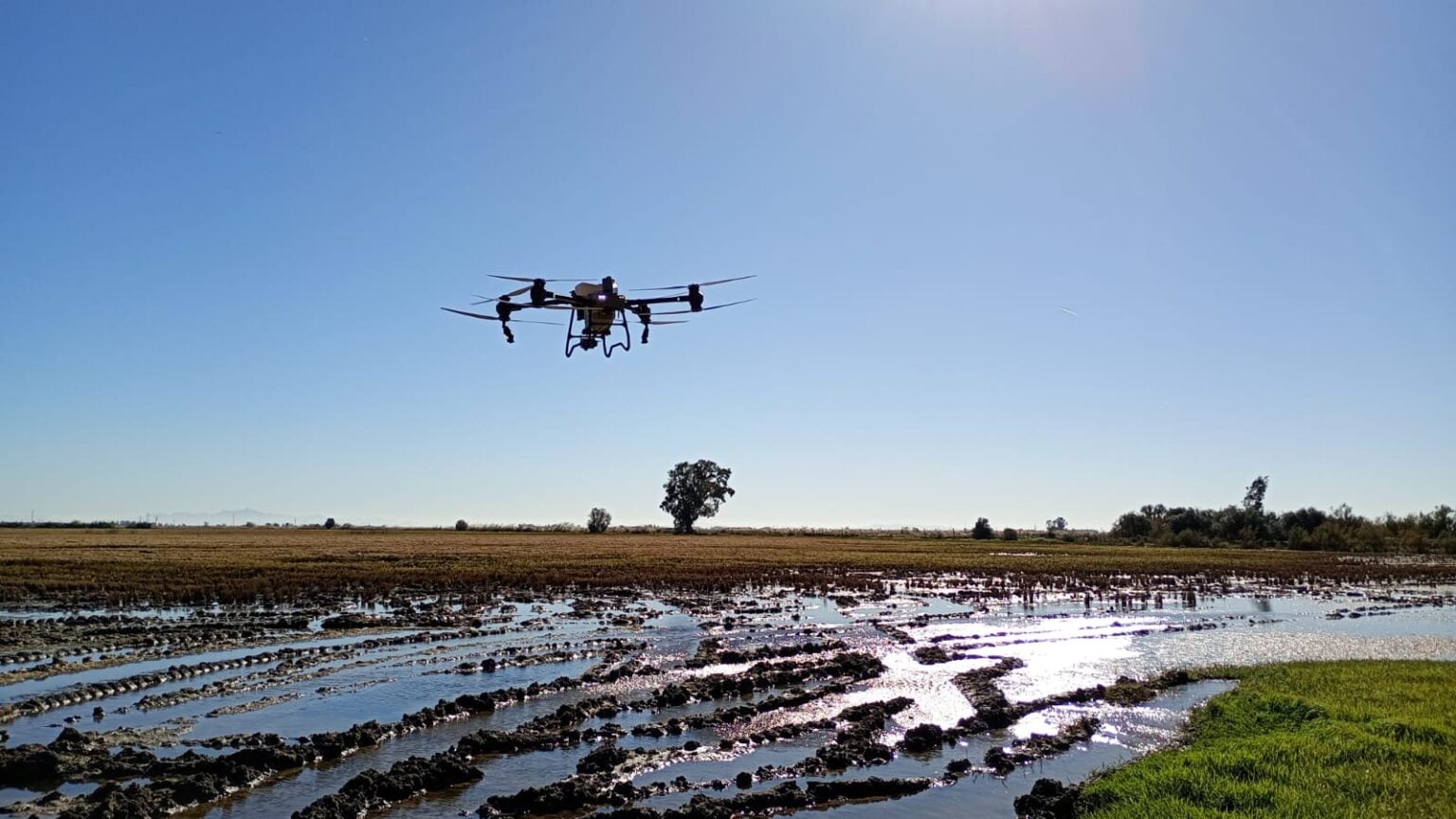

Authorities in Sevilla have deployed drones to help fumigate thousands of hectares of mosquito breeding grounds amid a spike in cases of West Nile virus.
The number of confirmed infections in the province has now reached 34, including 10 serious cases, while one person with underlying health conditions has died in Dos Hermanas.
The outbreak is particularly concentrated in several municipalities around the Guadalquivir and its extensive wetlands and rice fields.
Villamanrique de la Condesa has recorded seven cases, while La Puebla del Rio has five. Sevilla city itself has registered two infections.
The growing number of human cases has prompted the provincial government, the Diputacion de Sevilla, to intensify a mosquito-control programme that had already been strengthened ahead of this summer.
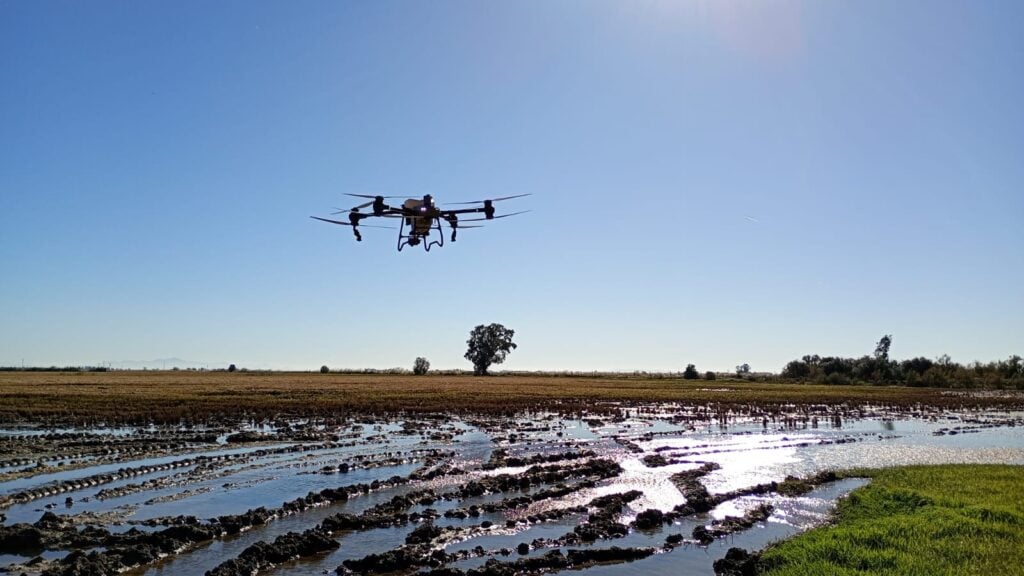
Its latest weapon is a fleet of drones capable of carrying out highly targeted spraying in areas considered particularly vulnerable to mosquitoes capable of transmitting the virus.
Drones create ‘protective belt’ around towns
The drones are being used across more than 500 hectares around municipalities including La Puebla del Río, Los Palacios and Dos Hermanas, all of which are currently under alert measures.
The aim is to create what authorities have described as a ‘protective belt’ around populated areas, reducing the likelihood of infected mosquitoes reaching residents.
Operations are focusing particularly on rice fields, bodies of standing water and areas of dense vegetation, which provide ideal habitats for mosquitoes.
The drone operation allows treatment to be applied more precisely in locations that can be difficult to reach using conventional vehicles or ground teams.
It is being complemented by a much larger aerial campaign involving aircraft treating around 6,000 hectares of rice fields.
These aircraft are applying adulticide treatments designed to kill adult mosquitoes around areas including La Puebla del Río, Isla Mayor, Dos Hermanas, Los Palacios y Villafranca, Utrera and Las Cabezas de San Juan.
Mosquito surge blamed on rain and early heat
The escalation comes after authorities detected an increase in the virus among both mosquitoes and humans during recent weeks.
The Diputación said conditions had been particularly favourable for mosquitoes this year following heavy rainfall last winter and the early arrival of high temperatures.
Those conditions have encouraged the proliferation of mosquitoes belonging to the Culex genus, which are responsible for transmitting West Nile virus.
Eleven ground teams are now working simultaneously across Sevilla province.
The scale of surveillance has also increased sharply. According to the provincial authority, inspections of potential mosquito breeding sites have risen by 35%.
Teams carried out 368 larvicide treatments in a single week, the highest weekly total recorded so far in 2026.
Another 231 treatments have been applied around municipalities under alert during the past two weeks, with the intervention programme being repeated every fortnight.
Sevilla city running separate mosquito operation
Sevilla capital is not covered by the Diputación programme because the city council operates its own mosquito surveillance and control system.
The capital has so far recorded two cases of West Nile fever.
Its €55,000 programme is being carried out by the Doñana Biological Station, part of Spain’s CSIC research organisation, under Andalucia’s strategic plan for monitoring and controlling disease-carrying insects.
Mosquito surveillance is being conducted at at least 16 strategic sampling locations across Sevilla.
Researchers search for breeding habitats and mosquito larvae before using specialist BG-Sentinel 2 traps to capture adult mosquitoes. The traps use CO2 to imitate human respiration and attract the insects.
Captured mosquitoes are then identified by species, with particular attention being paid to Culex pipiens, one of the principal vectors involved in the transmission of West Nile virus.
The intensified campaign represents a significant escalation from earlier this month as authorities attempt to contain infections during the period when mosquito activity is at its highest.
West Nile virus is transmitted primarily through the bite of an infected mosquito. Many infections produce no symptoms, but the disease can occasionally develop into serious neurological illness, particularly among older or medically vulnerable people.
Read more Andalucia news at the Spanish Eye.