
Traditional chiringuitos could be transformed forever under new rules governing businesses operating on the country’s beaches, industry leaders have warned.
Beach bar owners in Andalucia have intensified their battle with the Ministry for Ecological Transition over an imminent reform of the country’s Coastal Regulations.
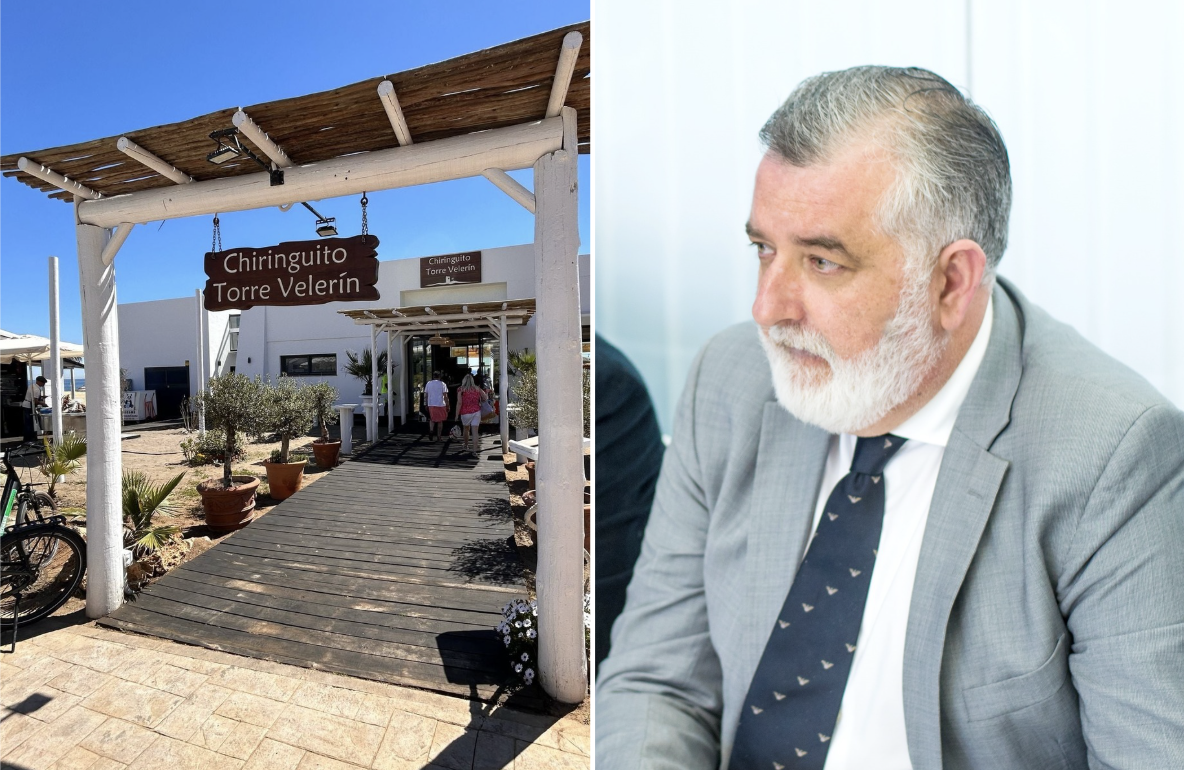
Francisco Trujillo, vice-president of the Andalucian and national Federation of Beach Businesses (Faeplayas), has warned the changes could represent ‘the beginning of the end of the traditional chiringuito model’.
At the heart of the dispute is the way concessions are awarded to private businesses operating on publicly owned coastline.
The Spanish government is changing the rules following demands from the EU, which has challenged the way concessions for economic activities on the country’s public maritime-terrestrial domain are awarded.
Under the new system, concessions for businesses such as chiringuitos will have to be awarded through transparent and impartial competitive procedures.
That means that when concessions come up for award, interested businesses must be given the opportunity to compete for them, with winners selected according to objective criteria.
The reform will also reduce the maximum duration of concessions, which under the existing general framework could extend to as long as 75 years.
For owners who have spent years or even decades building up beach businesses in the same location, the prospect has caused considerable alarm.
Government insists chiringuitos are not being closed
The Ministry for Ecological Transition has pushed back against suggestions that the reform means existing chiringuitos will suddenly disappear.

‘The modification of the General Coastal Regulations does not prevent concessions being granted, nor does it entail the closure of existing chiringuitos or establishments,’ the ministry said.
It stressed that the reform is designed to bring Spain’s concession system into line with European requirements on competitive tendering.
There will therefore be no automatic impact on existing establishments or immediate change to the conditions under which they currently operate, according to the ministry.
But representatives of the industry are far from reassured.
Trujillo said the changes threaten the long-term certainty that beach businesses have repeatedly demanded from authorities.
He said a number of concessions on the Andalucian and wider Spanish coastline were originally awarded for 30 years but subject to renewal every 10 years.
The uncertainty surrounding what happens when concessions are adapted to the new system could fundamentally change who operates businesses on Spain’s beaches.
‘The traditional chiringuito model that we all know in Andalucia is going to disappear,’ Trujillo warned, predicting a transformation of both beach businesses and the tourism economy surrounding them.
What happens to existing chiringuitos?

One of the biggest questions concerns businesses that already hold concessions and have invested significant amounts of money in their premises.
The ministry says the European Commission has required Spain to establish transitional arrangements for situations that could be affected by the new requirements.
Crucially, it insists this does not mean existing concessions or authorisations will simply be cancelled.
Any necessary adaptation would have to respect existing legal guarantees and, where appropriate, could involve compensation mechanisms for businesses affected by the changes.
That could prove particularly important for owners who have made substantial investments on the expectation that they would be able to continue operating their chiringuitos for years.
However, Trujillo warned that some businesses could find themselves caught between the old and new regimes while applications are already being processed.
‘Many business owners will be caught in the middle of a procedure without knowing which regulations will apply to them,’ he said.
‘The traditional chiringuito is going to disappear’
The industry argues that the potential consequences extend beyond the businesses themselves.
Chiringuitos have been a fixture of Andalucia’s coastline for generations, particularly across the Costa del Sol, Costa Tropical, Costa de la Luz and Almeria.
Trujillo said operators had endured numerous regulatory changes over the decades while retaining their connections to the communities in which they operate.
He argued that their focus on local produce and Andalucian traditions had helped both their respective areas and the tourists who visit them.
Competitive tendering raises fears within the industry about what sort of operators could eventually replace established family-run or longstanding businesses when concessions expire.
Trujillo acknowledged that nobody yet knows what the next generation of establishments created under the new rules will look like.
But he warned that the distinctive local character associated with traditional chiringuitos could be lost.
The dispute has already prompted opposition in Malaga, where local politicians have previously demanded that the Spanish government halt the reform.
For the Ministry, however, the changes are about complying with European law rather than eliminating beach bars.
Read more Andalucia news at the Spanish Eye.