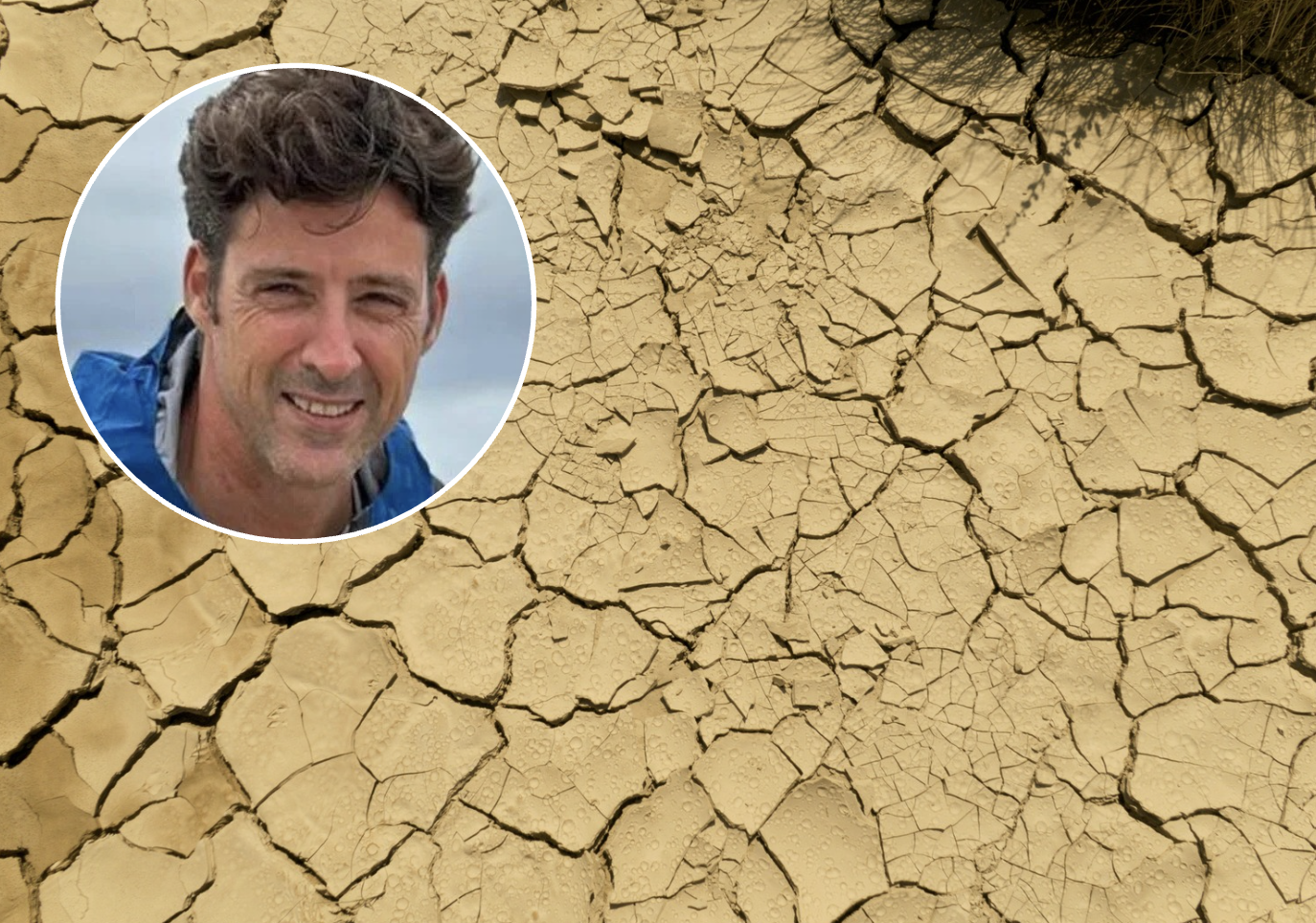

More than half of Andalucia is already desertified, according to a leading expert on the phenomenon – and unless the region radically changes course, the damage could continue for generations.
- Is it correct to say that Andalucia is turning into a desert, or does that oversimplify the reality?
- If nothing changes significantly, what could Andalucia look like in 20 or 30 years?
- What changes would an ordinary person notice first in daily life?
- Could some areas lose population because climate change and water shortages make them less attractive places to live?
- Is it reasonable to think the property market could be affected as concerns about climate risks grow?
- Which sectors of the economy are most vulnerable?
- How much time do we still have to avoid the worst-case scenarios through investment in water infrastructure, water recycling, desalination and other adaptation measures?
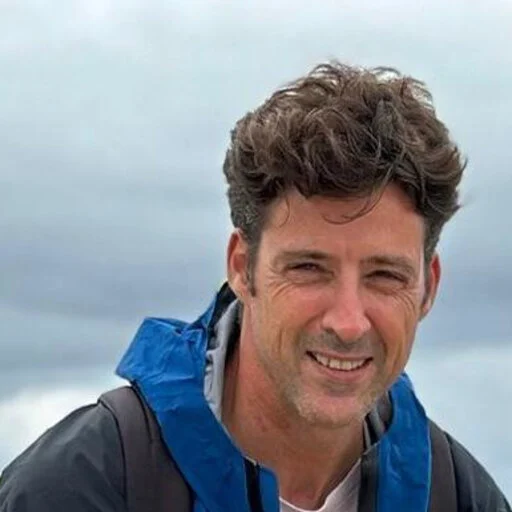
While many people associate desertification with the spread of deserts, Dr Jaime Martinez-Valderrama, one of Spain’s foremost specialists in land degradation, says the reality is far more complex.
In an interview with the Spanish Eye this week, he warns that human activity, from the relentless expansion of irrigation and tourism to the overexploitation of groundwater, is accelerating a process that could leave lasting economic and environmental scars across southern Spain.
Below, Valderrama explains why Andalucia is not ‘turning into a desert’, what desertification actually means, how it could affect everything from water bills and farming to the property market, and why some of the damage may already be irreversible.
Is it correct to say that Andalucia is turning into a desert, or does that oversimplify the reality?
It is more accurate to say that Andalucia is undergoing desertification, or that a significant part of its territory is already desertified.
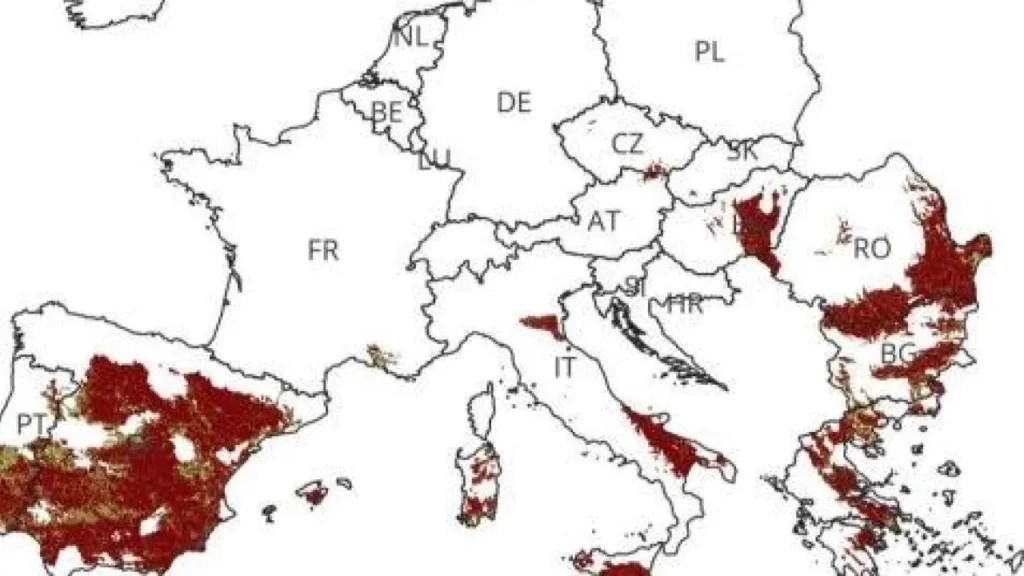
According to the 2025 Map of Desertification in Spain that we published, 57.3% of Andalucia – around 50,000 square kilometres, equivalent to a quarter of all desertified land in Spain – is already desertified.
Across Spain as a whole, the figure is 41%.
In some provinces the numbers are even more striking. Almeria is 83% desertified, largely because of the degradation of its underground water resources, while Sevilla has almost 10,000 square kilometres of desertified land.
The term desertification is inevitably associated with the advance of deserts.
In 2027 it will be 100 years since the word was first used, and it has always been surrounded by misunderstanding.
A desert naturally has very low productivity because of its climatic conditions – it simply rains very little.
In contrast, during desertification, low productivity is acquired. According to the UN Convention to Combat Desertification (UNCCD), it results from a combination of climate variations and human activities.
In other words, without human intervention there is no desertification.
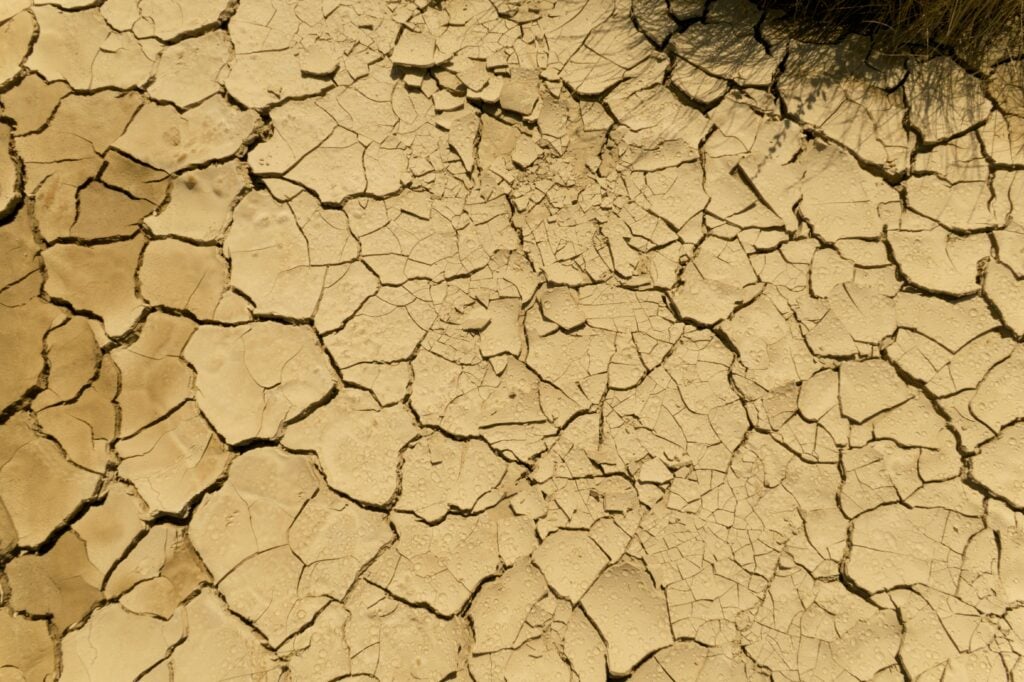
We always stress the importance of portraying the problem accurately. A photograph of irrigated farmland in an extremely dry area – or gullies forming in an olive grove with no vegetation cover – is a much more accurate illustration of desertification than images of deserts or natural landforms such as Tabernas, which have nothing to do with the issue.
However much I explain this, those more visually striking images often end up being used. In one of my recent interviews, after explaining the issue in detail, the article is illustrated with the Tabernas desert, which is not an example of desertification.
If nothing changes significantly, what could Andalucia look like in 20 or 30 years?
We can expect the situation to deteriorate further. The two drivers of desertification – climate change and human activity – are both intensifying.
Climate change is bringing more droughts, more DANAs (isolated high-altitude depressions causing intense rainfall), and a growing mismatch between weather patterns and crop cycles.
Meanwhile, our economic model continues to push for ever greater production: more irrigation, more agricultural output, more tourism – more of everything.
Arid regions simply cannot sustain that pace, and they are beginning to show the strain.
The real problem with desertification is the timescale for recovery. Recharging aquifers, pushing back seawater intrusion into groundwater, or regenerating soils can take centuries.
Reversing desertification is not realistically possible. We are engaged in a constant race to patch up problems because nature can no longer provide what we demand from it when we never allow it time to recover.
What changes would an ordinary person notice first in daily life?
People are already noticing them, although they may not realise desertification is the cause.
For example, replacing groundwater with desalinated water pushes up household water bills. Water is becoming more expensive, and it will continue to become more expensive.
Agricultural production costs are also rising because more fertilisers and other inputs are needed to compensate for declining soil fertility.
Large infrastructure also deteriorates more quickly. As ecosystem services such as water regulation, erosion control and nutrient recycling decline, governments have to make major investments, and ultimately taxpayers foot the bill.
Take reservoirs as an example. Severe soil erosion doesn’t just affect farmers directly. Downstream, reservoirs fill with sediment, reducing their storage capacity.
A reservoir designed to last 50 years may become ineffective after only 20. Providing water to the communities that depended on it then requires costly new infrastructure.
Could some areas lose population because climate change and water shortages make them less attractive places to live?
In both Spain and Andalucia, the population continues to move towards the coast. This increasing concentration places even greater pressure on coastal areas.
It is unlikely that coastal towns will face serious shortages of drinking water because desalination plants will become increasingly common.
Inland areas are different. There, water scarcity could have a greater impact on everyday life because groundwater – the country’s most strategically important water reserve – is already badly degraded in many places.
However, having enough water for people does not necessarily mean there will be enough for agriculture, which accounts for 80–90% of water consumption. Economic activity could therefore suffer, with consequences for communities that depend on farming.
In my opinion, migration towards the coast will continue for some time. Ideally, there should be a better balance between inland and coastal populations, but that will only happen if inland areas can offer viable economic opportunities instead of becoming demographic deserts.
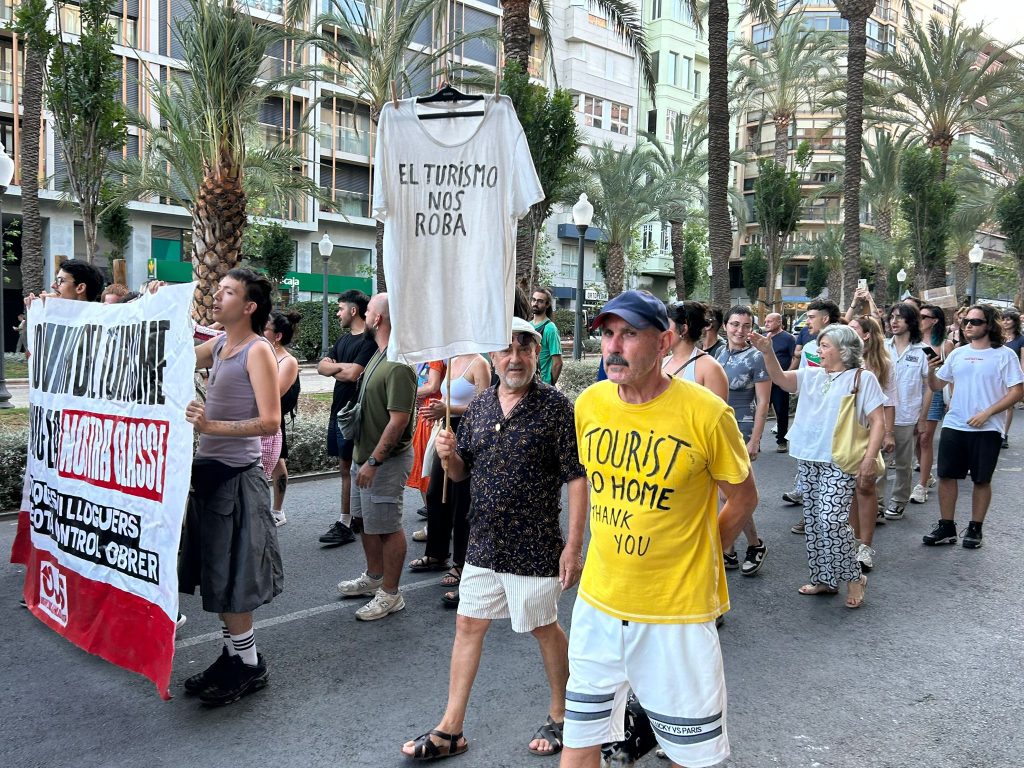
Is it reasonable to think the property market could be affected as concerns about climate risks grow?
I think that is already happening. Spanish holidaymakers are increasingly looking north rather than south.
The Cantabrian coast and Galicia still offer cooler summer days, making them more attractive. Southern Spain is losing some appeal, although foreign tourists continue to arrive in large numbers because of the enduring attraction of sunshine and beaches.
Paradoxically, northern Spain could end up facing more water restrictions than the south because it lacks the infrastructure to cope with prolonged drought.
Take Almeria, for example. Thanks to its extensive desalination capacity – developed to support greenhouse agriculture – droughts are barely noticeable there.
High temperatures may discourage tourists, but water shortages could actually prove less problematic than in other regions.
Which sectors of the economy are most vulnerable?
Without question, agriculture.
Agriculture lies at the heart of Spain’s desertification problem. It is both a major cause of desertification and the first sector to suffer its consequences.
It is also heavily dependent on imported inputs such as water, energy and fertilisers, making it extremely vulnerable to rising energy prices.
How much time do we still have to avoid the worst-case scenarios through investment in water infrastructure, water recycling, desalination and other adaptation measures?
Some areas became desertified more than a century ago and have still not recovered. Those are effectively lost.
Others are degraded but can still be prevented from crossing the point of no return. That will require changing the way we use the land.
Completely avoiding environmental degradation is impossible – it is an inevitable consequence of human economic activity (animals also alter ecosystems). The challenge is to plan our activities so that degraded areas are balanced by land that is allowed to regenerate.
Regeneration is not simply about planting trees. It means allowing farmland to lie fallow, reducing irrigation in some places, easing demographic and tourism pressure along parts of the coast, allowing aquifers to recharge naturally, and maintaining vegetation cover to reduce erosion.
Ultimately, we need to stop trying to squeeze every possible resource out of nature and abandon the mentality that ‘if I don’t exploit it, someone else will’ – the classic tragedy of the commons.
We need to recover a stronger sense of collective responsibility and become less individualistic in our decisions.
Political decisions should not be made with only four-year electoral cycles in mind, but with an understanding that nature operates on timescales that are far longer.
Read more Andalucia news at the Spanish Eye.