

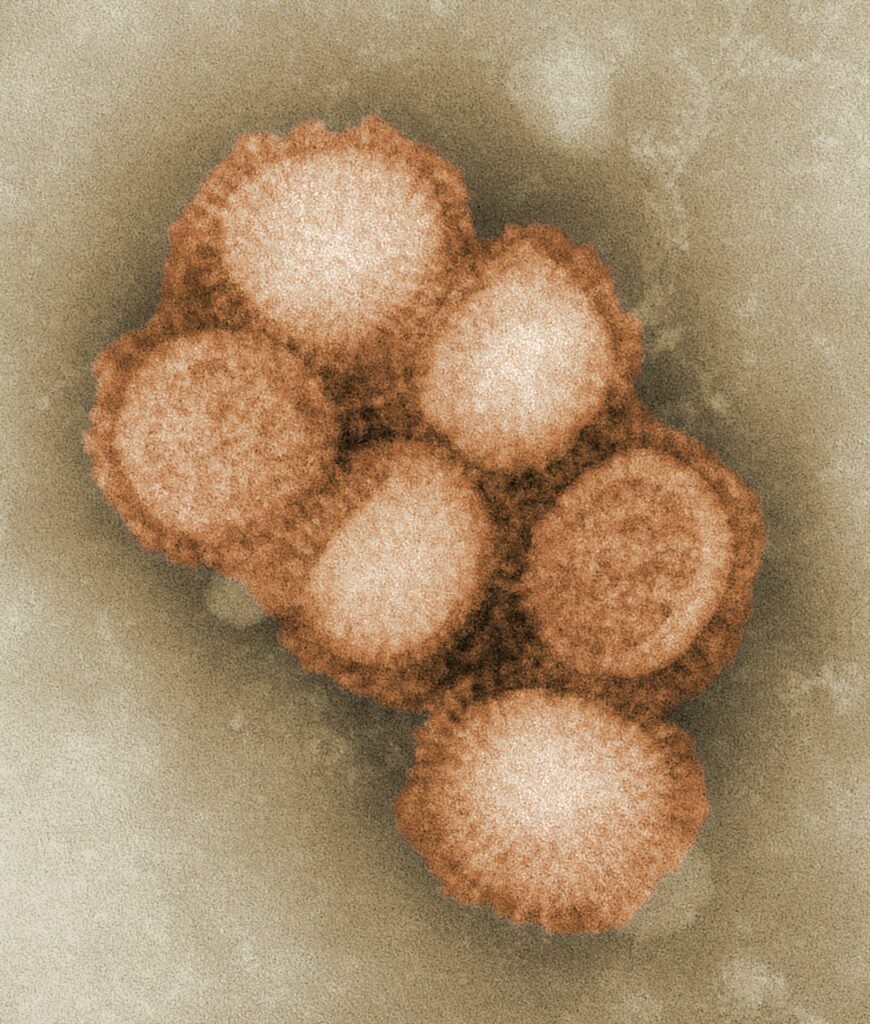
Health officials in Catalonia have confirmed a rare human case of swine flu (Influenza A H1N1) in Lleida.
They were required to notify the World Health Organisation (WHO) under international regulations.
The patient, an 83-year-old with chronic illnesses, tested positive after attending hospital for unrelated conditions.
He reportedly had no flu symptoms at the time and is now said to be ‘perfectly fine,’ according to Catalan health authorities.
No link to pigs, source unknown
In a twist that has puzzled investigators, neither the patient nor his close contacts had any known exposure to pigs, farms or other animals.
All close contacts tested negative and showed no symptoms.
Officials have ruled out lab errors and stress that the risk to the general public is considered ‘very low.’
The case was reported to Spain’s national health alert system and the WHO on February 13.
Not African swine fever
Authorities were quick to clarify that this case is not related to African swine fever, which affects wild boar and does not infect humans.
Spain has recorded just four human cases of this type of swine flu since 2009, with the most recent prior case detected in Catalonia in 2024.
Should you be worried?
Health experts say isolated cases happen occasionally, usually linked to close contact with infected pigs. So far, there is no evidence of wider spread.
However, epidemiologists caution that swine flu viruses have caused pandemics before – most notably in 2009 – and would only become concerning if more cases start appearing.
What is swine flu?
Swine flu viruses (H1N1, H1N2, H3N2) circulate in pigs worldwide and can sometimes infect humans. It spreads like seasonal flu – through coughs, sneezes, droplets and contaminated surfaces.
Symptoms are similar to regular flu:
- Fever
- Cough
- Sore throat
- Muscle aches
- Fatigue
- Headache
- Sometimes vomiting or diarrhoea
Severe cases can lead to pneumonia or worsen existing health conditions.