
Spain’s telecoms market is competitive, modernised, and heavily advertised. It’s also one of the most stressful utilities (OK, electricity isn’t great either) – especially if you’re new to Spain, speaking little Spanish.
- ‘Ayuda cliente’: AI chatbots and disappearing WhatsApp agents
- When a returned router is ‘lost’ – in the telco’s own warehouse
- Winning a reclaim case isn’t the same as being compensated
- Debt collectors: persistent but not judges
- Reputation versus reality
- Consolidation and confusion
- Is there an alternative to Spain’s traditional telcos?
- Dealing with complaints: cancel the service or shout from the rooftops!
- Do your research, stay calm, don’t give up
- Pro advice
- Five top tips to escalate a telco dispute in Spain
From ‘phantom’ services to billing errors, AI bots, and debt collecting agencies, the problems can be mentally challenging.
Consumer issues include bills that don’t match the package sold, ‘temporary’ discounts that quietly expire, data allowances altered mid-contract, services ‘activated’ (and billed) that never worked, and cancellations (‘bajas’) that terminate everything except your monthly invoice!
In 2024, Spain’s telecom consumer agency, Oficina de Atención al Usuario de Telecomunicaciones- OAUT) received almost 10,000 complaints and resolved more than 12,000.
Many involved bundled services (e.g. fibre optic internet, mobile SIMs, and TV streaming services together). If you’re ‘dialling a disaster’, you’re not alone! It’s a national pursuit.
‘Ayuda cliente’: AI chatbots and disappearing WhatsApp agents
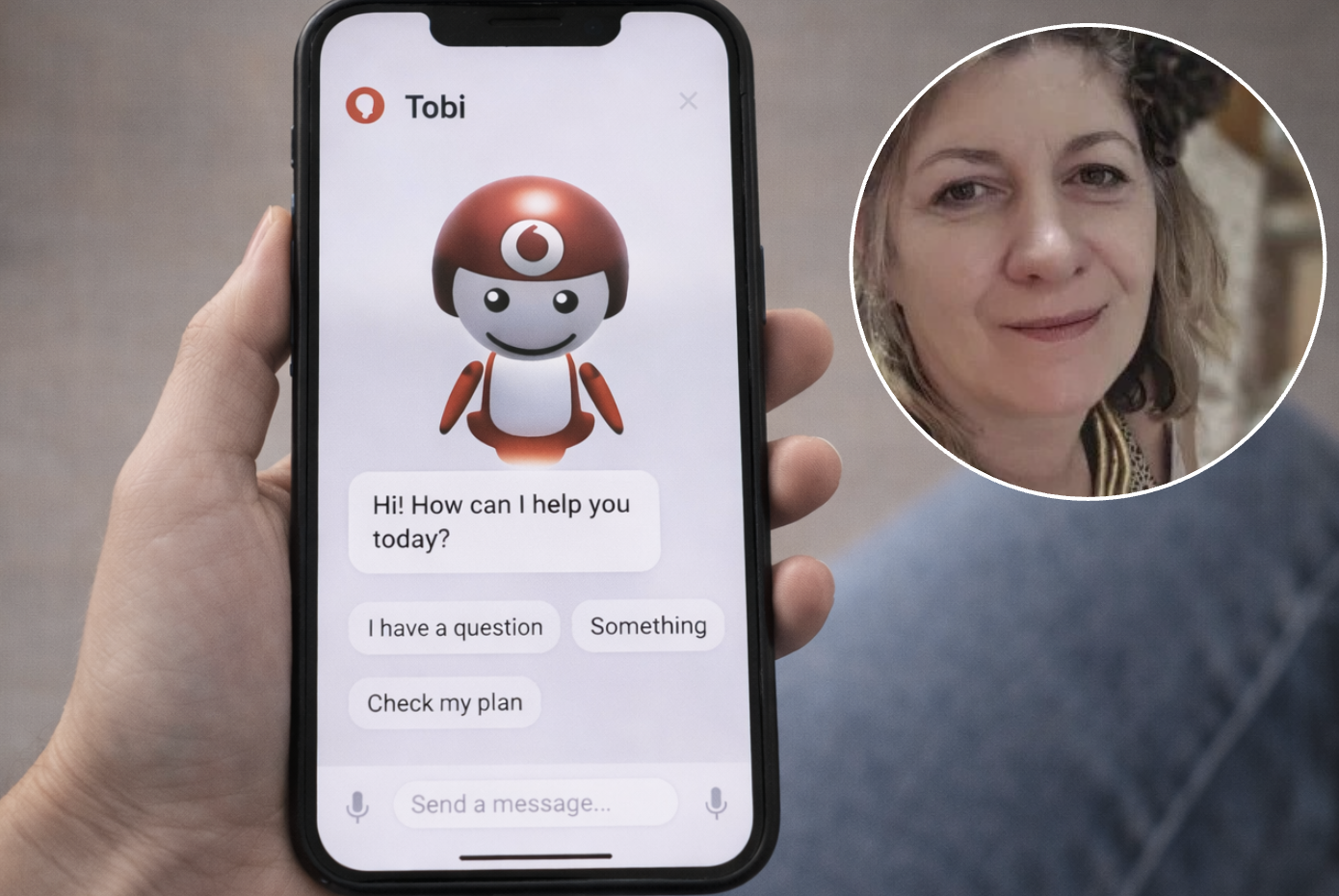
In the new world of AI, most telcos route customers through virtual assistants before a human being is reached. Orange has Djingo. Vodafone has TOBi.
Yoigo has a WhatsApp-based ‘ayuda cliente’, which promises a response ‘within 10 minutes’. Is the agent real? Who knows.
With Yoigo’s WhatsApp, a response may arrive an hour later – when you’ve gone out to do something else! If your reply isn’t immediate, the conversation times out and closes automatically. Then, you must start again from scratch. Argh!
AI bots are fine for checking your data usage and call centre opening hours. They fail when something goes seriously wrong. Disputes about invoices, failed ‘bajas’, and systemic dysfunctions require complex explanations, reference numbers, and back-office systems staffed by humans. Ask for a supervisor or manager.
When a returned router is ‘lost’ – in the telco’s own warehouse
One dysfunction involved the reporter’s returned router. The device was sent to Yoigo using tracked mail. The problem? The tracking number contained ONE wrong letter at the end of the code.
Despite the Correos tracking system clearly showing that the parcel was in Yoigo’s own warehouse, agents said it hadn’t been received. They explained how to return it again or they would charge a €100 fine.
This debacle continued until a consumer advisor phoned and said a lawyer was contacting the small claims court. The ‘missing’ router was located within five minutes, and the case closed.
Many disputes are stuck – not because they’re complicated, but because of low staff motivation to fix them. When ignoring the customer costs more than solving the problem, the response improves!
Winning a reclaim case isn’t the same as being compensated
In another case, a Movistar central office in Madrid agreed in the consumer’s favour about erroneous charges. The refund never arrived. A debt collection agency chased payment regardless.
Even when you win a case, you can still be fighting for your consumer rights. A decision from one department doesn’t automatically register with others – such as billing systems, credit files, or third-party debt agencies.
Debt collectors: persistent but not judges
When a disputed bill is passed to a debt collection agency, the consumer might panic. Spanish debt collectors look scary. Remember that they can’t seize your assets or enforce payment without involving courts.
However, they can harass you with phone calls and attempt to place you on credit blacklists.
It’s important to respond to your case in writing, clearly stating that the amount is disputed, why it is disputed, quoting complaint reference numbers, and attaching evidence. Silence can look like compliance.
Reputation versus reality
Online ratings for Spain’s major telcos aren’t great. On Trustpilot, the ratings out of five are: Vodafone 1.1, MásMóvil 1.1, Orange 1.2, Yoigo 1.2, Movistar (1.3), while DIGI ‘wins’ on 1.5.
These scores aren’t scientific surveys. Consumers might not leave reviews when everything works. However, it’s not a pretty picture.
Spain’s telcos also feature regularly in FACUA’s long-running ‘Worst Company of the Year’ awards – along with Ryanair! In 2019, Vodafone won with 36% of the vote, having ranked in several previous years. Movistar was the ‘champ’ in 2010 and 2011.
Consolidation and confusion
The 2024 merger of Orange and MásMóvil (which took over Yoigo in 2016) – operating as MásOrange – created Spain’s largest telco. Theoretically, upscaling can bring greater investment in fibre and 5G coverage.
For consumers, mergers can result in short-term billing errors and a lack of coherent ‘ayuda’.
The reporter has first-hand experience. After 10 years of service from Yoigo, the billing suddenly ‘broke bad’ after a fibre optic service was removed from a ‘bundled’ contract.
Despite the contract being permanent, wildly fluctuating bills then arrived. When the service was cancelled in January 2026, the matter was suddenly resolved with proactive calls from Yoigo!
Is there an alternative to Spain’s traditional telcos?
For people living in remote areas with no ‘line of sight’ of a mast, satellite broadband is an option. Musk’s Starlink operates widely in Spain, offering consistent speeds, independent of terrain.
The service is pricey. Hardware costs from €175 (you might find a discounted offer) and monthly fees are €60–70. For digital nomads, this is better than unreliable hotspot routers and ‘unlimited’ SIMs with no signal.
There’s a limitation: Starlink provides internet access, not phone calls. It’s not a replacement for your mobile phone.
Dealing with complaints: cancel the service or shout from the rooftops!
If you have problems with a company, there is one route that many consumers underestimate. Cost them money by turning it off or go public!
Cancelling your service can lead to resolutions, refunds, and being offered a better deal.
Posting your problem on their social media can produce faster results than the small claims court. Companies dislike negative content – especially if it goes viral. However, the complaint should be calmly presented – not a Karen rant or with swearing!
Telling a journalist can also help – especially if your case highlights a systemic issue rather than a one-off error.
Do your research, stay calm, don’t give up
Disputes with telcos can be exhausting. Nobody likes endless calls to agents who pass you like a parcel – perhaps between the national helpline and the physical store that opened your contract. Many calls are mysteriously terminated before you explain your problem! Then, you must repeat it 20 times!
Consumer issues are resolved by paper trails, evidence, persistence, and knowing when to escalate. You should never be aggressive – but do be informed. You could ask your local gestor to call in perfect Spanish.
In a sector where contracts are treated as flexible, the consumer must know (and apply) their rights – or employ someone who does.
Pro advice
Lucy Hayes Logan of Solving Spain says: ‘Gather maximum evidence to support your claim. This includes everything from invoices to screenshots – although the latter may not be admissible in court. An online login with the company makes things easier, as you can access previous bills on their customer service portal.
‘Sometimes, they require you to go in-store, so the more evidence you take, the better you can support your claim.
‘Drawing a timeline of events provides greater context. For example, if a technician visits the property, mark the date, so you can refer to it later.
‘These issues are never ‘fun’. Most importantly, don’t lose hope, as that sixth phone call might be the one!’
In conclusion, yes, Spain’s telcos are “difficult” to deal with in person. The solution is to stay calm, keep records of every communication, and carry on dialling!
Five top tips to escalate a telco dispute in Spain
1. Complain to the company first
Always do this in writing and ask for a complaint reference number. Keep all correspondence.
2. If nothing happens after a month
Escalate to the national telecom users’ office or a consumer organisation such as OCU or FACUA. Keep your evidence and timeline.
3. Consider the small claims court
For disputes under €2,000, you can usually start a claim yourself, without a lawyer or court fees. Simply demonstrating your rights might change the situation.
4. Don’t ignore debt collectors
Respond in writing, state that the debt is disputed, and attach evidence.
5. Use forums
Public social media posts and – occasionally – journalists can succeed where private emails fail.