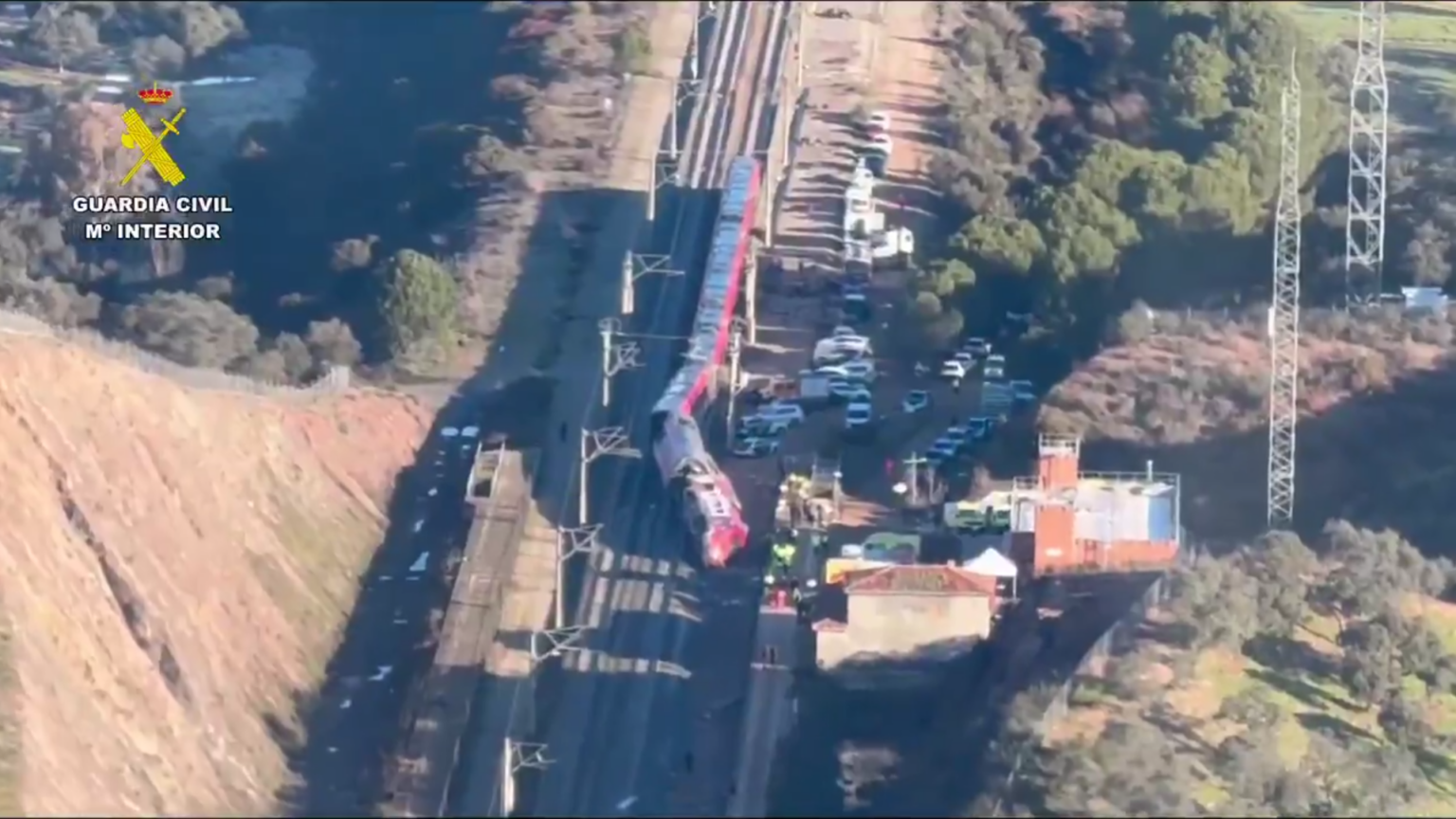

The fatal train crash in Cordoba that has so far claimed 39 lives was not due to excessive speed, the president of Renfe has said.
Alvaro Fernandez made the comments during a radio interview with Cadena SER on Monday.
He told reporters that the trains involved were travelling at 205 and 210km/hr at the time of the incident.
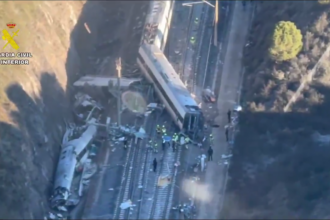
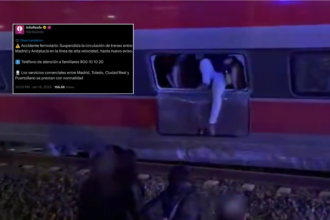
At around 7.39pm, the last two carriages of a Malaga-Madrid Iryo train derailed and ended up on the opposite track, just as a Renfe Alvia train was passing.
The Renfe train then collided with the Iryo carriages, sending it ‘flying’ into a four-metre embankment.
Fernandez stressed that both speeds of the affected trains were below the maximum permitted on the affected section of the track – which is 250km/hr.
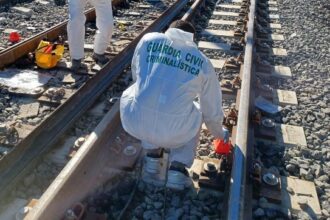
The investigation into the cause of the accident remains ongoing and no definitive explanation has yet been established.
Renfe has warned that restoring the damaged infrastructure and removing the wreckage could take several days, meaning continued disruption of operations between Andalucia and Madrid.
While avoiding speculation, Fernandez pointed towards a possible technical failure, suggesting that the origin of the accident could lie either in the train itself or in the infrastructure, rather than in human error.
In this context, he referred to the so-called LZB safety and signalling system, which is designed to prevent driving errors.
The system is capable of stopping train traffic by triggering emergency braking if it detects an obstacle on the track.
However, the available reaction time was extremely limited, as only 20 seconds passed between the derailment of the Iryo train and the collision with the Alvia service.
Regarding the condition of the line, Fernandez recalled that a comprehensive overhaul was completed in May last year. He said the infrastructure should have therefore been in ‘optimal condition’.
He warned that the Madrid–Andalucia high-speed line could remain closed for up to four days due to the complex work required to remove damaged trains, repair the track and restore affected systems.
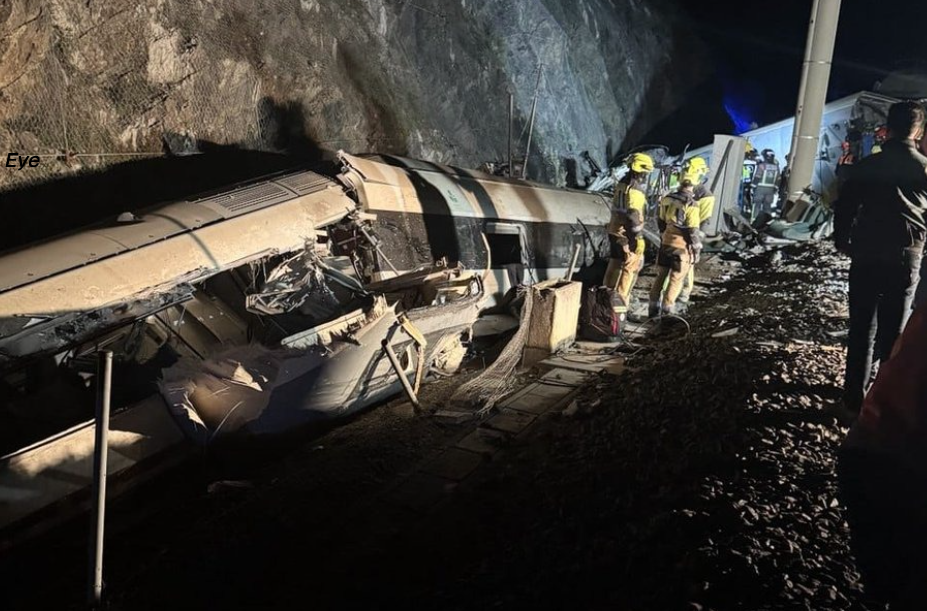
Evidence so far suggests the tragedy began with the derailment of the final two carriages of the Iryo train.
After leaving the track, those carriages ended up on the adjacent line just as a Renfe Alvia train was approaching.
The resulting collision caused the first two carriages of the Alvia train to fall down a nearby four-metre embankment.
The events unfolded within seconds, limiting the scope for an automatic system response and shaping the scale of the accident.