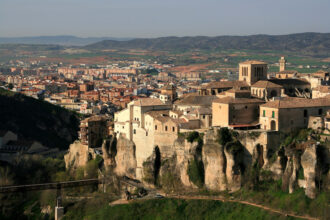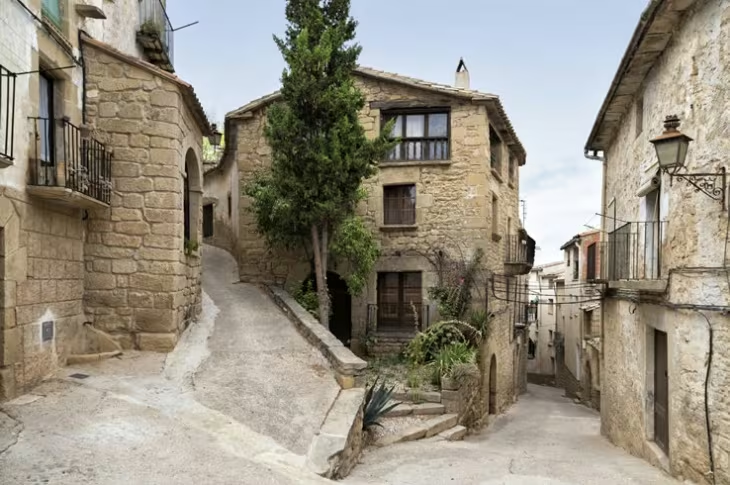

Thanks to its incredibly rich history, Spain is filled with ancient towns and villages that appear frozen in time.
One such gem is tucked away in eastern Teruel, in the Matarraña region of Aragon, and you’ve likely never heard of it.
Calaceite is a town where olive oil once defined wealth, culture and daily life, leaving its mark on stone façades, noble coats of arms and a historic centre that rewards slow wandering rather than hurried sightseeing.
Set between the valleys of the Matarraña and Algars rivers, Calaceite has managed to turn its heritage into an economic engine without losing its soul.
Despite its modest size, the town offers everything needed for an easy escape: characterful accommodation, restaurants rooted in local produce, and small shops closely linked to olive oil and wine.
For centuries, Calaceite was one of the area’s leading olive-producing centres, and that prosperity translated into a remarkable architectural boom between the 18th and 19th centuries.
The historic heart of Calaceite was declared a Historic-Artistic Ensemble in the 1970s and later awarded protected heritage status.
Life revolves around the Plaza Mayor – also known as Plaza del Sitjar – an irregular, atmospheric space shaped by arches, covered walkways and buildings that adapt naturally to the slope of the land.
From here, streets radiate towards former gate-chapels that once guarded a town built on faith, trade and agriculture.
Dominating the skyline is the Church of the Assumption, a grand Baroque structure from the 17th and 18th centuries, whose monumental façade anchors the town visually and symbolically.
Nearby stands the Renaissance-style town hall, reinforcing the sense of strolling through an inland Italian village where beauty and function were never separate concerns.
Beyond the old town, Calaceite holds a deeper past still. The Iberian settlement of San Antonio, dating from the 5th to the late 3rd century BC, offers a glimpse into the area’s strategic importance long before Roman rule. Walking among its remains adds historical depth to a landscape already rich in stories.
January is also an ideal time to explore the surrounding countryside without the intensity of summer heat.
Nearby stands the Roca Caballera, a striking rock formation wrapped in legend. Local tradition claims that Templars and members of the Order of Calatrava once held mass here, using the stone itself as a natural altar – crosses carved into the rock still visible today.