
The baby-faced apprentice matador tosses the bull’s ear to his adoring fans as they rush to catch it.
The 16-year-old has just spent the last 20 minutes tormenting the animal before plunging a sword between its shoulder blades.
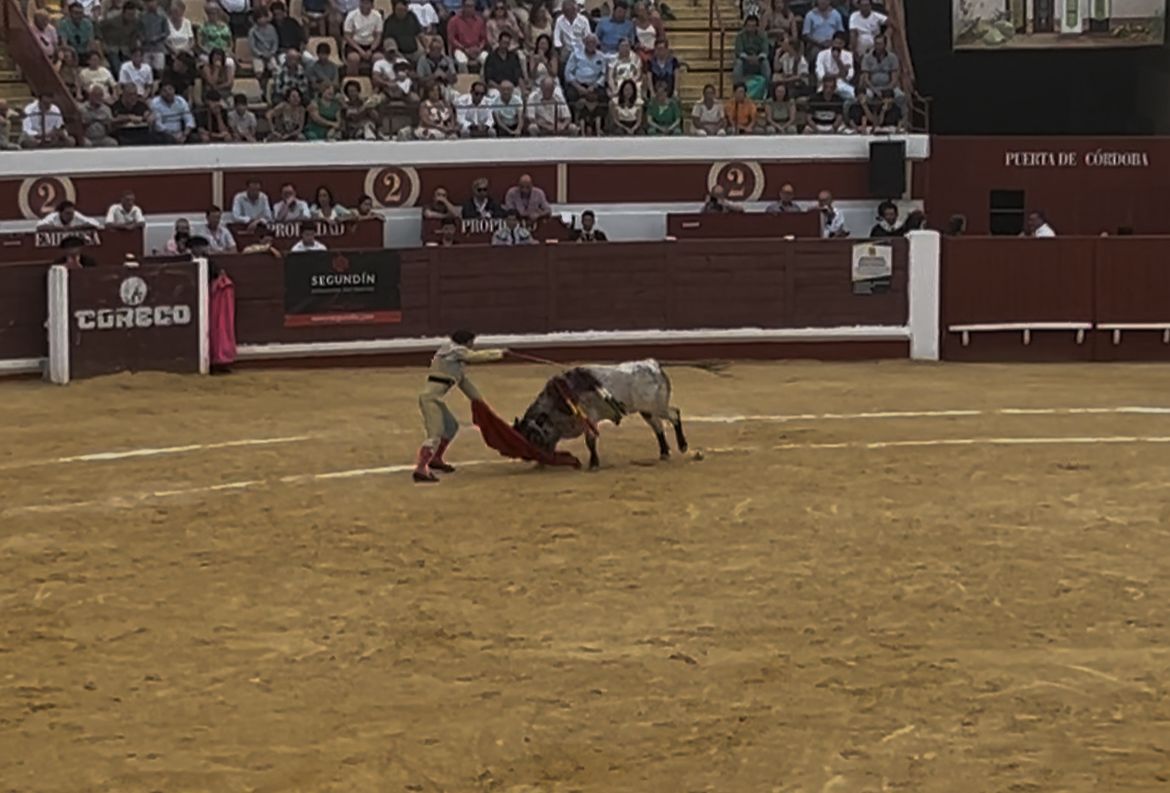
His name is Manuel Real ‘Realito’, and he is one of six teens who took part in the Grand Final of the Becerradas Circuit, held in Lucena, Cordoba on September 7.
The spectacle, attended by the Spanish Eye, was free to enter and saw hundreds of families fill out the local bullring, including young children and pensioners.
The event was the culmination of multiple previous rounds, in which a total of 30 so-called ‘becerristas‘ battled it out to make it to the final showdown.
It’s the most amateur of bullfighting events, using the youngest of bulls (aged a maximum of two years old).
Manuel was awarded two ears and a tail – a rare honour reserved for the most exceptional displays.
The teen was given 47 points by the judges, the highest score of the night. Wearing a baby-blue traje de luces embroidered with gold, he brought the crowd to its feet with a display that mixed fearlessness with showmanship.
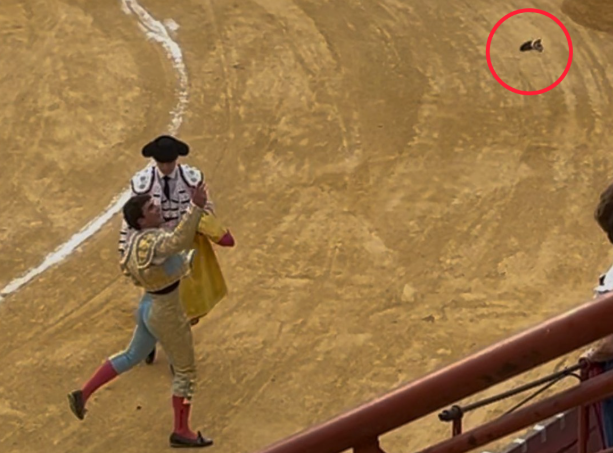
Video shows him parading the severed ears and tail around the ring during his victory lap, kissing scarves and gifts thrown by fans before tossing them back.
At one point, a young woman serenaded him from the stands with a flamenco song about the love of bullfighting, while others unfurled banners emblazoned with his name and photograph.
He began the fight in dramatic fashion – sitting on a wooden chair to taunt the bull, deliberately raising the risk of being gored but delighting the audience.
Later, as he worked through his ‘passes’ with the cape, he skimmed closer to the horns than anyone else, unlike two rivals who were tossed into the air and trampled. Neither suffered serious injury.
‘I am euphoric… I’m without words, I can’t describe what I’m feeling,’ Manuel told the crowd before the prize ceremony.
Tradition dictated that, after winning two ears, he was carried from the ring on the shoulders of jubilant spectators.
Local press swooned over his Cordoba display, with one paper hailing it as ‘a performance unbecoming of his age – of sublime artistry and exceptional bullfighting.’
Manuel, who trains at a bullfighting school (Escuela Taurina) in Camas, on the outskirts of Sevilla, later posted on Instagram a photo of himself clutching the bull’s tail. ‘Lucena, I will never forget you, you were very special,’ he wrote.
On the podium, Manuel was joined by Pablo Sanchez of the Almería school, who finished second on 34.5 points (one ear), and Rojeli Pajuelo of Ubrique, who took third place with 33 points but left empty-handed.
The becerristas came from different bullfighting academies across Andalucía, where the centuries-old bloodsport still holds sway – and where it is beginning to attract new, younger fans.
Locals told the Spanish Eye the revival is being fuelled by charismatic young fighters who have built followings on social media, as well as a renewed push among right-wing youth to embrace traditional Spanish symbols.
‘It’s making a bit of a comeback with young people because there are some inspiring fighters,’ said Juan Ruiz, 74.
Asked what he thought of activists calling for a ban, he added: ‘If I told you what I really think, you wouldn’t be able to print it.
‘I’ve been coming to bullfights since I was a kid and I turned out fine, this industry brings hundreds of millions of euros to the economy, a lot of jobs rely on it.
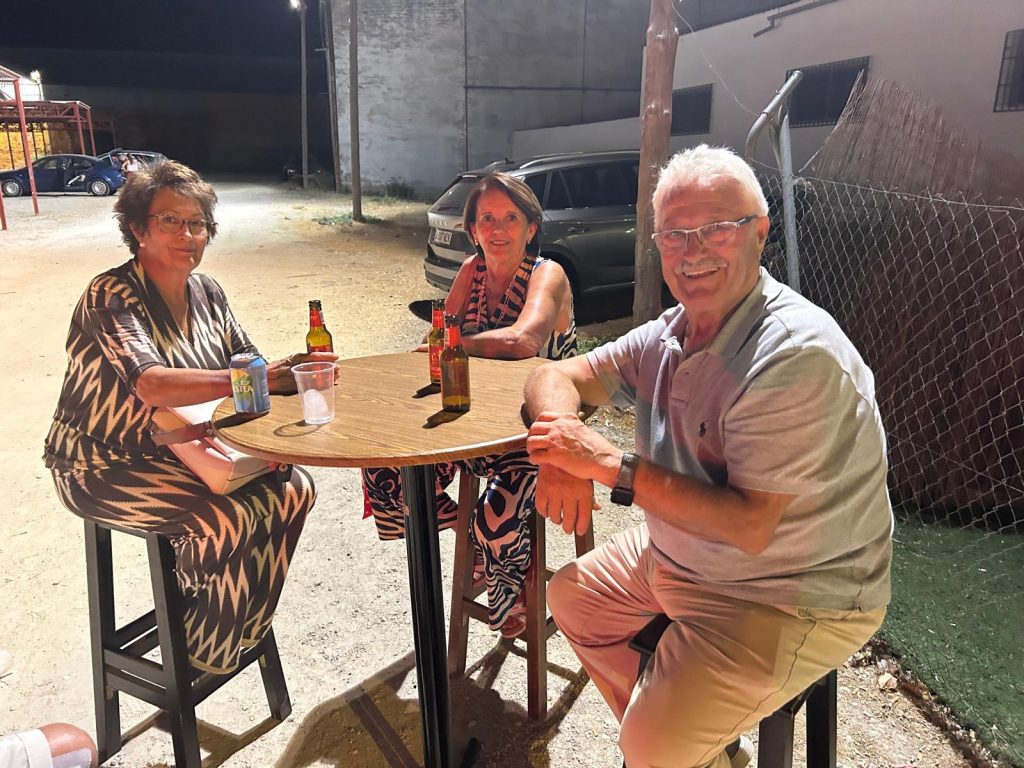
‘And if there was no bullfighting, this breed of bull would simply cease to exist.
‘If you don’t like something, don’t go, no one is forcing you, but respect the culture and traditions of the people that do.’
Sharing his view is the Mayor of Lucena, Aurelio García, who stood before the crowd at this year’s festival and promised: ‘We’re very happy to have enjoyed another year of this event – and we WILL hold it again next year!’
The path to the ring
Most becerristas, aged between 16 and 18, dream of following in the footsteps of stars like Andres Roca Rey, a 28-year-old Peruvian who can earn up to €400,000 per fight.
But the road to becoming a fully-fledged matador is long, brutal and often unrewarded. Beginners fight calves (becerros) as part of the becerradas circuit, sometimes paying for the chance to perform.
If they show promise, they move on to novilladas with bigger bulls, though pay remains rare until the milestone alternativa ceremony officially ordains them as professional matadors.
For many years, they face enormous risk with little financial return. The dangers are very real: just this month, a 22-year-old fighter was gored to death in neighbouring Portugal.
Only a handful ever make it to the top, but those who do can secure fame, wealth and access to high society.
Critics call it ‘the ultimate cruelty’
Animal rights campaigners say becerradas are the darkest side of the bloodsport.
‘Becerradas are even more controversial because they are performed on animals that are babies, typically ranging from six months to one year old… It’s the ultimate cruelty,’ said PACMA national secretary Javier Sanabria.
‘Novillos are animals between two and four years old. The Spanish Animal Protection Law condemns the use of animals of that age for any type of work, but that same law makes an incomprehensible exception for bulls. As if bulls weren’t animals and didn’t suffer.’
He added: ‘There are people with a lot of power who enjoy watching a spectacle that tries to torture an animal to death… they try to indoctrinate children to believe that this is normal, that torturing animals, if their elders say so, is okay.’
Sanabria argued that small but powerful circles are determined to recruit new generations, despite polls showing up to 89% of Spaniards oppose bullfighting.
‘Within that small percentage that does support it, they promote it among their children and groups, inducing them to become figures, gain fame and money.
‘Typically, bullfighters are people who, for various reasons, lack education or training and see the opportunity to become famous, rich, and rub shoulders with high society.
‘Bullfighting thrives on subsidies; without public money, bullfighting wouldn’t exist in Spain. Ranches, bullring owners, bullfighters… they all receive subsidies, and these shows are maintained thanks to that money. When it became clear a few years ago that bullfighting would end without these subsidies, the right-wing politicians of the time protected it and required by law to maintain it by investing public money in it.’
Yet he did not spare the left either: ‘They look the other way because their voters are bullfighting and hunting enthusiasts, and taking a stand against it could cause them to lose votes. They talk about it, they insinuate it, but they do nothing to prevent it.’
A tradition under pressure
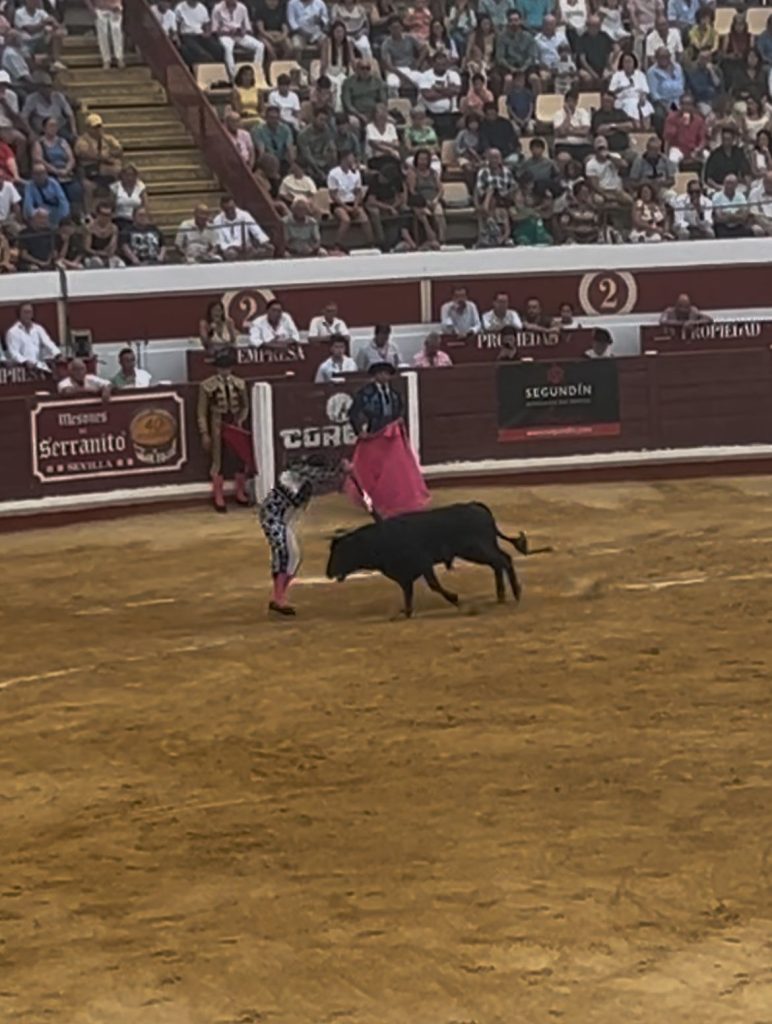
Despite widespread opposition, becerradas finals continue to draw packed houses. In Córdoba, the crowd ranged from toddlers to pensioners, filling the arena for free entry. The spectacle followed the classic ritual: calves chased and weakened by assistants, speared with banderillas, and finally brought down by apprentice matadors.
Each kill was met with cheers of ‘ole!’ and waves of white handkerchiefs. Judges awarded ears and tails depending on artistry and the cleanliness of the kill, while the carcasses were dragged out of the sand by horses to make way for the next fight.
Occasionally, a bull displaying exceptional courage is pardoned and sent back to breed – a rare honour. Some bulls, like the notorious Ratón (Mouse), have even achieved their own dark fame after killing spectators during running festivals.
Schools and students
Andalucía is the beating heart of Spanish bullfighting, home to 70 bullrings and 31 bullfighting schools. Around 400 students are enrolled across the region, starting as young as 12. They are drilled in cape technique, posture, agility and etiquette, alongside lessons in history and cultural pride. Increasingly, they are also taught how to respond to critics.
The system is designed to produce the next Roca Rey or José Tomás, though only a tiny percentage succeed. For most, the dream ends on the novice circuit. For a few, the rewards are enormous – up to hundreds of thousands of euros per fight, global travel and celebrity status.
Still, the tide of public opinion seems to be turning. A poll earlier this year found 78% of Spaniards are not fans of bullfighting, though less than half favour stripping it of its official cultural heritage status. Political divides remain stark, with right-wing parties defending the practice, and local bans overturned in regions like Mallorca and Marbella.
For now, Andalucía continues to stage the bloody spectacle in arenas like Seville’s Maestranza- the ‘Cathedral of Bullfighting’ – where the tradition first took its modern form under Ronda-born Pedro Romero in the 18th century.
Whether it remains a pillar of Spanish culture, or a relic of the past, depends on whether those young becerristas can carry the flame – or whether the protests grow too loud to ignore.
Read more Andalucia news at the Spanish Eye.