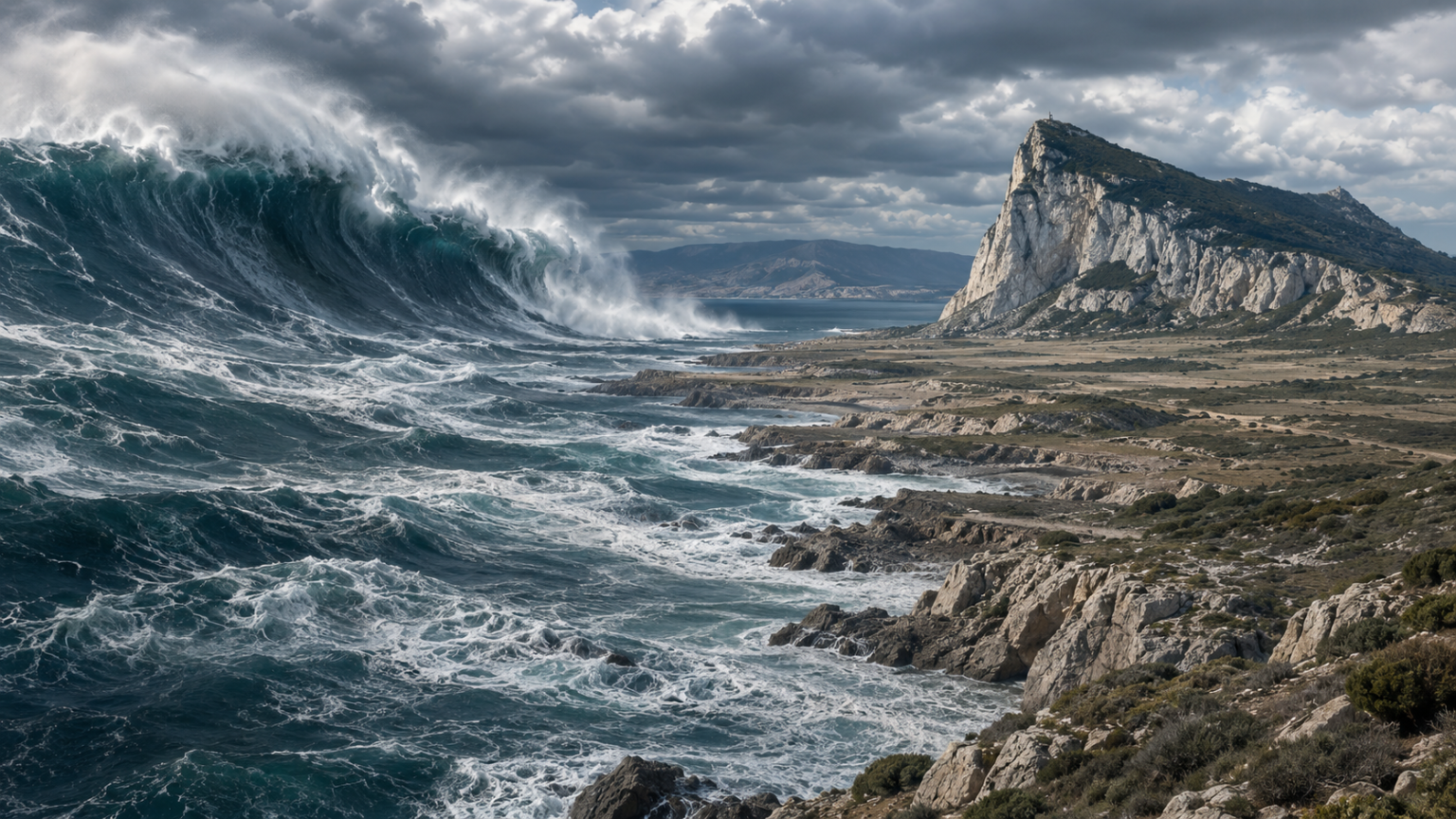

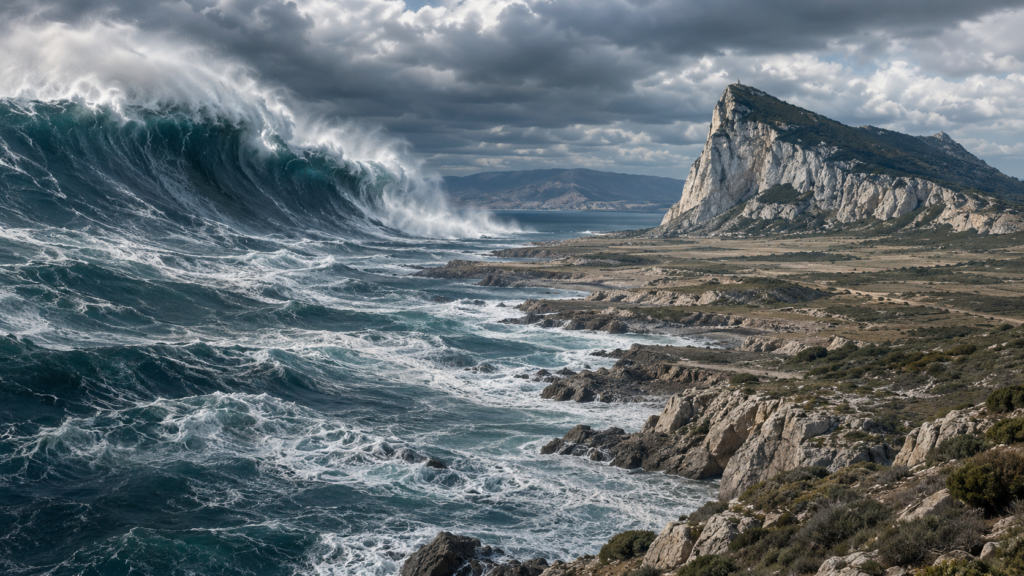
A huge tsunami may have struck the Strait of Gibraltar and swept into the ancient marshes of Doñana around 45,000 years ago, according to an international research team.
Scientists led by the universities of Huelva and Sevilla identified a buried sediment layer that suggests a powerful marine flood reached land now within the national park.
Their study, published in Minerals, dates the event to between 44,000 and 50,000 years ago.
That overlaps with evidence of ancient megatsunamis around Gibraltar, raising the possibility that both locations were affected by the same event.
The main discovery came from a 93-metre borehole drilled by the Geological and Mining Institute near Palacio de las Nuevas, in southwestern Doñana.
Within the core, researchers examined a layer just 30cm thick containing marine remains mixed with sediments from ancient freshwater or brackish marshes.
They analysed its minerals, chemistry and microscopic marine organisms, then applied three independent statistical methods.
All supported a tsunami origin, with one assigning the layer a classification probability of 95.05%.
The deposit’s location is particularly significant. Sea levels were lower at the time, and researchers estimate the site lay between seven and 30km inland from the ancient coastline.
Marine material reaching that far inland suggests extensive flooding, potentially channelled through waterways and marshland.
Huelva University palaeontology professor Francisco Ruiz also highlighted marine deposits covering cracks in Gibraltar’s cliffs, dated to a broadly similar period, although further evidence is needed to establish whether they came from the same event.
One possible cause was a major collapse of a Canary Island’s flank around 50,000 years ago, which could have generated powerful waves towards southwestern Europe.
However, the researchers have not established what caused the suspected tsunami or how far its effects extended.
The research team also includes specialists from Madrid’s Autonomous University, Rey Juan Carlos University and the University of Lisbon.
Read more Andalucia news at the Spanish Eye.