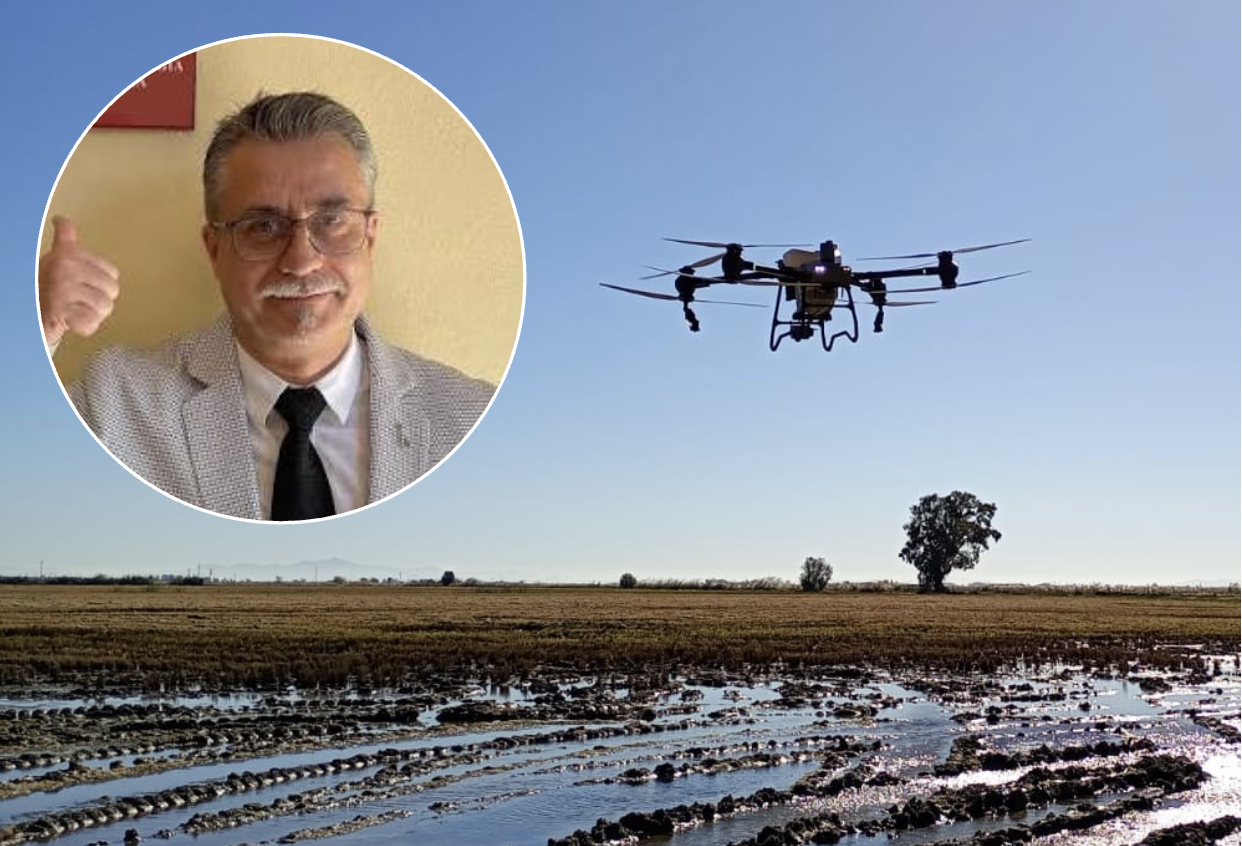

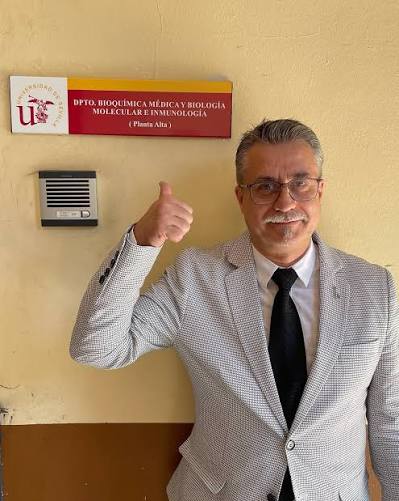
West Nile virus has likely established itself permanently in Andalucia and should now be expected to circulate in the region for years to come, a leading Spanish immunologist has confirmed.
But Professor Alfredo Corell Almuzara urged residents and tourists not to panic amid this summer’s surge in infections, stressing that around 80% of people who catch the virus never develop symptoms at all.
Speaking exclusively to the Spanish Eye, Corell said Andalucia now provides the environmental conditions necessary for the virus to maintain its natural cycle between birds and mosquitoes.
‘Yes, we probably have to assume that West Nile virus is now part of our ecosystem,’ he said.
‘But that doesn’t mean we’re going to have a worrying situation every summer. Those are two very different things.’
His comments come amid renewed concern over West Nile in Andalucia, particularly in Sevilla province, where dozens of human infections have been detected this summer and an 82-year-old with pre-existing health conditions has died.
Corell said the intensity of transmission is likely to fluctuate considerably from one year to another.
‘There will be years with more circulation and others with much less, as we have just seen between 2025 and 2026,’ he explained.
‘So I would talk more about coexistence and surveillance than threat.
‘We know the virus is here, we know how it is transmitted and we know what we can do to reduce the risk. And that is very different from facing a new or unknown virus.’
Why are cases increasing?
There is no single explanation behind the outbreaks.
Corell described West Nile as an ecological ‘puzzle’ requiring the right combination of birds, mosquitoes, the virus itself and favourable environmental conditions.
Heavy rainfall can create more breeding grounds for mosquitoes, while high temperatures accelerate both the insects’ life cycle and the reproduction of the virus inside them.
Increasingly long periods of warm weather could also extend the season during which transmission is possible.
Birds are another essential component because they act as the virus’s natural reservoir.
However, Corell cautioned against assuming that bird populations simply develop immunity following one outbreak.
Bird populations constantly change, with new animals being born and migratory species arriving and departing.
And there is another reason Spain is finding more West Nile, as authorities have become better at looking for it.
‘We now monitor the virus much better,’ Corell said.
‘We look for it in mosquitoes, birds, horses and people, and we diagnose mild cases which, a few years ago, probably would have gone unnoticed.’
How dangerous is West Nile?
Despite the potentially frightening consequences of severe West Nile disease, Corell said the statistics need to be kept firmly in perspective.
Approximately eight out of every 10 infected people experience no symptoms whatsoever.
Most of those who do become ill experience symptoms such as fever, headache, muscle aches, fatigue and general malaise for several days – something Corell compared to a particularly bad cold.
The most serious neurological complications are considerably rarer.
‘Less than one in every 100 infected people develops the serious neurological forms, such as meningitis or encephalitis,’ he said.
‘That’s why we have to take it seriously within public health teams, but we shouldn’t give people the impression that simply going outside in Andalucia represents a significant risk.
‘We have to deal with the virus, not live worried about it.’
Who is most at risk?
Age is one of the most important risk factors.
People aged over 65, those who are immunosuppressed and people suffering from certain chronic illnesses face a greater risk of developing serious complications.
For most people, the immune system controls the virus during the early stages of infection and prevents it from reaching the nervous system.
But those defences can be less effective among vulnerable people, allowing the infection in rare cases to reach the brain or meninges.
Corell said immune defences naturally weaken with age and can also be suppressed by treatments for autoimmune or inflammatory diseases, following organ transplantation and during some cancer treatments.
That helps explain why the same infection can be entirely unnoticed by one person but cause serious disease in another.
‘This summer’s death of an 82-year-old person with previous health conditions reminds us precisely of that,’ Corell said.
‘Although the overall fatality rate of the virus is very low, we must particularly protect vulnerable people.’
How can you protect yourself?
For individuals, Corell’s advice is remarkably straightforward.

People spending time in mosquito-heavy areas should use insect repellent, particularly around dawn and dusk, while mosquito screens can provide additional protection inside homes.
Residents should also remove standing water from terraces, patios and gardens.
Even something as innocuous as water sitting beneath a plant pot or inside a bucket for several days can become a mosquito breeding site.
But Corell stressed that responsibility cannot simply be shifted onto individuals.
‘There is something that has to be made very clear and which I think is extremely important: prevention cannot fall solely on citizens,’ he said.
‘Authorities have to continuously monitor mosquito populations and act against larvae and the places where they reproduce.
‘The best strategy isn’t to wait until we have lots of mosquitoes and then fumigate. It is to try to prevent those mosquitoes from appearing in the first place.’
Why isn’t there a West Nile vaccine?
There is currently no approved human vaccine against West Nile virus and no specific antiviral treatment.
Patients who become seriously ill are instead given supportive treatment while their immune system fights the infection, with doctors treating complications as they arise.
But Corell believes there is reason for optimism.
Effective West Nile vaccines already exist for horses, while vaccines have successfully been developed against related viruses, including yellow fever.
Several potential human vaccines have undergone research, with some reaching clinical trials, while scientists are also investigating antiviral and immunological treatments.
The problem is partly an unusual consequence of West Nile’s relatively low danger to humans.
Because severe disease occurs in fewer than 1% of infections, demonstrating that a vaccine prevents those rare outcomes requires extremely large, lengthy and expensive clinical trials.
‘Until now, there hasn’t been the investment or public health priority that, for example, we had during Covid-19,’ Corell explained.
‘And because there are so few severe cases, the research itself becomes much more complicated.’
If circulation continues increasing across Europe, he believes investment could follow.
‘Scientifically, we can do it,’ he said. ‘The question is dedicating the necessary resources to achieve it.’
‘Enjoy Andalucia with absolute normality’
‘Enjoy Andalucia and the summer with absolute normality,’ Corell said.
‘There is no reason whatsoever to cancel a holiday, stop going out at night or change our way of life because of West Nile virus.’
Instead, visitors should take simple precautions against mosquito bites, with older people and those taking immunosuppressive medication exercising particular care.
For Corell, the distinction between respecting the virus and fearing it is crucial.
‘We should respect West Nile virus: monitor it, prevent it and particularly protect those who are at greater risk. But we shouldn’t be afraid of it.
‘After all, we know the virus, we know the mosquito that transmits it and we know quite well how to reduce the risk. Information and prevention are much more useful than alarm.’
Read more Andalucia news at the Spanish Eye.