
Spain’s former transport minister Jose Luis Abalos has been jailed for 24 years and three months for his role in a Covid mask corruption scandal.
The Supreme Court sentenced the former ally of prime minister Pedro Sanchez after finding him guilty of leading the so-called Koldo corruption network.
In a unanimous ruling, judges also handed Abalos’ former adviser Koldo Garcia a prison sentence of 19 years and eight months, while businessman Víctor de Aldama received a four-and-a-half-year sentence for his role in the scheme.
The verdict follows a high-profile trial that lasted 14 days across April and May, examining allegations surrounding multimillion-euro mask contracts awarded during the height of the pandemic.
‘A clear division of roles’
According to the court, the three men operated as a criminal organisation that carried out ‘serious acts of corruption’ through a coordinated division of responsibilities.
Judges found it proven that public bodies under the Ministry of Transport, including Adif and Puertos del Estado, awarded contracts for 13 million face masks to Soluciones de Gestion, a company linked to Aldama.
The court also concluded that Abalos received €10,000 per month for what were described as his ‘fixed expenses’.
Among the other irregularities identified by judges were the hiring of two women linked to the former minister in public companies and the payment of rent on an apartment used by one of them.
The ruling further details property agreements involving Abalos and Aldama, including a Madrid flat and homes in Marbella and La Linea de la Concepcion that were allegedly connected to government decisions involving the bailout of airline Air Europa and a hydrocarbons licence.
‘Damage to democracy’
In unusually strong language, the Supreme Court said the case demonstrated how corruption can undermine public trust in democratic institutions.
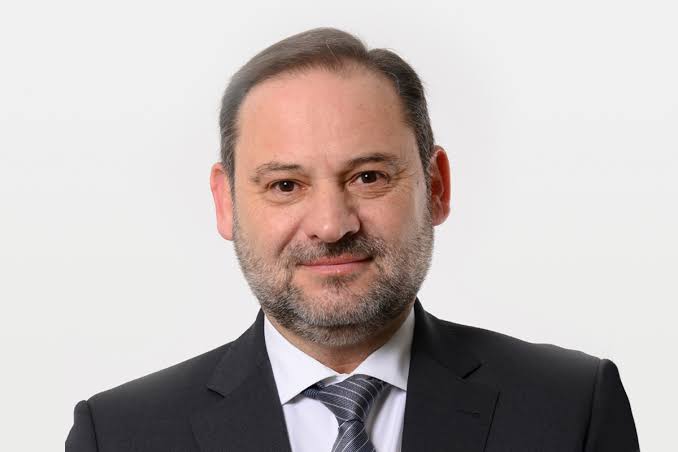

The judges noted that Abalos was not only a cabinet minister but also a senior official within the governing party, giving the offences particular significance.
The ruling said that corruption destroys citizens’ expectation that political power will be exercised for the public good and instead creates the perception that those in authority are acting for private gain.
According to the court, this leads to a loss of institutional legitimacy and can threaten the stability of the democratic system itself.
The judges stressed that corruption offences are not simply financial crimes but acts that directly affect the exercise of political power, giving them a far greater potential to destabilise democratic institutions.
Quoting previous anti-corruption arguments and international conventions, the court described corruption as a threat to democracy, justice, the rule of law and the proper functioning of the state.
The sentences mark one of the most significant corruption convictions involving a former senior member of Spain’s national government in recent years.