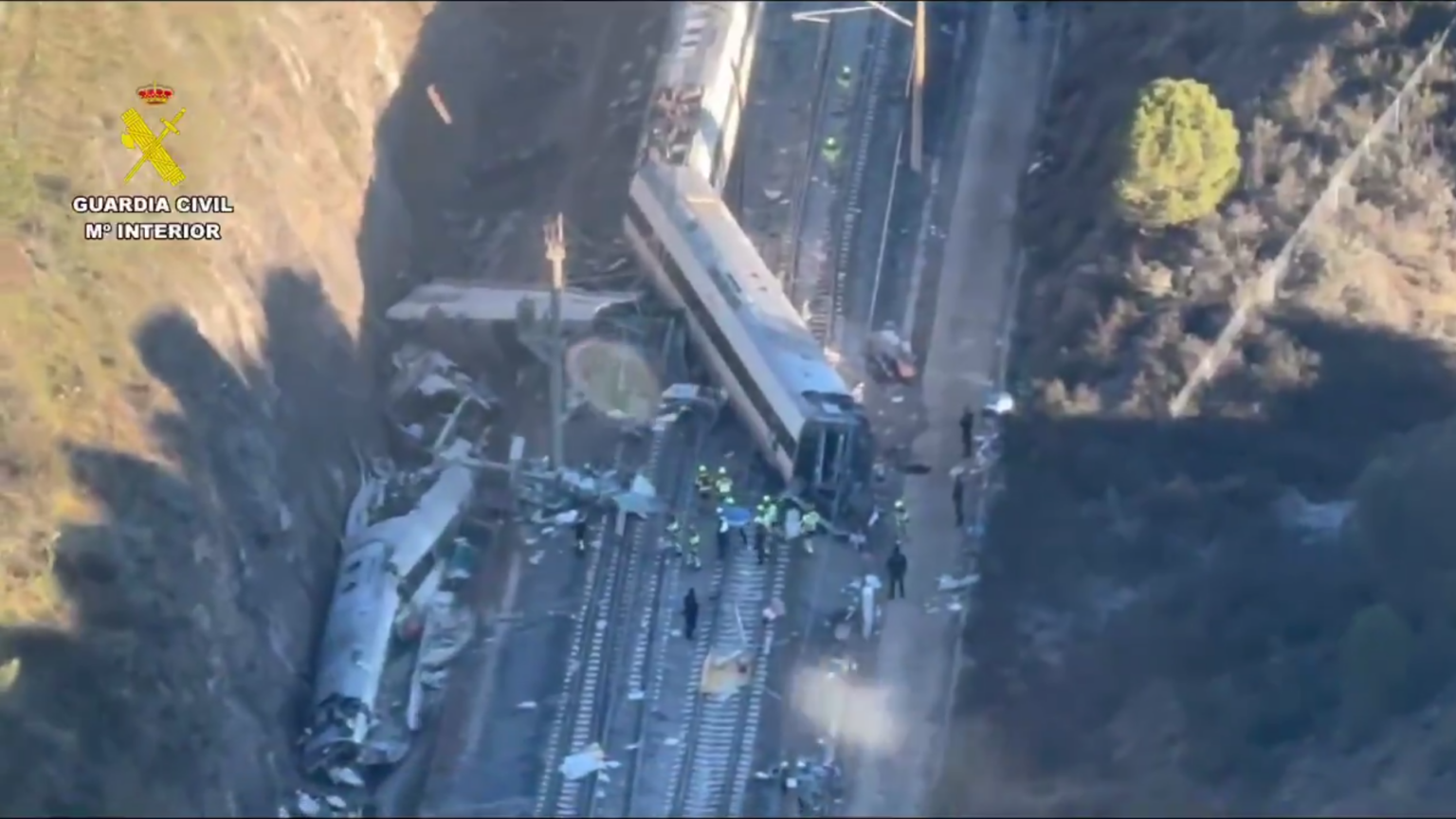

The catastrophic rail failure that killed 46 people in Cordoba occurred nearly a full day before the crash but went undetected due to flaws in the system, a new report has revealed.
An investigation by the Guardia Civil, submitted to a court in Montoro, confirms the track rupture happened 22 hours before the Iryo train derailed and collided with an Alvia service in Adamuz on January 18.
The disaster left 46 dead and more than 120 injured in one of Spain’s worst rail tragedies in recent years.
Crucially, investigators have ruled out sabotage, terrorism or driver error, instead pointing squarely at a structural failure in the rail or its welding as the main line of inquiry.
According to the report, a key maintenance system detected an electrical anomaly on the night of January 17, but it was not serious enough to trigger any alert.
The SAM system (used to monitor track conditions) recorded a sudden drop in voltage at 9.46pm, consistent with a rail break.
However, it did not fall below the threshold required to activate alarms, meaning no warning was sent to maintenance teams or signalling systems.
Additionally, the system was not configured to automatically flag such incidents, due to concerns over reliability in that section of track – a limitation investigators say was known but never resolved.
The infrastructure manager, Adif, had specifications requiring the detection of rail fractures, but did not enforce the capability in this case.
Data from signalling provider Hitachi Rail GTS Spain supports the findings. Voltage in the track circuit dropped from around two volts to 1.5 volts late on January 17 – and remained unstable until the moment of the crash, when it fell to zero.
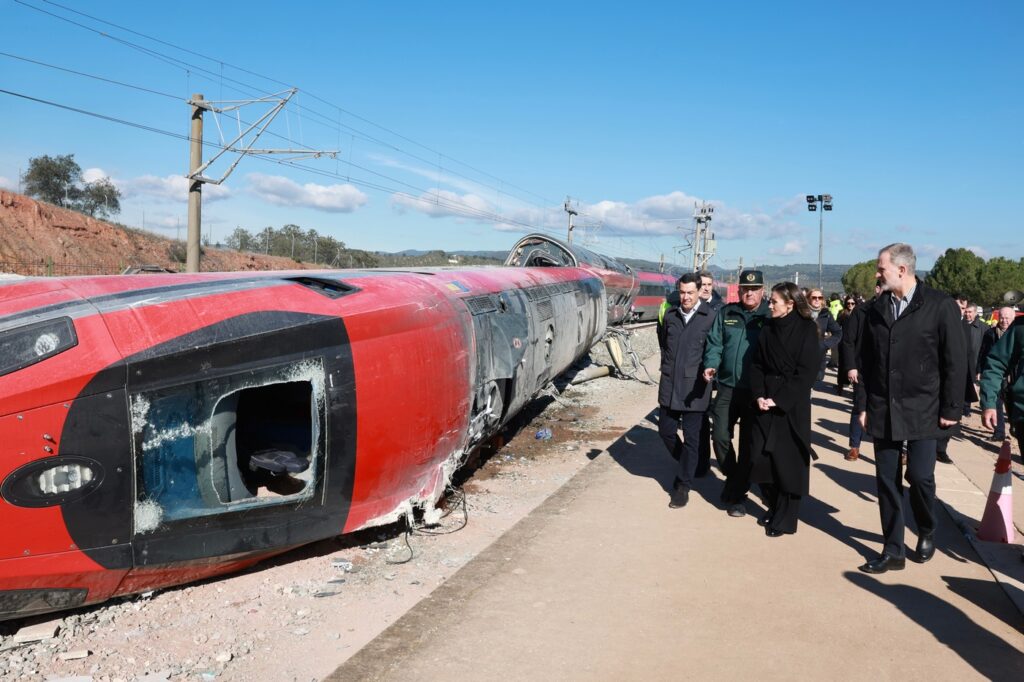
Investigators have pinpointed the exact location of the break to kilometre 318.681 of the line, confirming the failure occurred the night before the tragedy.
Despite this, no intervention took place.
The report notes that such a sustained voltage drop is ‘not typical’ and should have raised red flags – but the system monitoring the data was only reviewed when faults were formally reported or during scheduled maintenance.
Authorities are now trying to determine whether it was technically possible – and operationally expected – for alerts to be generated from these anomalies.
The findings build on earlier conclusions from Spain’s rail accident investigation body, the CIAF, which had already identified electrical irregularities consistent with a broken rail.
Further evidence comes from physical inspections, which found marks on passing trains consistent with damage caused by a fractured track.
Investigators have also analysed testimony from 19 train drivers who passed through the section that day. Only one reported feeling an unusual impact, while the rest noticed nothing out of the ordinary.
Attention is now focusing on the rail itself – a recently installed component manufactured in 2023 from high-strength steel – as experts examine whether the failure was caused by a manufacturing defect, material fatigue or another technical issue.
The exact cause of the disaster remains under investigation, with forensic analysis and video footage from both trains still being examined.
Read more Andalucia news at the Spanish Eye.