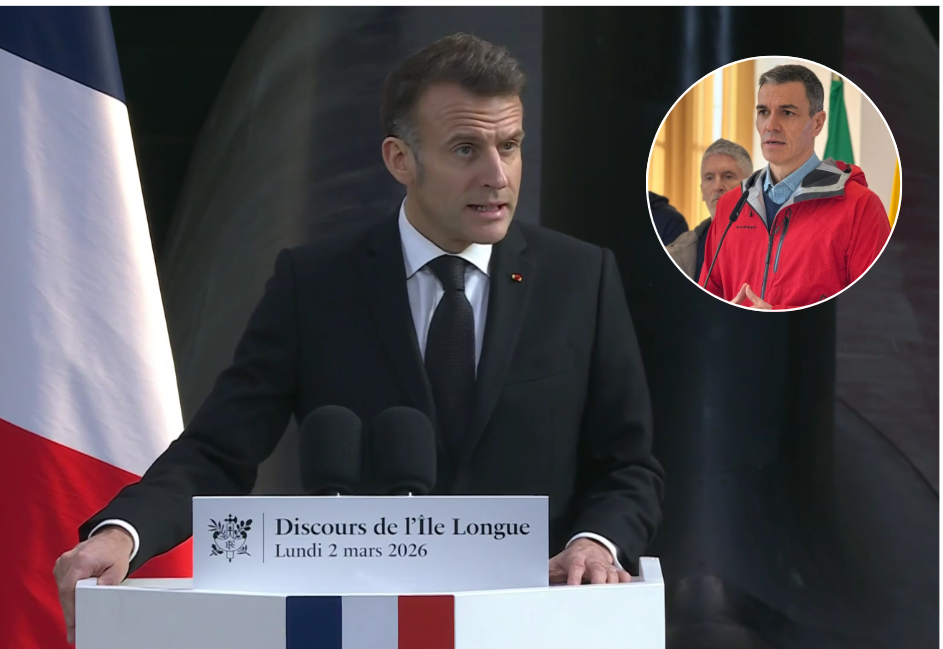

Spain has so far refused to join a European nuclear deterrence programme currently being pushed by France.
Pedro Sanchez’s government is sitting out on the plans, which have come in response to rising global tensions and the conflict between Iran and the US and Israel in the Middle East.
Poland’s Prime Minister Donald Tusk, however, confirmed his country’s participation in discussions coordinated by France alongside Germany and the United Kingdom.
‘Poland is holding talks with France and a group of our closest European allies on an advanced nuclear deterrence programme,’ Tusk wrote on social media.
‘We are arming ourselves together with our friends so that our enemies never dare to attack us.’
According to Macron, the countries involved – in addition to France – are: Germany, UK, Belgium, Netherlands, Greece, Poland, Sweden and Denmark.
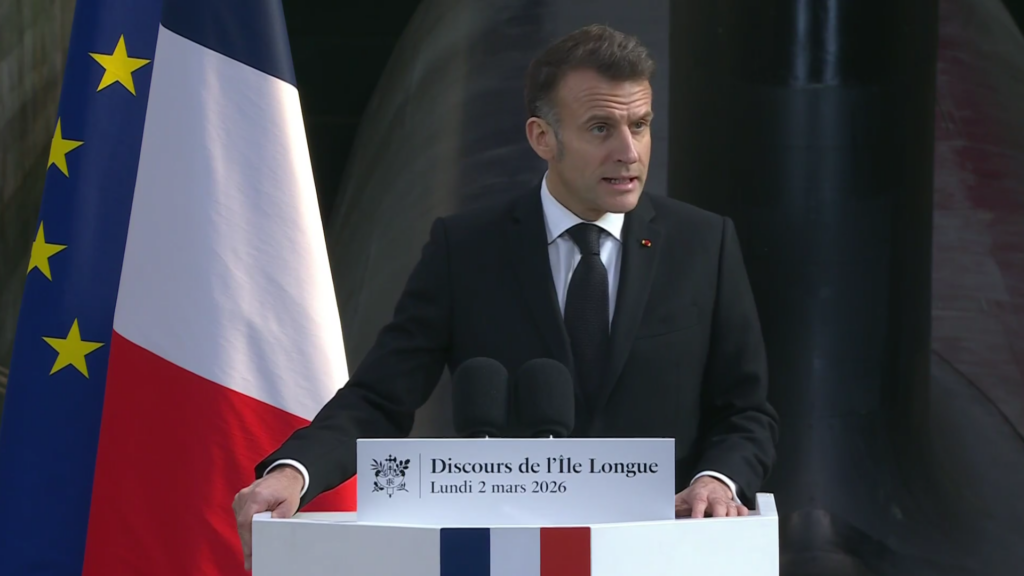
In a speech outlining France’s long-term nuclear strategy, Macron announced that France will increase its nuclear stockpile and will no longer publicly disclose the size of its arsenal.
‘To be free, one must be feared,’ the French president declared.
He confirmed the creation of a nuclear steering group with Germany and the UK to coordinate deterrence policy.
German Chancellor Friedrich Merz added that Berlin intends to take concrete steps before the end of the year, including participating in French nuclear exercises.
The three countries have also agreed to cooperate on the joint production of long-range missiles.
France has already announced the deployment of a warship, anti-missile systems and anti-drone defences to Cyprus. The UK is also sending a warship following recent drone attacks on a British base on the island.
Greece confirmed on Monday that it will deploy troops as well.
European leaders insist Cyprus – an EU member but not part of NATO – is not a target of Iran despite the regional escalation.
Spain has declined to join Macron’s nuclear push or the broader European military deployments.
Foreign Minister Jose Manuel Albares framed the issue as a choice between international law and unilateral force.
‘We are facing a dilemma: either international law and the principles of the UN Charter, or the law of the jungle where the strongest prevails. That is a more unstable world for everyone,’ Albares said.
He also downplayed any fallout from Spain’s refusal to allow the US to use the Moron and Rota bases for operations against Iran.
‘These are bases under Spanish sovereignty. There is nothing unusual or surprising, and we do not expect any consequences,’ he said.
Macron adopted one of his most forceful tones yet when addressing France’s armed forces.
‘The evolution of our competitors’ defences, the emergence of regional powers, coordination between adversaries and the risk of proliferation have led me to a clear conclusion: strengthening our arsenal is indispensable,’ he said.
He insisted the move is not about triggering an arms race but about ensuring deterrence.
Iran has warned European nations that there will be ‘consequences’ if they join the US-Israeli offensive.
Foreign Ministry spokesman Esmaeil Baqaei said any violation of international law ‘will have consequences for every person on the planet.’