
At a moment when political judgement should be at its sharpest, Juanma Moreno has chosen to step straight into a controversy.
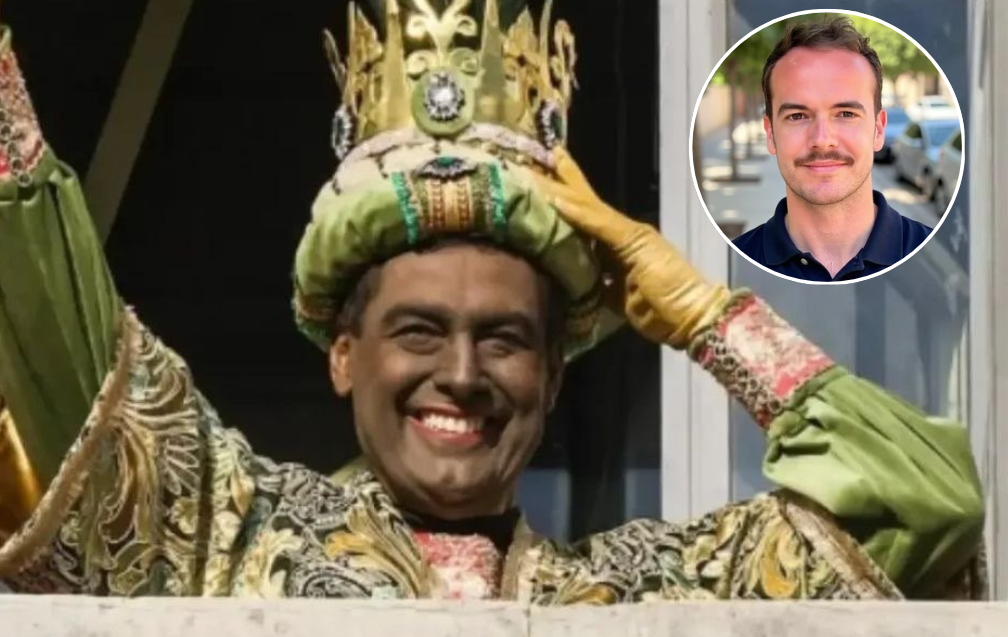
Images of the Andalucian president painting his face black to portray King Balthazar during Sevilla’s Three Kings parade have ignited a predictable – and entirely avoidable – backlash.
Accusations of blackface and racial insensitivity have flooded social media just months before regional elections.
Left-wing party Podemos has jumped on the outrage, accusing Moreno of carrying out a ‘racist’ act.
It comes as the Partido Popular leader is already under intense pressure over the Junta’s handling of the breast cancer screening and testing scandal, a deeply emotive issue that has shaken public confidence and put his administration on the defensive.
It all raises an obvious question: what on earth was he thinking?
You would think Moreno would want to keep his head down after his government spent weeks responding to mounting criticism over delays, failures and communication problems surrounding breast cancer testing in Andalucia – which cost the political life of his former health minister.
It is precisely the sort of crisis that demands restraint, seriousness and an acute awareness of optics.
Instead, the regional president has handed critics an entirely new line of attack.
The debate around blackface is not new, nor is it complicated. Spain is home to hundreds of thousands of Black residents, many of them Spanish citizens.
Sevilla, a major European city, is not lacking in people who could portray King Balthazar without resorting to blackface.
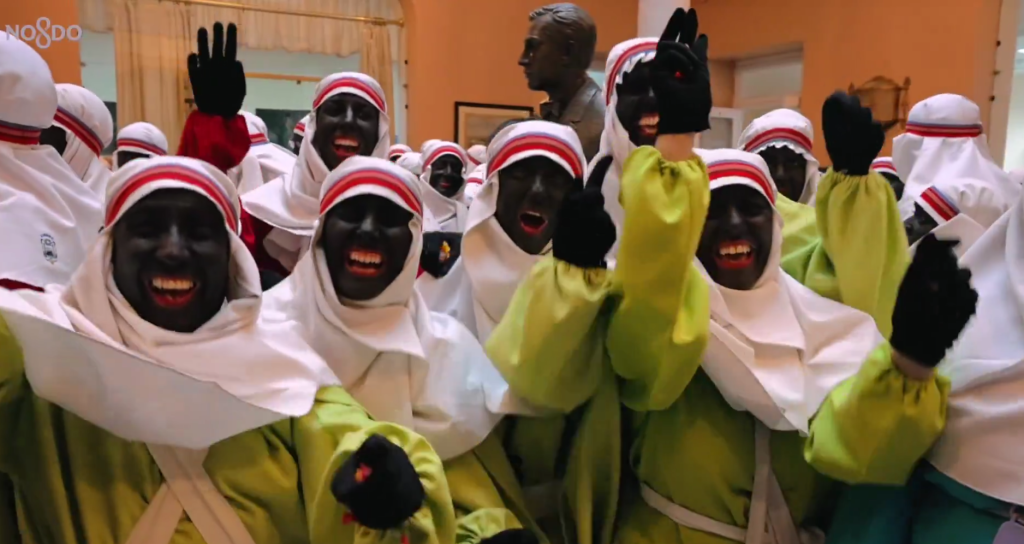
If black people find it offensive, is it really too much to ask to undo the so-called tradition? It wouldn’t be the first outdated ritual to be banished.
Just look at Malaga, which recently vowed to only use black people to portray Balthazar, and last year asked a hero migrant to take on the role, after he helped rescue a local woman from floods.
Year after year, public institutions continue to make the same decision and then act surprised when the backlash arrives.
Supporters argue that it is purely tradition and insist there is no racist intent.
Critics, however, say tradition is not a justification for practices other societies have outgrown, and that intent does not cancel out impact.
Black friends I spoke to this week put it more simply, telling me that being black ‘is not a costume’ for entertainment.
Whichever side you fall on, what makes this episode politically baffling is the timing.
Moreno and his government certainly did not need this controversy – so how did no one on his team predict a fallout?
Truth be told, in Andalucia itself, the row is unlikely to have a noticeable impact on voter opinion, especially within a few months (tackling racism is not a major concern for the region at large, one could say).
But when a regional president already battling a serious healthcare scandal chooses to ignite another entirely avoidable crisis, the question stops being ‘did this cause offence?’, and morphs into ‘does he understand the moment he is in?’
If Moreno is trying to project stability, competence and leadership under pressure, this was precisely the wrong way to do it.
Read more Andalucia news at the Spanish Eye.