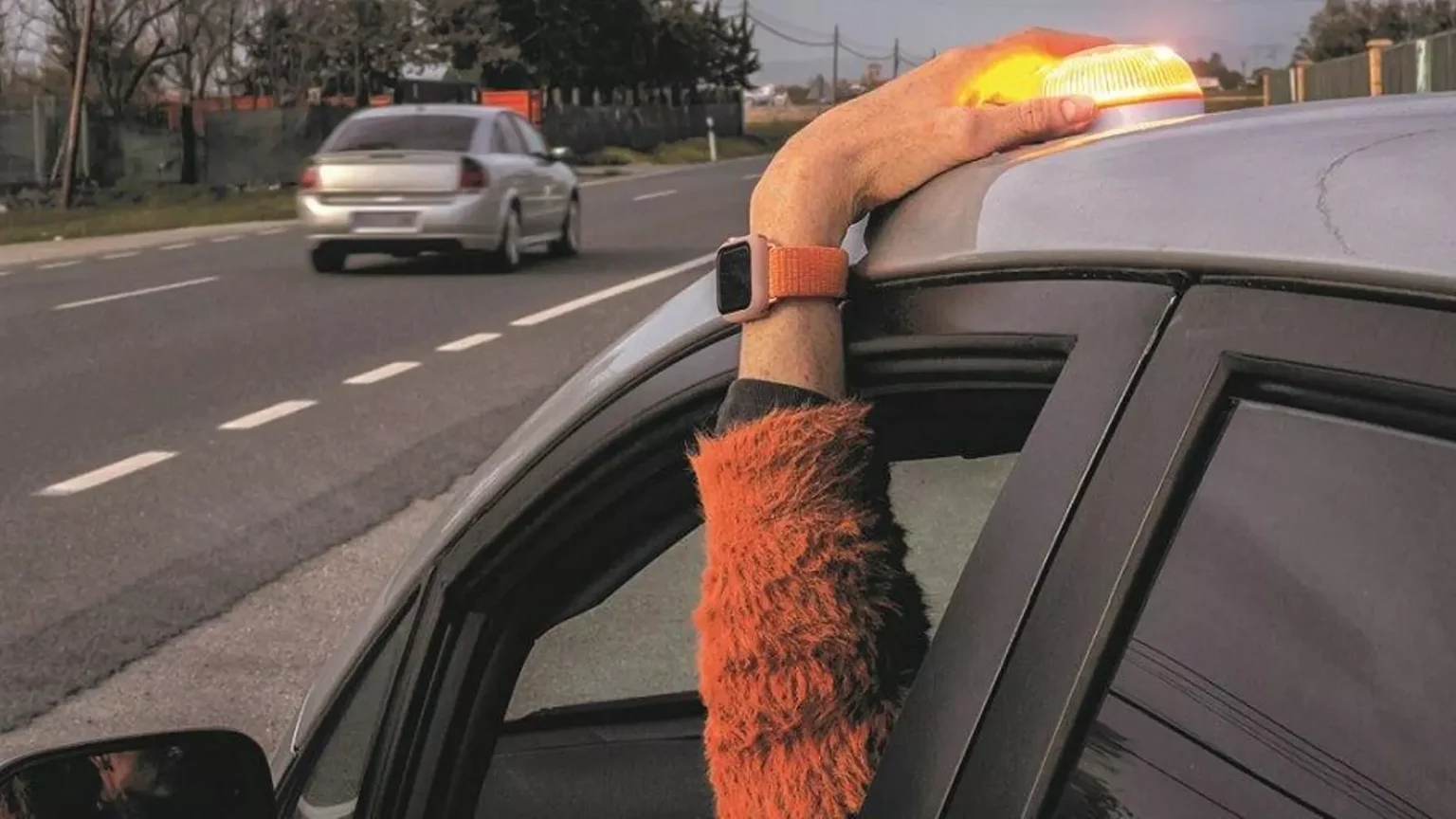

Spain’s V16 emergency light will become compulsory for all vehicles from January 1 2026, replacing the traditional warning triangles.
But as the deadline approaches, many motorists have been left stunned by the cost of the devices, which typically retail between €30 and €70.
Because the beacon must be fully approved and meet strict technical requirements, including geolocation capabilities, prices have come under fire from drivers who see the rollout as an unnecessary financial burden.
In an interview with ABC, Jorge Torre and Jorge Juan Costas, the two Guardia Civil officers who developed the first V16 prototype, addressed the criticism head-on.
They stressed that privacy protection was the key reason the DGT chose this model over cheaper alternatives.
Some devices on the market, particularly low-cost options, do not guarantee the same data protection standards.
While acknowledging that drivers are wary of the price tag, the creators insisted that they are ‘entrepreneurs, not millionaires in waiting.’
Tower and Costas emphasised that there are around 250 approved V16 models currently available,
They said there are dozens of manufacturers, with many producing cheaper imported versions, and that they are ‘just one more competitor’ in a large and diverse market.
‘We’re not going to get rich from this, we earn a little more than we do in the Guardia Civil, that’s it,’ they said.
The pair describe themselves as pioneers of the concept, but reject the idea that they are driving the commercial side of the industry.
They say their motivation has always been road safety, noting that deploying warning triangles on motorways has led to fatal accidents in Spain and across Europe.
‘Spain has taken a bold, unpopular step, but it will save lives,’ they argued, predicting other EU countries will eventually adopt similar systems.
The V16 replaces hazardous roadside triangles, which require drivers to walk 50 metres behind their vehicle onto the carriageway after a breakdown.
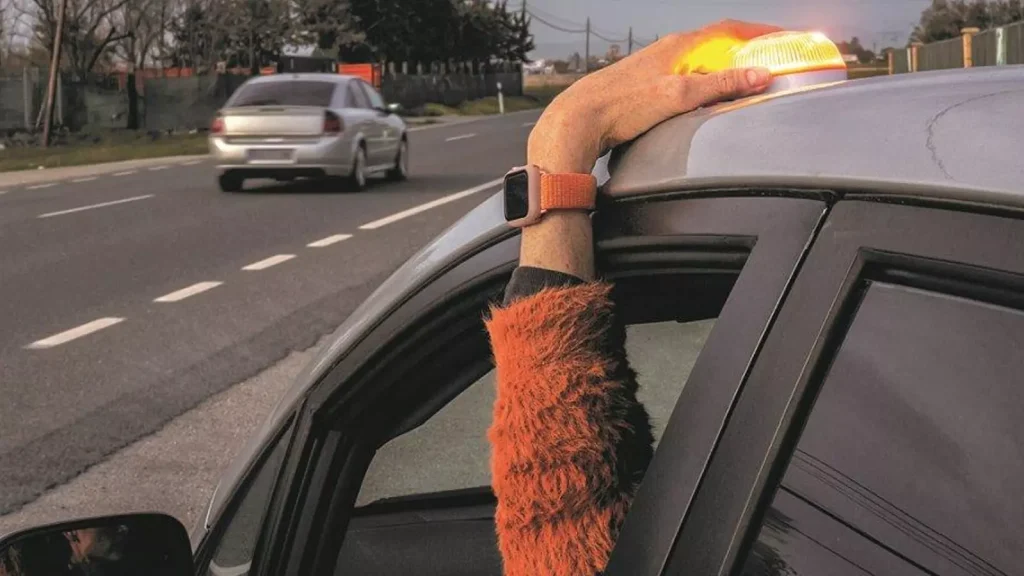
The new beacon is placed on the roof from inside the vehicle and sends a geolocated signal to the DGT’s connected platform,
It also flashes automatically to alert other drivers.