
Airbnb has revealed a €40million plan to invest in rural Spain after being ordered to remove tens of thousands of listings in saturated tourist zones nationwide.
The company has spent the past year withdrawing unlicenced properties following multiple court rulings, and is now presenting itself as a more willing partner to local and regional authorities.
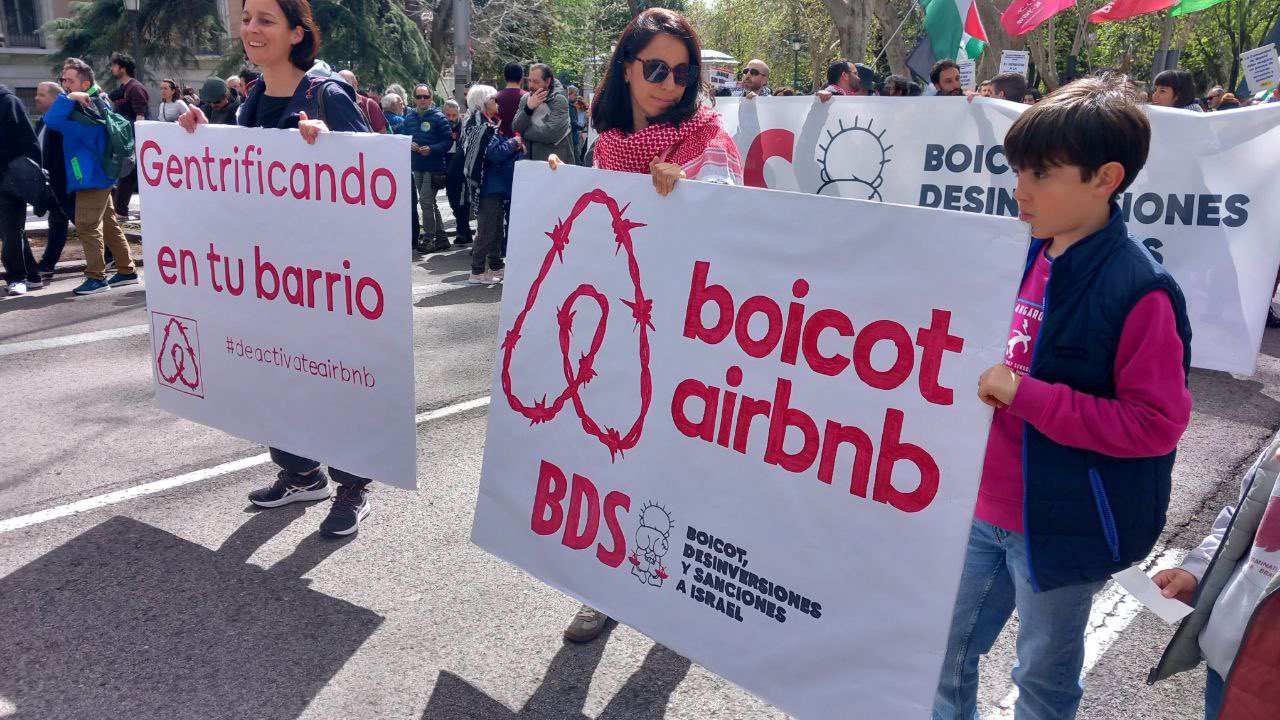
It comes after a strong backlash from activists in saturated tourist areas like Mallorca and Barcelona, who blame the short-term apartment booking platform for reducing housing stock and pushing up prices.
It comes after thousands of businesses and homes in cities like Malaga have been converted into tourist flats due to their high returns.
While profitable for the owners, locals say it has removed much of the city’s character, with many streets and courtyards becoming solely tourist apartments – and which turn to ‘ghost towns’ in the off season.
On Tuesday, Airbnb announced its new Rural Commitment for Spain, a plan to invest €40 million over three years in an attempt to move away from a model heavily concentrated in major cities and towards one spread across smaller towns and villages.
Jaime Rodríguez de Santiago, Airbnb’s general manager for Spain and Portugal, said that rural Spain is dramatically under-developed as a destination.
He noted that Spanish villages receive only a fraction of the tourism enjoyed by regions visited by the French or British.
How the €40 million will be spent
1. Rural investment (€33m):
- €22 million in credit lines for the renovation of restaurants, shops and heritage buildings.
- €11 million for upgrading rural homes used for tourist accommodation.
2. Rural promotion (€12m):
- Funding for destination marketing
- Support for astrotourism and other niche rural experiences
A major clean-up and new political approach
Since Rodríguez de Santiago took over leadership for Spain and Portugal, the platform has shifted its priorities. The first was to remove illegal listings; the second, to open dialogue with municipalities and regional governments rather than fighting them solely in court.
One of the clearest examples of this new approach is Mallorca, where Airbnb removed 2,300 unregistered properties after reaching a cooperation agreement with the island’s authorities.
Mallorca’s tourism councillor, Jose Marcial Rodriguez, said the new relationship was helping to protect the island’s tourism model and ensure compliance with local regulations.
Airbnb is adapting to restrictions
Airbnb has been forced to adapt in the face of growing restrictions on the tourist flat industry in Spain.
It comes after:
- Barcelona ruled that it will stop issuing tourist flat licences from January 1, 2028.
- Madrid launched its Plan Reside, which removes nearly all tourist flats from the city centre and bans mixed residential-tourist use.
- The Ministry of Consumer Affairs brought multiple legal actions seeking the removal of unlicensed listings, threatening substantial fines for failure to comply.
The highest-profile case was a ruling from the Madrid High Court (TSJM), which upheld the ministry’s orders for Airbnb to delete 65,000 listings lacking licence numbers or failing to clarify whether the property owner was an individual or a company.
A study presented by Analistas Financieros Internacionales (Afi) during the event found that in 75% of Spanish municipalities under 10,000 residents, there is no hotel accommodation at all. Short-term rentals, the report argues, help fill this gap while supporting local economies.
The research estimated that in 2024, short-term rentals drew over 13 million tourists to small municipalities, generating around €5.5 billion in economic activity – of which €3.2 billion flowed directly into local businesses.
Airbnb maintains that its new strategy will spread tourism more evenly across Spain, reduce pressure in major cities, and support communities that traditionally see far fewer visitors.