
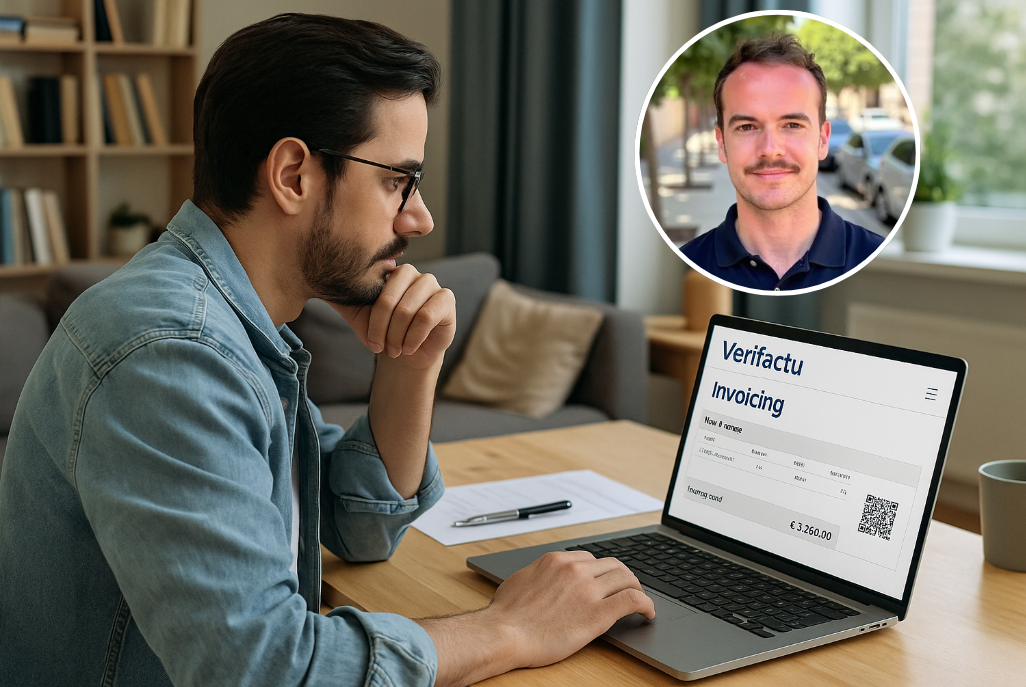

Spain’s self-employed are no strangers to bureaucratic overreach. But with the incoming Verifactu system, set to become law in 2026, the government is really taking liberties.
Billed as a weapon in the fight against tax fraud, Verifactu is being sold to the public as a sleek, digitised leap into transparency.
In reality, it’s yet another administrative hammer blow aimed at freelancers and small business owners, under the banner of accountability, but with little regard for the realities on the ground.
Real-time reporting, delayed payment
Let’s start with the most obvious flaw, which is that under Verifactu, every invoice gets logged, timestamped, and sent (optionally, for now) to the Tax Agency the moment it’s issued.
It sounds reasonable until you remember that in Spain, invoices aren’t paid the moment they’re sent. In fact, many aren’t paid for months.
So now, self-employed workers will be forced to report income they haven’t received, potentially facing tax obligations on money that still hasn’t hit their account – and may never will if the client ghosts or delays.
And no, Verifactu doesn’t lift a finger to stop that from happening.
Where’s the antifraud protection for the person who did the work and is still chasing the payment?
Another digital stick to beat the little guy
The government insists that Verifactu is about transparency. What it’s really about is surveillance.
The system hands the Tax Agency a live feed of your commercial life, while expecting you to foot the bill for the tech that makes it happen – from certified invoicing software to updated systems and added hours of admin.
Big corporations already have in-house accountants and legal teams. Freelancers don’t. But once again, it’s the small fish that get netted first.
‘Voluntary’ grey area
Meanwhile, officials point out that real-time invoice submission is ‘voluntary.’
However, there are fears that businesses that do not send invoices in real time will be flagged as non-compliant and may be more vulnerable to inspections.
Tackle the real fraud
If the Spanish government was serious about fighting fraud, it would start with late payment culture and untraceable cash economies, and not the freelance graphic designer in Granada or the plumber in Cadiz who’s now expected to learn a new invoicing system between jobs.
Verifactu may look like modernisation on paper, but in practice, it’s a burden dressed up as a solution.
It’s easier to squeeze Spain’s self-employed than to enforce payment deadlines or overhaul broken systems.






Agreed it’s about total control..and will not take into account the invoices that are not paid for whatever reason. Can you cancel them once issued? When will the Spanish wake up and start fighting back?.