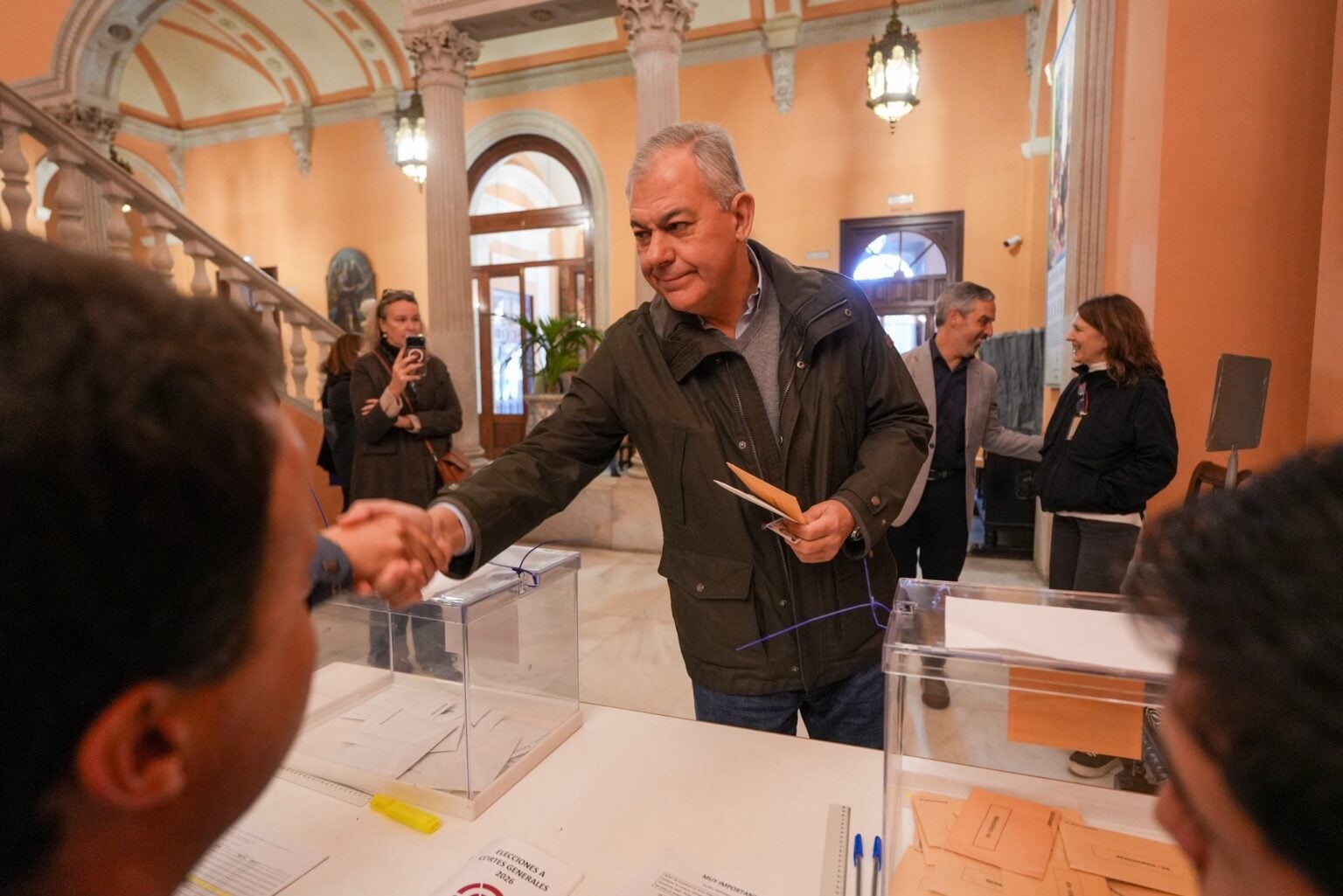

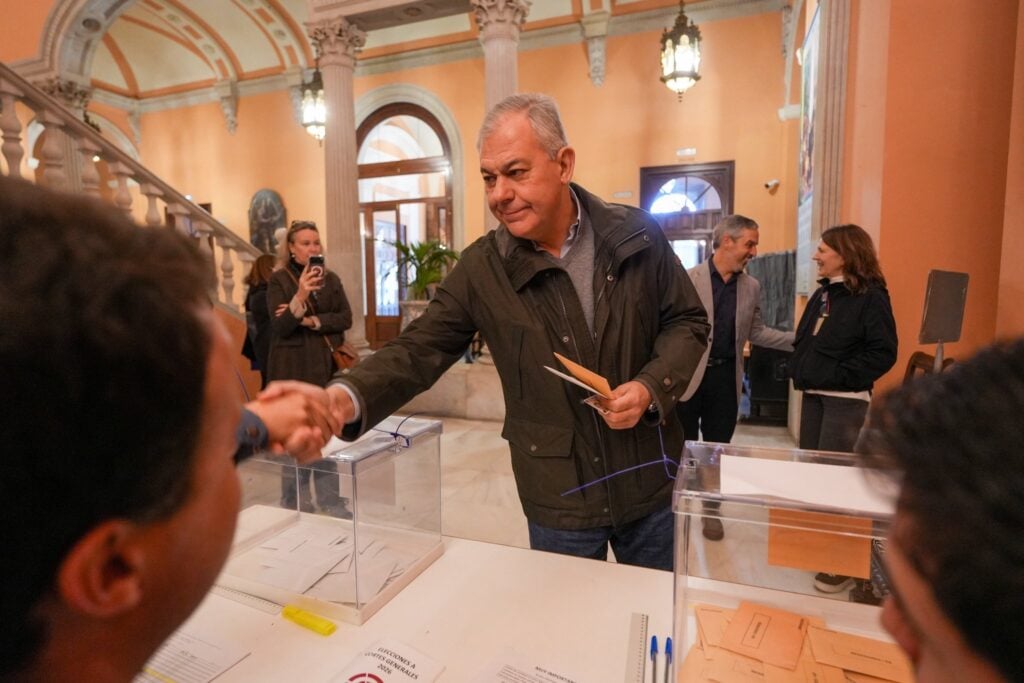
Voter turnout has increased across most of Andalucia as millions of Spaniards head to the polls in Sunday’s general election.
Some 44.13% of eligible voters in the crucial southern region had cast their ballots by 2pm, slightly below the national average.
Andalucia elects 60 of Spain’s 350 MPs, making it the country’s largest electoral region in terms of congressional representation.
Sevilla is one of the key battlegrounds, with 12 parliamentary seats at stake in a province historically dominated by the socialists.
Together with Malaga province, they account for almost 40% of Andalucia’s seats in Congress, making them particularly significant in the battle for power in Madrid.
Almeria recorded the biggest increase in participation compared with the 2023 general election, rising by 5.36 percentage points to 46.3%.
Turnout also increased in Cadiz (3.3 points), Malaga and Huelva (2.76 points each), Sevilla (2.35 points) and Granada (1.78 points).
However, Cordoba and Jaen bucked the regional trend, with participation falling by 1.24 and 2.08 percentage points respectively.
Huelva recorded the lowest turnout in Andalucia at 42.1%, followed by Cadiz (42.6%) and Malaga (42.8%).
In Sevilla city, participation reached 46.2%, exceeding both the regional and national averages.
Turnout increased across every district of the city, with the historic centre recording a particularly significant rise of more than 7.75 percentage points.
Vox is seeking to expand its representation in Sevilla, a province historically dominated by the PSOE.
The province is also an important target for the PP as Spain’s traditionally socialist southern heartland becomes increasingly competitive.
However, it is too early to determine which parties will benefit from the increase in turnout.
The Spanish government’s delegation in Andalucia said voting was proceeding normally, with very few new incidents reported since polling stations opened at 9am.
The next official turnout figures will be released at 6pm, two hours before polling stations close.