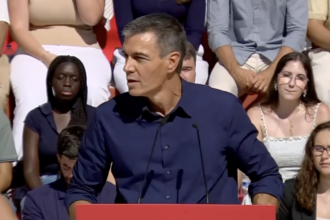
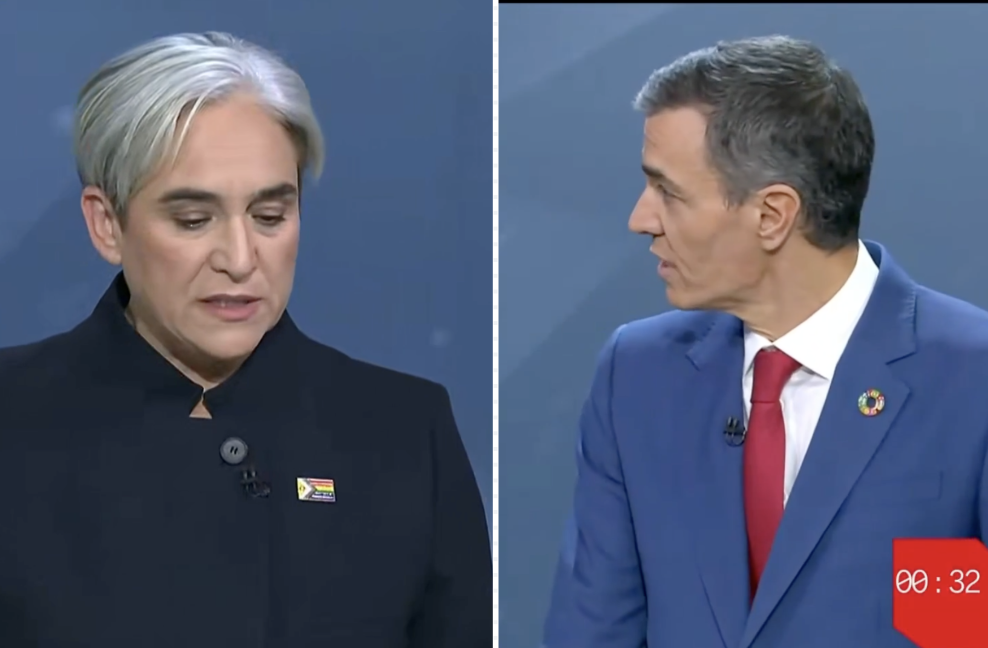

Pedro Sanchez and Ada Colau made a series of false or misleading claims during Thursday night’s final televised election debate, covering everything from Spain’s economic growth to pensions, housing and corruption.
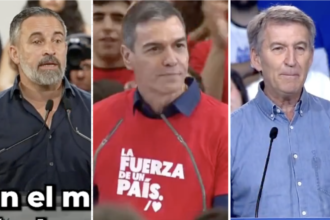
The PSOE and Frente Amplio candidates faced off against PP leader Alberto Nuñez Feijoo and Vox’s Santiago Abascal just days before Spaniards head to the polls on Sunday.
A fact-checking analysis by El Pais identified inaccuracies made by all four candidates. Here are five of the most notable claims made by the leaders of the left.
Sanchez: Spain has the fastest-growing economy in Europe
The prime minister’s claim is false.
While Spain’s economic performance remains strong, European Commission forecasts predict GDP growth of 2.6% in 2026.
Eight EU countries are expected to outperform Spain, including Denmark, Malta and Poland.
Spain is, however, growing faster than the eurozone’s other three major economies: Germany, France and Italy.
Sanchez: PP and Vox voted against inflation-linked pension increases
This is only partially true.
Both parties opposed the 2021 legislation linking pension increases to inflation.
However, the PP has subsequently supported several annual pension increases. Its more recent objections concerned government decrees that bundled pension rises together with unrelated measures.
Vox maintained its opposition in both rounds of voting on the two most recent increases.
Colau: Feijoo built just 16 protected homes during his final four years governing Galicia
Official figures contradict this claim.
Between September 2020 and May 2022 alone, 197 protected homes received final certification in Galicia, including 82 in publicly owned developments.
Colau: The PP repeatedly voted against minimum wage increases
The claim is procedurally incorrect.
Spain’s government raises the minimum wage by decree without requiring parliamentary approval.
Although the PP has publicly criticised several increases, it did not vote against them in the manner suggested by Colau.
Colau: The PP was convicted of being a criminal organisation
Despite the party’s involvement in the notorious Gürtel corruption scandal, the PP itself has never been convicted of the criminal offence of belonging to a criminal organisation.
Its liability in the case arose from benefiting financially from the corruption network and bearing civil responsibility for certain damages.
The distinction does not absolve the party of its involvement in the scandal, but it makes Colau’s description of the court rulings misleading.