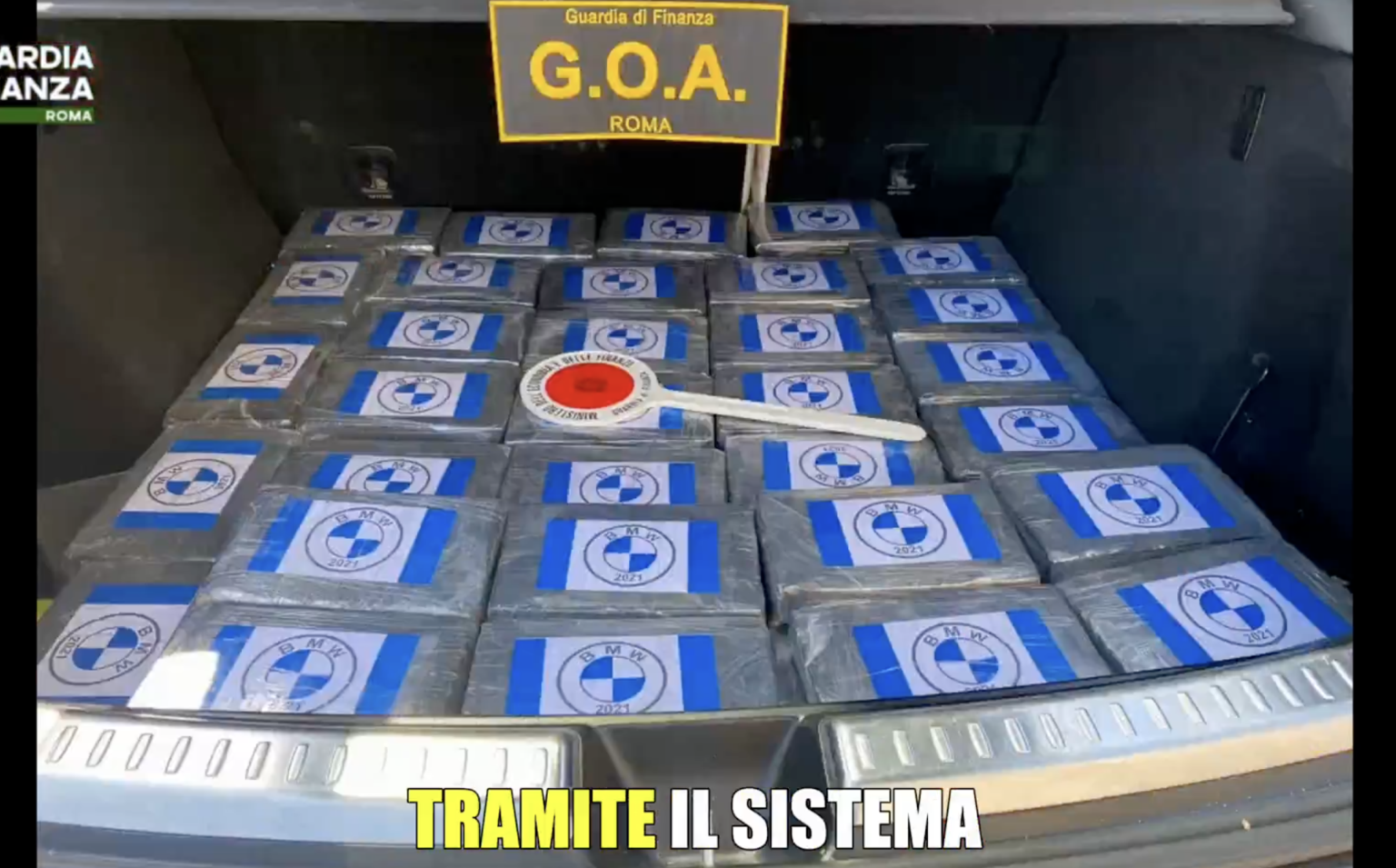

This is the moment Italian authorities busted three alleged drug trafficking networks linked to Spain.
The Guardia di Finanza operation saw 27 arrests and more than 1.1 tonnes of narcotics seized over several months.
The case has a direct connection to Marbella, where convicted Italian trafficker Antonio Gala was arrested on March 30.
Investigators allege that Gala coordinated supplies of hashish and cocaine from the Costa del Sol for distribution in Italy.
The investigation, coordinated by anti-mafia prosecutors, focused mainly on activities between 2022 and 2024. Authorities announced the results on November 16.
Officers executed 18 pretrial detention orders, following nine arrests during earlier stages of the inquiry.
Police estimated the value of the seized drugs to be more than €38million.
Gala, originally from Marano near Naples, was detained in Marbella under a European arrest warrant and subsequently transferred to Italy.
He had an outstanding 18-year prison sentence for involvement in a drug trafficking association with a mafia-related aggravating circumstance.
His March arrest was separate from the 18 detention orders announced this week.
The investigation also identified another alleged trafficking operation run from Barcelona by Francesco Lapis, whom Italian authorities link to the criminal circle of Michele Senese, a Camorra figure in Rome.
Lapis was arrested at Barcelona-El Prat airport in July 2024 after fleeing a two-year drug trafficking sentence.
According to investigators, the networks transported cocaine, hashish and cannabis from Spain in trucks and other vehicles fitted with concealed compartments.
Drugs were taken to distribution points in Rome and Latina province, with storage sites identified in the Roman districts of Magliana, Portuense and Acilia.
A third network allegedly maintained Colombian supply contacts for substances including tusi, commonly marketed as ‘pink cocaine’.
Investigators also traced approximately €1million in cash movements, including around €500,000 allegedly handed to Chinese nationals based in Rome’s Esquilino district.
The Guardia di Finanza believes a money-transfer system known as Fei Ch’ien was used to move trafficking proceeds.