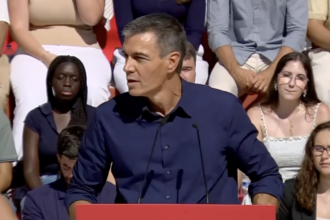
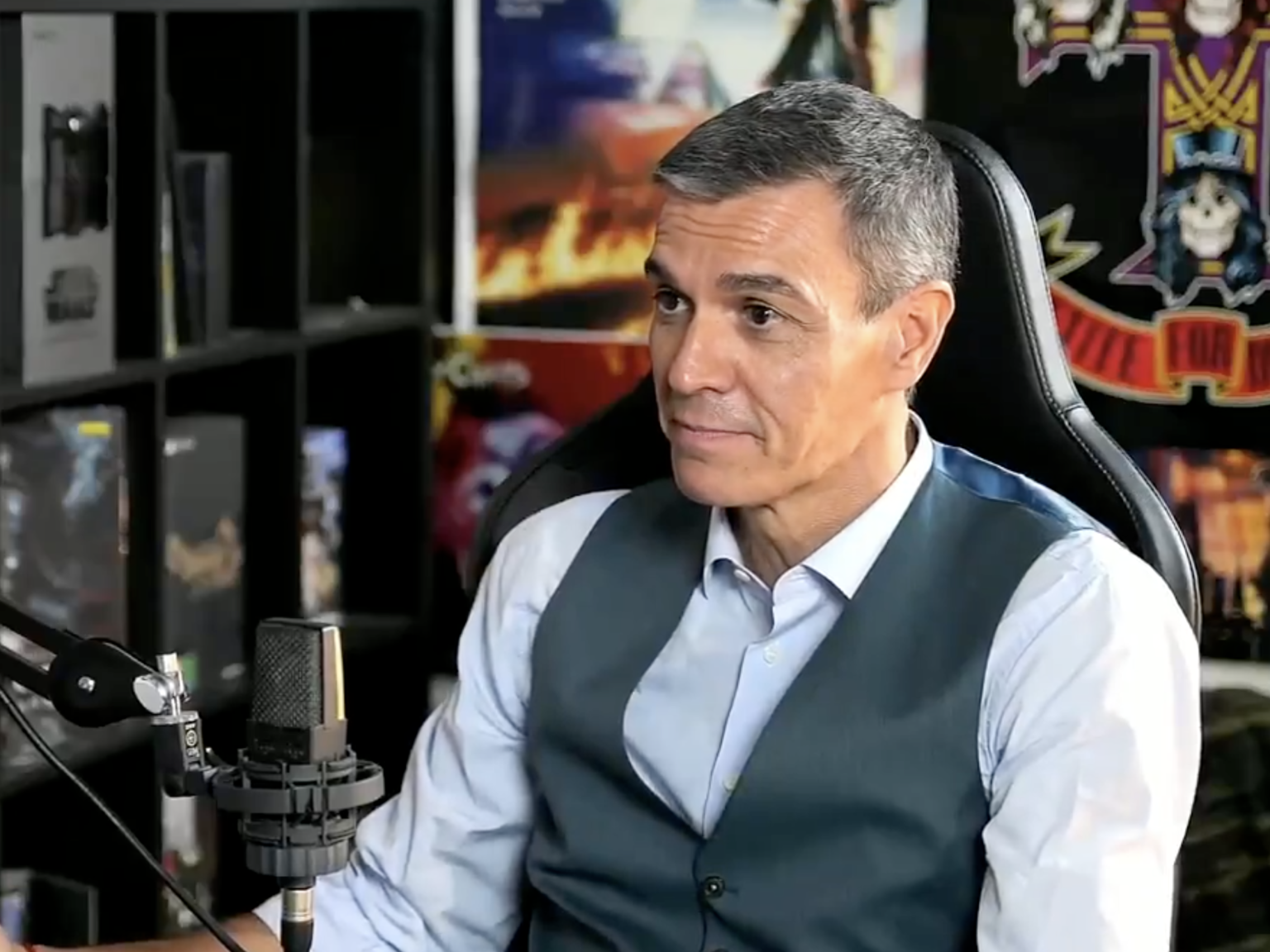

Pedro Sanchez has pledged €19billion for railway maintenance and safety while admitting failings after two high-speed rail disasters during a wide-ranging interview with podcaster Jordi Wild.
The prime minister faced questions over the Adamuz and Urda crashes, corruption allegations involving former allies, the Ceuta migration crisis and Spain’s housing shortage.
Almost 150,000 viewers watched the interview’s YouTube premiere, according to Cadena SER, as campaigning gets under way for the November 29 general election.
The PSOE leader said the railway investment would cover 2026 to 2030. He also announced an extraordinary audit of the Madrid-Sevilla line and talks with train drivers over rest periods and retirement conditions.
‘It is evident that mistakes were made,’ he said, pointing to the need for better control-centre training and more frequent emergency drills.
Wild challenged him over how two such disasters could happen on the same high-speed route in less than a year, accusing him of insufficient self-criticism.
‘It is unacceptable for Spain to have two accidents like this in one year,’ Sanchez responded, while maintaining that the railway system was safe.
He defended Oscar Puente’s decision to resign as transport minister after attending to victims, securing an aid decree and appearing before Congress.
He declined to say whether he would otherwise have dismissed him.
On housing, Sanchez acknowledged that the situation was ‘bad’ and defended rent caps, public intervention and the construction of protected housing.
He argued that his government had laid the foundations for a new housing policy, while stressing that responsibility was shared across national, regional and local administrations.
The PM claimed regulated areas, including Barcelona, were beginning to contain rent increases.
Corruption allegations involving former senior PSOE figures prompted a more personal response.
‘It is something that embarrasses me,’ Sanchez said. He described his disappointment in Jose Luis Abalos and Santos Cerdan, whom he had considered friends, and said he had barely had a relationship with Koldo Garcia.
He also defended former prime minister Jose Luis Rodriguez Zapatero, saying he believed in his innocence.
Discussing the mass arrival of migrants in Ceuta, Sanchez said intelligence services had warned of movements and online rumours, but the eventual numbers exceeded expectations.
He said he had no information establishing that Morocco was behind the crisis and acknowledged that its handling needed to improve.
The interview also touched on the effect of political abuse on his family. Sanchez said his daughters had once left a venue because people were chanting insults against him.
‘It is a very distressing situation for them,’ he said.
Asked why he wanted another term, Sanchez argued that the political climate demanded he step forward, ending with an appeal for a ‘historic mobilisation’ to secure four more years of progressive government.