
Spain’s self-employed are once again up in arms after a little-known rule change triggered a sharp rise in monthly payments for half a million workers.
The reform, which affects so-called family collaborators and company-linked freelancers, has pushed up the minimum contribution base by 42% – from €1,000 to €1,424 from 2026.
That jump could translate into an extra €135 per month, or more than €1,600 a year, according to industry groups.
The change stems from a clause included in the 2022 reform of Spain’s social security system, which now comes into force.
It requires these categories of freelancers to align with the minimum base of the general employment regime.
‘The government has misled freelancers’
The backlash has been immediate.
Lorenzo Amor, head of the freelancers’ association ATA, accused the government of failing to protect self-employed workers.
‘The government has once again misled freelancers,’ he said, warning that around a third of self-employed workers will see their minimum contributions rise this year.
Meanwhile, Eduardo Abad, president of UPTA, has called for urgent intervention, demanding a decree to roll back the increase and restore the €1,000 base.
Who is affected?
The measure impacts autónomos colaboradores (family members working in a business) and autonomos societarios (freelancers operating through companies).
According to estimates, the change could affect over 500,000 people across Spain.
Many of them are in small family businesses and disproportionately women over 50, particularly in rural areas.
A delayed blow
For now, affected freelancers can continue paying based on the €1,000 minimum during 2026.
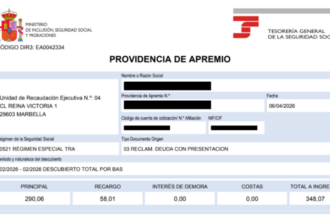
However, when accounts are later regularised, they will be forced to pay the difference retroactively, effectively turning the increase into a delayed financial hit.
That means someone currently paying around €300 a month could see their bill jump to roughly €435, even if their income hasn’t increased.
Mounting pressure on the system
Spain’s freelancer system has long been criticised for its rigidity, requiring fixed payments regardless of income.
This latest change risks deepening that frustration, particularly among small businesses already struggling with rising costs.
Organisations are now urging the government to step in before the increase fully bites.