
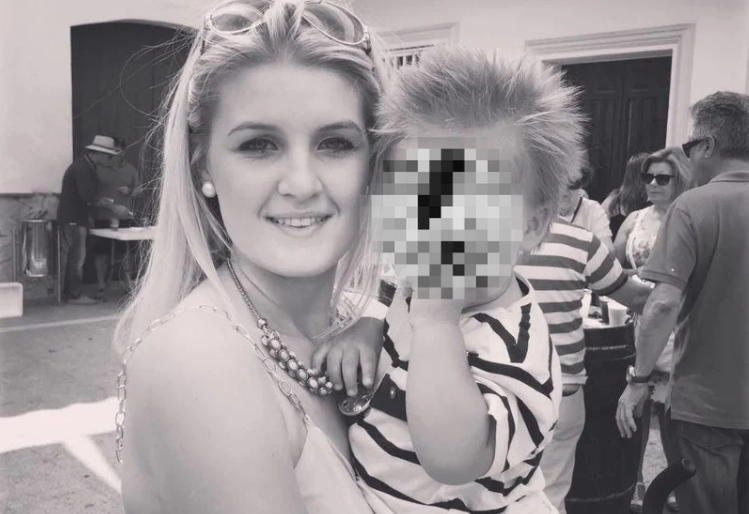
The British expat community was rocked to its core following the brutal murder of mother-of-three Victoria Hart in January of this year.
The 33-year-old hairdresser was allegedly stabbed to death by her Spanish ex at around 11.40am on a Saturday morning, while her six-year-old twin daughters and 11-year-old son were inside the home in Alhaurin el Grande, Malaga.
Disgracefully, the killing was just the start of what has become one of the bloodiest first three months of the year since Spain began tracking gender-based violence some 23 years ago.
A total of 14 women have been killed at the hands of their current partners or exes so far in 2026 – that’s double the number recorded at the same time in 2025.
Last week, that grim figure included a three-year-old girl, hung by her father in his garage in Torrevieja, and a woman in Zaragoza, shot dead in the middle of the street by her ex. Both men killed themselves after the acts.
The spike in gender-based violence has left authorities, campaigners and communities searching for answers.
To understand what is driving this apparent surge, The Spanish Eye spoke exclusively to two of Spain’s leading experts: Octavio Salazar Benitez, a law professor at the University of Cordoba and author of multiple books about gender and masculinity, and Miguel Lorente, a Professor of Legal Medicine at the University of Granada and former government delegate for gender violence.
They both believe Spain is not just seeing more visibility of violence against women, but a dangerous convergence of cultural, social and political factors that may be fuelling it.
‘I believe it’s a combination of both,’ explains Salazar. ‘There is greater awareness and visibility of sexist violence, as well as stronger legal tools to combat it, which can lead to more reporting.
‘But at the same time – paradoxically – we are seeing a resurgence of machismo linked precisely to advances in equality.’
Lorente goes further, warning that what is happening now is the result of multiple forces colliding at once.
‘It’s the consequence of several factors that converge to bring about violence,’ he says.
‘The first is cultural – a patriarchal system that promotes rigid gender roles and traditional ideas, such as the belief that a man has the right to punish his partner.
‘Then there is the individual man himself – his personality and his need for control or power. And thirdly, the social and political environment.’

It is this third factor, Lorente stresses, that is becoming increasingly dangerous.
‘We are seeing a growing climate of distrust that attacks feminism and presents men as the victims – particularly around false allegations – which casts doubt on real cases,’ he warns.
‘It worries me a lot. There is so much machismo content online influencing young people, and it is growing year after year. This is being pushed by the far right.’
According to Salazar, recent cases are not isolated tragedies, but symptoms of deeper structural problems.
We are in a moment of reactionary machismo – even misogyny – encouraged by the far right and amplified by digital environments.
Octavio Salazar Benitez
‘They show the insufficiency of resources and the urgent need to work on prevention and socialisation,’ he says.
‘We are in a moment of reactionary machismo – even misogyny – encouraged by the far right and amplified by digital environments.’
At the core of many of these crimes lies a persistent and deeply ingrained belief system about power, control and masculinity.
‘The perception some men have is that they are the owners – the masters – of the people they are in relationships with,’ Salazar explains.
‘They have been raised within a model of masculinity tied to control, dominance and power. Violence becomes a way to reassert that control, especially when they feel it slipping.’
Lorente agrees and warns that modern online culture is accelerating the problem.
‘Many men feel lost with the rise of female equality,’ he says. ‘Influencers and streamers are promoting an idea of the ‘real man’ – strong, dominant – which can lead some to see violence against women as justifiable.’
Domestic violence is growing across Europe, but in Spain we are counting the cases better
Miguel Lorente
He points to trends such as the rise of so-called ‘trad wives’ – which glorify women’s roles as purely domestic – as part of a wider regression in gender attitudes.
‘It reinforces the idea that a woman’s value is in the home – cooking, cleaning, serving – and that feeds into a mentality where men see themselves as superior,’ he says.
‘When that happens, women are treated as objects, and that can justify violence.’
This is particularly evident in cases involving break-ups or separation, which are moments that can trigger extreme reactions.
‘What the unbearable figures of violence against women continue to show is that many men have not gone through a process of reflection about how they relate to women,’ Salazar says.
‘They still operate from a position of hierarchy.’
Beyond the causes, both experts warn that the system itself is struggling to keep up.

‘That tells us the system is still failing in its duty to protect potential victims,’ Salazar says. ‘There are gaps in information, training, and resources.’
Lorente is equally blunt, adding: ‘The system is not enough to respond to all these cases… We are allowing violence to develop. We need to improve detection, take complaints more seriously, and expand the focus – education, prevention and early intervention are key.’
He also highlights a critical – and often overlooked – factor: timing.
From more than two decades of data, Lorente warns that certain periods of the year are significantly more dangerous.
‘June, July, August, Christmas and January are the worst times,’ he explains.
‘Children are not at school, families spend more time together, and that increases the likelihood of tension and conflict.’
Importantly, both experts caution against viewing Spain in isolation.
While the country is often perceived as having a particularly severe problem, Lorente argues that this is partly due to better tracking and legislation.
‘Domestic violence is growing across Europe, but in Spain we are counting the cases better,’ he says.
‘In many countries there is no specific legislation on gender-based violence. When I recently asked colleagues in Europe how many women had been killed by partners or ex-partners in their countries in the past year, they couldn’t answer – because they are not counting.’
Still, the warning signs in Spain are clear.
As Salazar puts it: ‘We must review risk detection systems, provide more resources, strengthen prevention and improve education across society – especially among young people. Without that, it will be impossible to move forward.’
The worrying stats behind shifting attitudes on women
If the recent surge in violence is alarming, the underlying attitudes revealed in Spain’s youth are perhaps even more unsettling.
A major 2025 study by the Reina Sofía Centre’s Youth and Gender Barometer paints a picture of a generation deeply divided and in some cases, increasingly tolerant of controlling or toxic behaviours in relationships.
The data shows that a significant proportion of young people still normalise attitudes closely linked to coercive control.
Nearly one in three (31%) agree that ‘you should always know where your partner is’, while 22.9% believe jealousy is ‘a proof of love’.
Around 21.7% say ‘true love forgives everything’ and the same proportion downplay the importance of friendships once in a relationship. Perhaps most concerningly, 20.9% consider it normal to check a partner’s phone.

In every one of these categories, men were between six and 15 percentage points more likely than women to agree.
These are not fringe views and they have remained stubbornly stable over time.
While Spain has seen a notable increase in support for personal independence within relationships (rising from 59.2% in 2017 to 72.1% in 2025), this has been accompanied by a parallel rise in romanticised ideas of love – including those that blur the line between affection and control.
In practice, that contradiction is already playing out in young people’s lives.
The study found that controlling behaviours are not only widely accepted but widely experienced.
More than four in ten young people (41.8%) say they have witnessed a partner checking a woman’s phone, while 38% have seen situations where a woman was criticised for not replying immediately to messages.
Within relationships themselves, the numbers are equally stark. Around 21.9% say they have had their phone checked by a partner, while 26.1% report being told who they can or cannot speak to- both figures rising significantly in recent years.
At the same time, one in five young people admits to having checked their partner’s phone.
For women, the impact is far more severe. They are significantly more likely to experience multiple forms of abuse, and the consequences – from health problems to loss of self-esteem – are both more intense and longer lasting.
Beyond relationships, the study also highlights a growing ideological divide between young men and women.
While there is broad agreement that gender-based violence is a serious social problem, only 58.1% of young men say so – compared to 77.7% of women.
Similarly, just one third of young men believe Spain is a patriarchal society that discriminates against women, compared to more than half of young women.
At the same time, over half of young men (52.8%) believe gender equality policies discriminate against them – a sentiment shared by just 39.1% of women.
This sense of polarisation extends to perceptions of inequality more broadly. Six in 10 young women see gender inequality as a major issue, compared to little more than a third of men.
And while awareness of inequality rose sharply between 2017 and 2021, it has since declined, suggesting a potential backlash or fatigue with the issue.
Even more striking is the contradiction at the heart of these findings: while most young people reject traditional patriarchal roles in theory, many still reproduce them in practice.
More than a third (38.2%) believe women are naturally better suited to childcare, and nearly four in 10 say domestic work in their homes still falls mainly to women. Although a majority claim household tasks are shared equally, the lived reality appears more uneven, particularly from women’s perspective.
On one hand, younger generations are more educated, more aware, and more supportive of equality than ever before. On the other, a significant minority – particularly among young men – appears to be embracing or tolerating attitudes that underpin control, inequality and, in its most extreme form, violence.
Read more Andalucia news at the Spanish Eye.