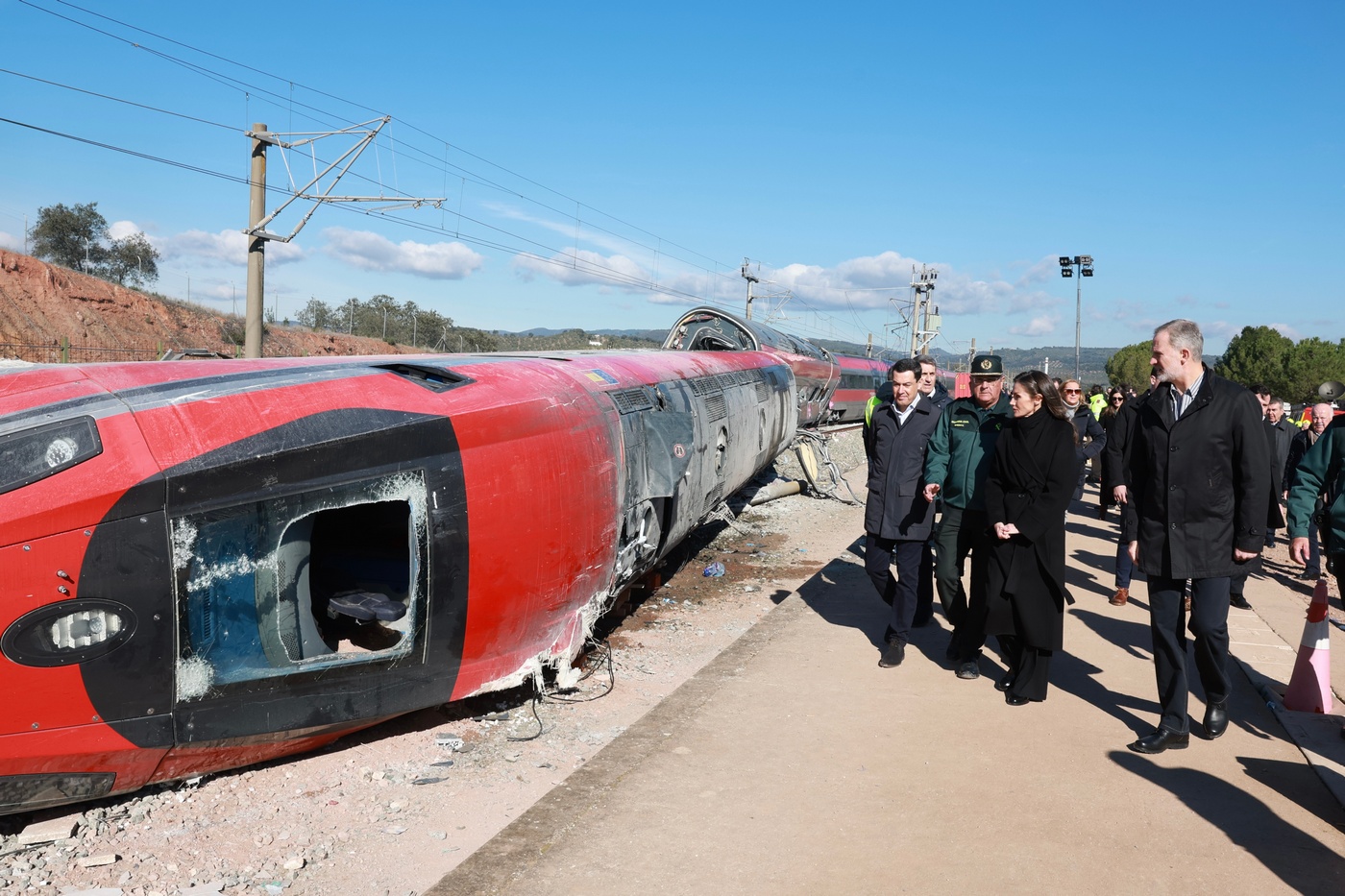

Brussles has opened an investigation into the use of €110 million in EU funds allocated to upgrade the Madrid–Sevilla high-speed rail line – the same stretch where the recent Adamuz accident occurred.
The probe, led by the European Public Prosecutor’s Office (EPPO), will examine whether there has been any misuse of regional development funds (FEDER) tied to the project.
The investigation comes after the European Commission warned back in December 2023 that the Madrid–Sevilla AVE line – first opened in 1992 – had become ‘obsolete’ compared to the rest of Spain’s rail network.
Just six months later, Brussels approved over €110 million in funding from the European Regional Development Fund to modernise the line.
The project aimed to upgrade more than 435km of track, bringing it in line with European rail interoperability standards and requirements under the Trans-European Transport Network (TEN-T).
What the money was meant to fix
Planned works included:
- Replacing rails and sleepers
- Reinforcing bridges and tunnels
- Stabilising embankments
- Improving drainage systems
- Upgrading operational buildings and access routes
- Installing or strengthening perimeter fencing along sections of the line
Now, investigators want to know whether that money was actually spent as intended.
Political pressure and growing doubts
Spain’s opposition Popular Party had already called on Brussels earlier this year to investigate how the funds were being used – and whether the agreed upgrades had been properly carried out.
The European Commission’s decision to formally open a case follows a preliminary review assessing whether there were signs of irregularities or potential fraud involving EU aid.
Authorities are specifically examining whether the handling of the funds could amount to embezzlement or misuse of European subsidies.
Government plays down probe
Transport Minister Oscar Puente has sought to downplay the development, insisting the investigation is standard procedure whenever EU funds are involved.
He revealed that authorities had already requested information from the Spanish government back in January, adding: ‘This is not a new development.’
Crash link under investigation
The case has drawn intense public interest due to its possible connection to the Adamuz rail accident.
A technical report submitted to Spain’s rail accident investigation commission suggests a possible track fracture may have caused the derailment.
The report points to a voltage drop detected hours before the incident, a sign consistent with structural failure in the track.
Judge appointed
A judge from Spain’s National Court, Jose Luis Calama, has been appointed to oversee the investigation and ensure legal safeguards are respected as prosecutors dig deeper into the case.
Read more Andalucia news at the Spanish Eye.