
Growing fears of escalation in the Middle East – and its direct impact on drivers’ wallets – is already being felt at petrol stations in Andalucia, it has emerged.
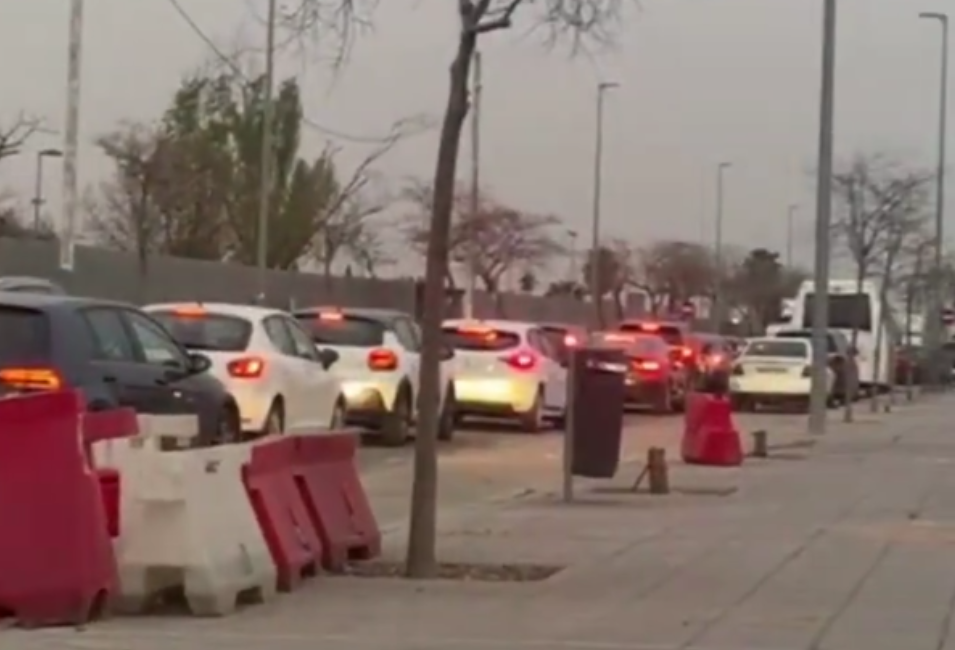
The possibility that the conflict between the US and Iran could send oil prices soaring has triggered queues at several forecourts, as motorists rush to fill up before any fresh hikes hit the pumps.
In Sevilla, dozens of cars were filmed forming a snaking queue outside a petrol station near the Costco store on Tuesday evening, reported ABC.
In Jerez, La Voz del Sur reported that multiple forecourts were brought to the brink of ‘collapse’ due to hundreds of locals looking to fill up their motors at once.
Preventive refuelling amid market nerves
The public anxiety comes as energy markets show clear signs of volatility. Crude oil prices have climbed sharply amid fears of supply disruptions, particularly linked to instability in the Strait of Hormuz – one of the world’s most strategic oil and gas shipping corridors.
Any disruption in this maritime route has immediate consequences for global oil benchmarks and, in turn, European fuel prices.
In Jerez, many drivers have opted for precautionary refuelling. At some stations, including a Ballenoil outlet in the business park on the Lebrija road, high demand reportedly led to fuel supplies running dry – an unusual situation outside of strike actions or major logistical crises.
OCU warns of price rises of up to 10 cents per litre
Spain’s consumer association OCU has warned that the conflict involving Israel, Iran and the US could push fuel prices up by between 8 and 10 cents per litre in the coming weeks.
Current average prices stand at €1.4842 per litre for petrol and €1.4387 per litre for diesel.
According to the OCU, these figures do not yet fully reflect the latest geopolitical tensions.
The organisation noted that oil prices had already risen from $65 to $70 per barrel between late January and early February, and warned that the ‘expected’ increase linked directly to the outbreak of hostilities has yet to be fully passed on to consumers.
The ‘rocket and feather’ effect
The OCU also highlighted the well-known ‘rocket and feather’ effect in fuel pricing, whereby price increases are applied rapidly, while decreases tend to filter through much more slowly.
It cautioned that the transmission of higher crude prices to petrol stations could take several days or even weeks, depending on the scale and stability of the oil market rebound, as well as broader geopolitical and financial factors.
Consumers are being advised to compare prices carefully, as differences between service stations can reach up to 19%, particularly in periods of heightened uncertainty.
For now, the queues in Jerez and Sevilla reflect anticipation rather than actual dramatic price spikes. But with tensions in the Gulf region unresolved and oil markets on edge, many drivers are clearly unwilling to take chances.
Read more Andalucia news at the Spanish Eye.