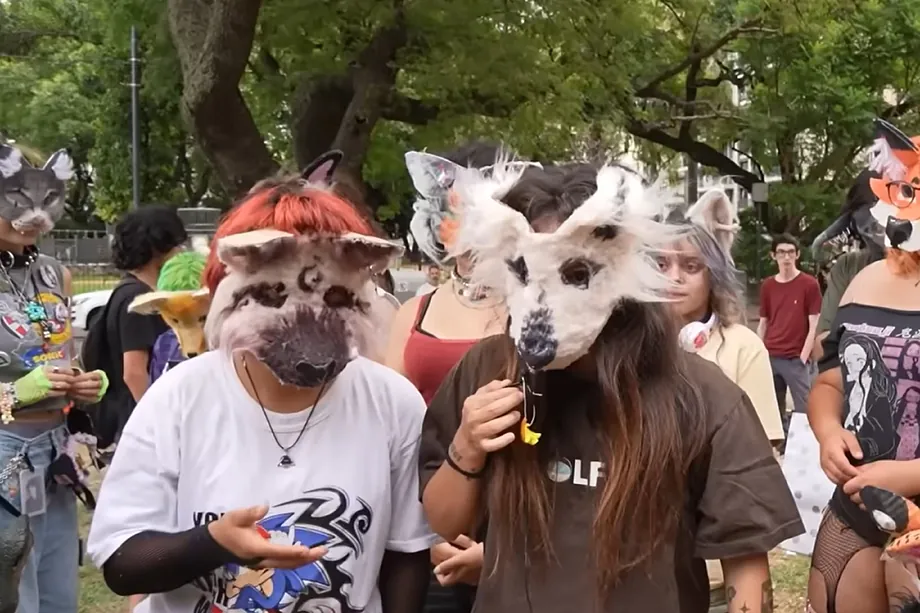
Spain’s teens are embracing a fast-growing subculture known as therian – identifying psychologically or spiritually with animals – and it’s sparked fascination, mockery and concern in equal measure.
But is it a mental health issue?
According to Maria Huertas, psychologist, university lecturer and co-director of Psinergia Psicología, the answer is a resounding ‘no’.
‘Therian identity is not recognised as a mental disorder,’ she explained to 20Minutos.
A mental disorder, she stresses, is defined by intense distress or significant impairment in daily life – not simply by having an unusual identity.
Not the same as clinical lycanthropy
In recent days, some commentators have even revived the term clinical lycanthropy – a rare psychiatric condition in which someone delusionally believes they have physically transformed into an animal.
Huertas dismisses the comparison.
‘Clinical lycanthropy is extremely rare and linked to severe psychotic disorders. It has nothing to do with therian identity as it appears in adolescents today.’
The key distinction is that Therians do not literally believe they have physically transformed.
She adds that clinical concern would only arise if there were:
- Extreme rigidity
- Significant social isolation
- Literal belief in physical transformation
‘What matters is not whether an identity is unusual,’ she says, ‘but whether it causes suffering, loss of functioning or disconnection from reality.’
Why are teenagers drawn to it?
Huertas points out that adolescence is a period of intense identity exploration. Trying out labels, aesthetics and group identities is developmentally normal.
The therian label, she explains, may serve several psychological functions:
- Symbolising personal traits like independence or sensitivity
- Expressing difficult emotions
- Creating a sense of belonging
- Coping with loneliness, trauma or emotional discomfort
Social media plays a crucial role. When an identity goes viral, it offers instant validation and community, which are powerful forces for teenagers seeking connection.
Just a phase?
Some dismiss the trend as a ‘typical teenage phase’, but Huertas warns against oversimplifying.
‘What’s important isn’t whether it’s permanent,’ she says, ‘but whether the young person is functioning well – maintaining relationships, coping at school and remaining emotionally stable.’
The real red flag isn’t duration but more it’s impact.
If the identity becomes rigid, exclusionary or starts limiting other areas of development, that’s when concerns arise.
There is also a risk of romanticisation as presenting the identity as ‘special’ or idealised may reinforce social withdrawal – especially if a young person is already struggling with anxiety, depression or trauma.
The damage may come from society, not the identity
Recent public meetups in Spanish cities have drawn curiosity and ridicule. Online, memes and mockery have exploded.
Huertas says the psychological danger often lies not in the identity itself, but in sustained social rejection.
‘Constant ridicule and stigma increase the risk of anxiety, depression and isolation – particularly in adolescents, who are already vulnerable.’
When young people feel attacked or misunderstood, they may retreat further into closed communities, cutting themselves off from wider social spaces.
What should parents do?
For concerned families, Huertas offers calm advice.
‘Stay calm. Dramatic reactions create distance and shut down communication.’
Instead, she recommends:
- Listening with curiosity
- Asking what the identity means to the young person
- Observing overall wellbeing – sleep, mood, school performance, friendships
If there are no signs of significant distress or dysfunction, supportive accompaniment is healthiest.
However, if there is intense suffering, extreme isolation or clear disconnection from reality, professional help would be advisable.