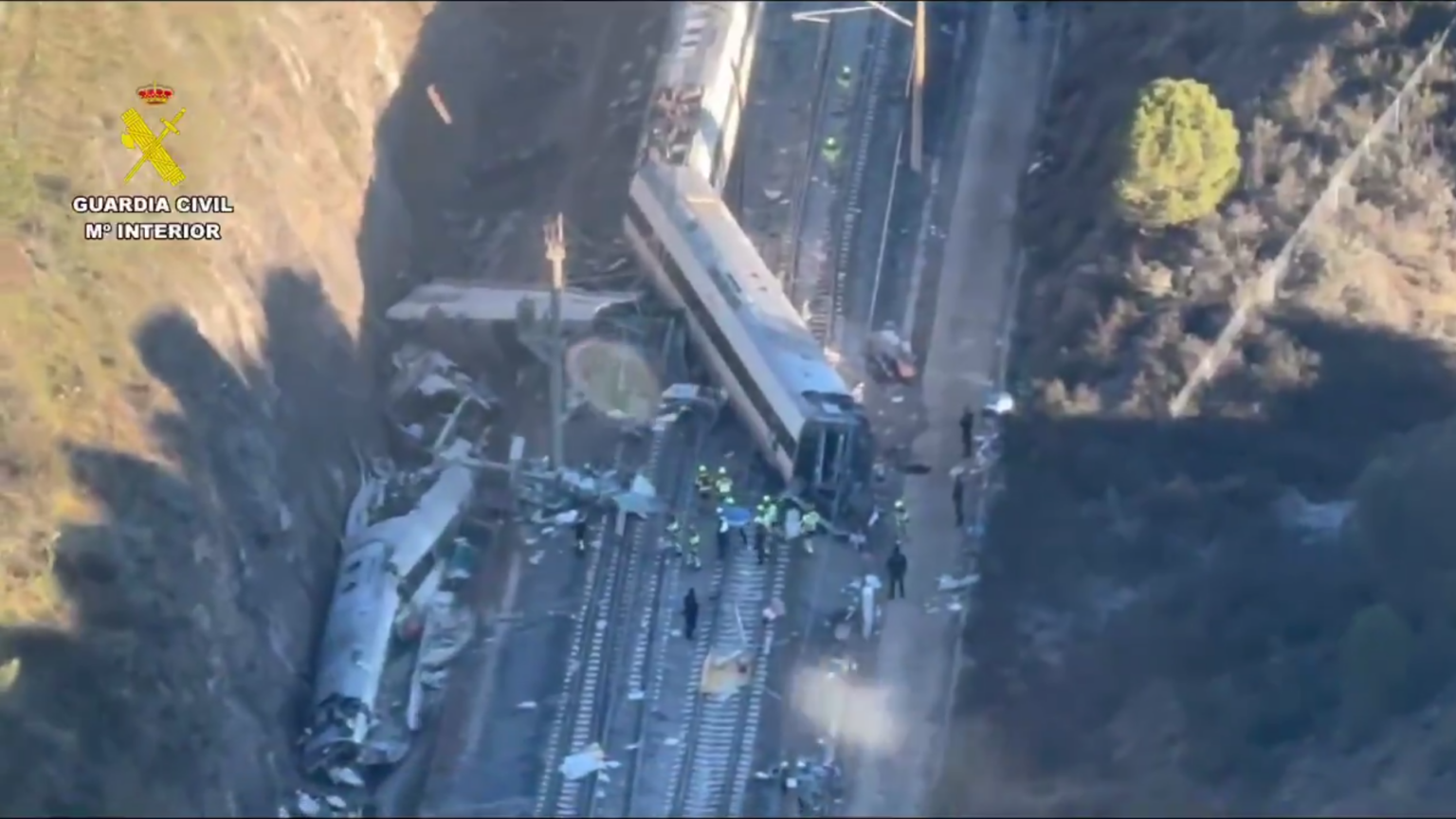

The Guardia Civil is keeping all lines of inquiry open into last month’s deadly rail crash in Adamuz, including the possibility of sabotage or even terrorism, it has emerged.
In a preliminary report submitted on February 5 to the investigating court in Montoro (Cordoba), officers state that while infrastructure failure is a leading hypothesis, they cannot at this stage rule out deliberate interference.
The crash, which left 46 people dead and more than 100 injured, involved an Iryo train that derailed and collided with a Renfe Alvia service.
Forensic tests to check for tools or explosives
Investigators have asked the Railway Accident Investigation Commission (CIAF) whether the laboratory analysing sections of rail and welding removed from the scene has the technical capacity to detect:
- Mechanical traces indicating the use of cutting tools
- Residue from explosive or corrosive substances
The Guardia Civil has also requested specialist analysis from its own Criminalistics Laboratory to determine whether any explosive materials were involved.
The report states that sabotage or a terrorist act “cannot currently be ruled out” pending further forensic results.
Infrastructure failure remains a key focus
Despite those possibilities, much of the investigation centres on a potential infrastructure problem. Authorities confirmed that a rail and a weld fractured at the point where the Iryo train derailed.
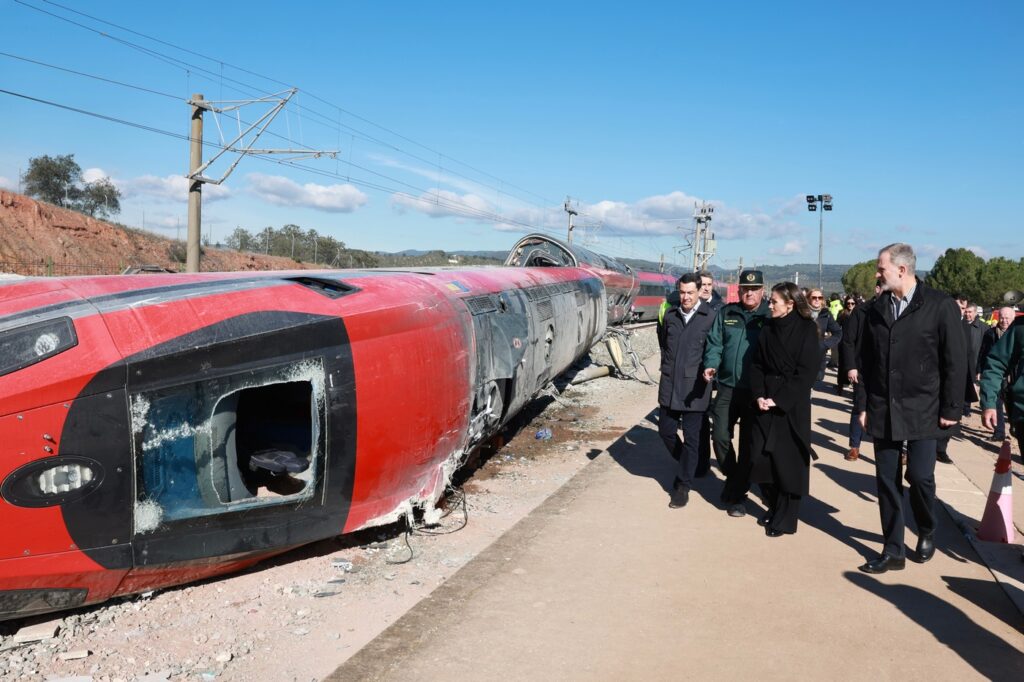
Unlike CIAF, which has reportedly focused on the weld as the likely failure point, the Guardia Civil says it cannot yet determine whether the rail broke first or whether the weld failed initially.
Among the scenarios being examined:
- A defective rail on the Madrid-bound track (marked ‘ENSIDESA 2023’)
- A faulty weld
- Poor overall track condition, including sleepers, ballast and fastenings
- Possible errors in the welding process
- Insufficient maintenance or supervision
Investigators have requested documentation relating to recent renovation works on the Madrid–Seville line, including contractor details and inspection records.
Human error and train malfunction also examined
Human error is considered less likely. The Iryo driver tested negative for alcohol and drugs. Toxicology tests on the deceased Alvia driver have not yet been carried out, but initial technical data and control centre testimony reportedly show no obvious negligent behaviour.
Authorities are also examining whether the derailment could have been triggered by:
- A structural issue with the Iryo train
- A fallen component
- Contact between the train and infrastructure
Iryo has been asked to provide its latest technical inspection reports, though investigators are still awaiting documentation.
Black boxes still pending inspection
Both CIAF and the Guardia Civil are still waiting for judicial authorisation to examine the trains’ black boxes, which remain under court custody.
With several forensic and technical tests still outstanding, the report concludes that the exact cause of the Adamuz disaster ‘remains unresolved’.
Read more Andalucia news at the Spanish Eye.