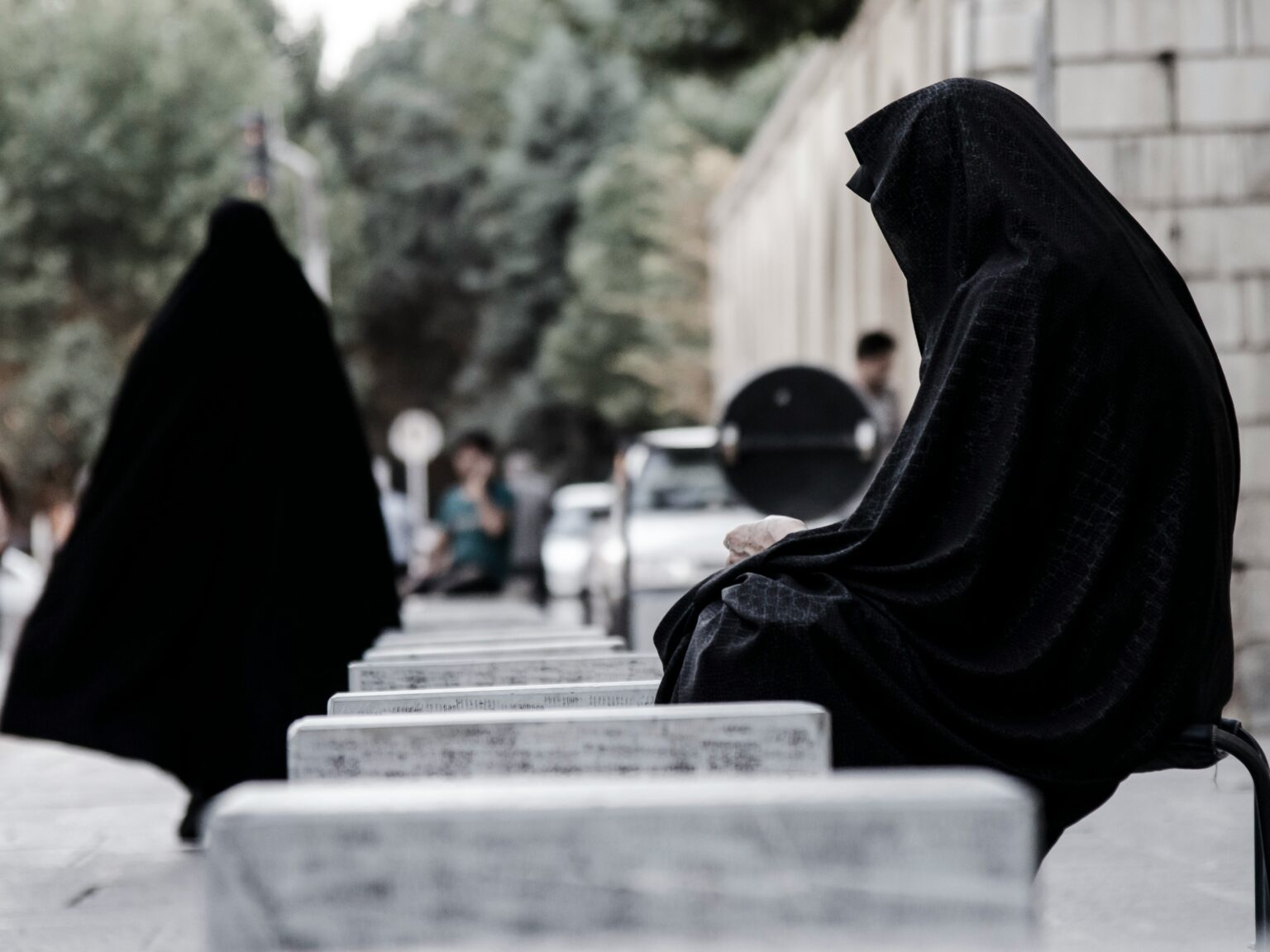

A proposed ban on the burka and niqab in Spain is set to be debated in Congress next week, reigniting one of the country’s most sensitive cultural and political debates.
The initiative, driven by Santiago Abascal’s hard-right party Vox, aims to prohibit the wearing of full-face Islamic veils in public spaces, arguing the move would protect ‘women’s dignity and public safety’.
Now, the Partido Popular (PP), led by Alberto Nuñez Feijoo, has signalled its support for moving in the same direction, having previously floated similar measures at its national congress last July.
What is being proposed?
The draft bill, which will be debated in the Congreso de los Diputados on Tuesday, seeks to ban both garments from public spaces nationwide.
The burka covers the entire body and face, typically including a mesh screen over the eyes. The niqab leaves the eyes visible but covers the rest of the face and hair.
Spain currently has no national law prohibiting either garment in public areas, though some local attempts at bans in the past have faced legal challenges.
Vox argues that ‘Spanish society cannot accept the erasure of women’s identity’ and has linked the proposal to what it describes as concerns over immigration policy and social cohesion.
Following other European countries
Supporters of the measure point out that Spain would not be alone in adopting such legislation.
Several European countries have already introduced restrictions on full-face coverings in public:
- France banned face-covering garments in 2011. The law, which applies not only to the burka and niqab but to any clothing that conceals the face, was upheld by the European Court of Human Rights in 2014.
- Belgium introduced a similar ban in 2011.
- Austria prohibited face coverings in 2017.
- Denmark followed in 2018, extending restrictions to include full-face veils and other coverings such as balaclavas.
- Switzerland approved a nationwide ban via referendum in 2021.
Each country’s legislation differs in scope and penalties, but all restrict full-face coverings in public settings.
A divisive debate
The proposal is already generating controversy in Spain.
Supporters frame the issue as one of gender equality and security, while critics argue it raises concerns about religious freedom and individual rights.
Read more Andalucia news at the Spanish Eye.