Spain has recovered two extraordinary Roman bronze sculptures dating back nearly 2,000 years, after a long and complex international investigation into their illegal removal from the country.
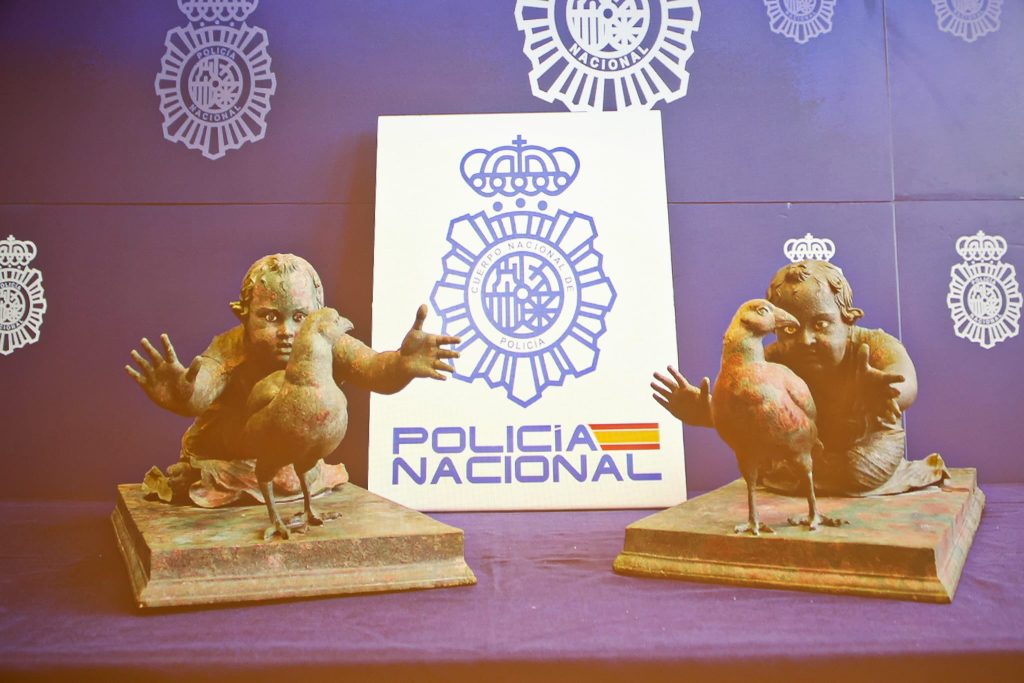
The sculptures, worth millions, are two rare bronze groups from the 1st–2nd century AD.
They were unlawfully taken from Spain between 2007 and 2008, before being laundered onto the legal art market via the UK and Switzerland.
They were ultimately auctioned to an unwitting buyer in the US in 2012 for several million euros.
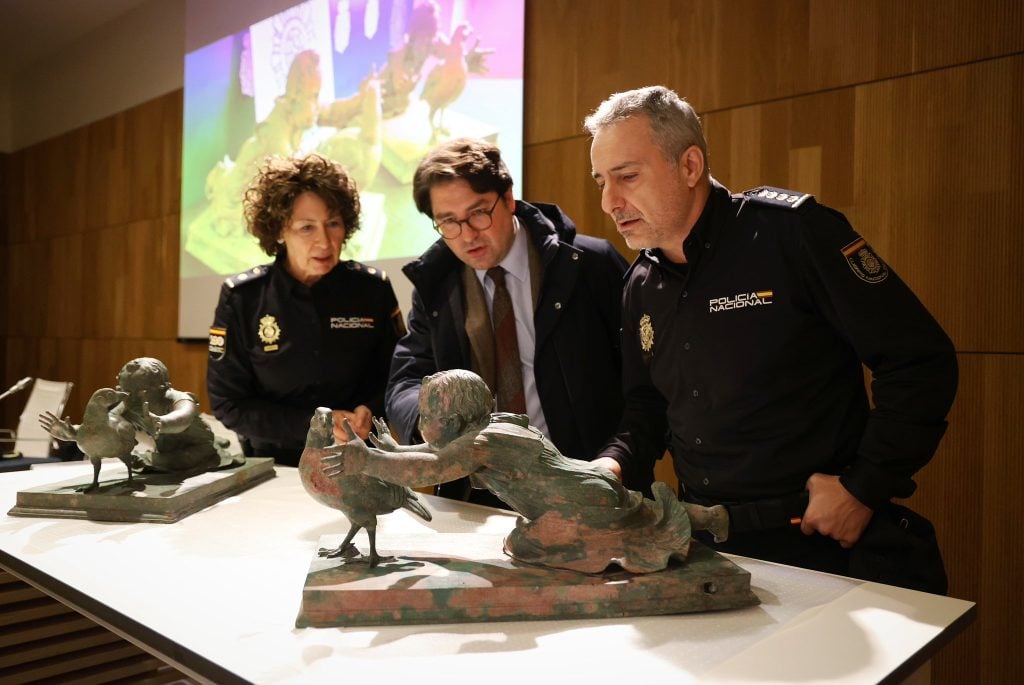
They have now been returned to Spain and placed in the Museo Arqueologico Nacional.
A remarkable and rare discovery
The recovered works are exceptional not only for their age and state of preservation, but also for their subject matter.
Each sculpture depicts a young girl chasing a partridge, which is an unusual and rarely preserved scene in Roman sculpture.
Bronze Roman statues are themselves extremely rare, as many were melted down over the centuries. That a complete pair has survived, both still mounted on their original metal bases, is considered ‘absolutely exceptional’ by investigators.
The last confirmed public appearance of the sculptures was in 2015, when they were displayed prominently in a major museum in the US.
From Spanish soil to international auction houses
The investigation was led by the Police’s Historical Heritage Brigade after information emerged that several important Roman bronzes had been discovered while ploughing farmland somewhere in Spain – most likely in the south of the Iberian Peninsula. Their precise archaeological origin was never officially declared.
Instead, the pieces were illegally taken out of the country, restored abroad and later presented with falsified documentation to disguise their true provenance.
Once ‘cleaned’ of their illicit origins, they entered the European art market and were sold at auction in 2012 to a private collector.
A Swiss court case reopens the trail
The case resurfaced at the end of 2023, when Spanish police became aware of press reports in Switzerland relating to a judicial process involving the sculptures.
A Spanish national had filed a complaint against several individuals of different nationalities, accusing them of fraud, embezzlement, handling stolen goods and document forgery.
According to the complainant, the sculptures had belonged to his family for decades and had been handed over around ten years earlier for restoration, but were never returned, nor was he compensated after their sale.
He presented photographs allegedly showing the bronzes inside his home in Spain, along with notarised statements from friends and relatives supporting his claim.
Two of the accused drew particular attention: a 51-year-old Swiss national and an 80-year-old Italian citizen already known to Spanish police for his links to other cultural heritage trafficking cases.
During the trial, it emerged that the sculptures had been moved illegally to the UK and then to Switzerland – an act that would itself constitute smuggling, given that the pieces originated from an archaeological looting.
Once restored, their immense value became apparent and plans were made to sell them and divide the profits.
The Swiss defendant attempted to legitimise the sculptures by claiming they had belonged to a Swiss collector who gifted them to his grandfather — a version later discredited in court.
Stolen, but justice runs out of time
Ultimately, the judge ruled that none of the explanations offered by those involved were credible. The most plausible conclusion was that the sculptures had been looted from a Spanish archaeological site.
Further enquiries by Spanish investigators also undermined the original complainant’s claims, concluding that the sculptures had not belonged to his family for decades, but were instead removed illicitly from a site in Spain and passed on to intermediaries.
Although criminal proceedings in Spain were eventually shelved due to the statute of limitations – a common outcome in heritage crime cases where years pass before artefacts re-emerge – police continued working to locate the pieces.
From the US back to Madrid
The final breakthrough came after Spanish authorities sought assistance from Homeland Security Investigations, via the US embassy in Madrid. This led them to the American collector who had purchased the sculptures in good faith at auction in 2012.
Once informed of their illegal origin, the collector chose to relinquish the sculptures voluntarily and permanently to the Spanish state, without compensation.
On December 20, the bronzes arrived at Aeropuerto Adolfo Suarez Madrid-Barajas from the United States via Frankfurt.
With the assistance of airport police, they were transferred directly to the Museo Arqueológico Nacional, where they will now remain under public guardianship.