
A major airport in Portugal has been forced to suspend its rollout of the EU’s Entry/Exit System (EES).
The drastic decision was made for Lisbon Humberto Delgado International Airport after Brits and other ‘third nationals’ suffered hours-long queues at arrivals.
The government acknowledged the chaos caused by the new passport checking system and said it would be taking measures to improve efficiency.
It also said it plans to use the ‘GNR’s certified capacity at border control by immediately beefing up the number of customs staff and police at the airport.’
The EES rollout will be suspended for three months, during which time the number of machines will be increased by at least 30%.
The decision to suspend the EES was announced on December 30 after complaints of six-hour queues and general chaos for travellers from non-Schengen countries.
It follows similar scenes in major British hotspots in Spain recent months, chiefly Malaga and Alicante.
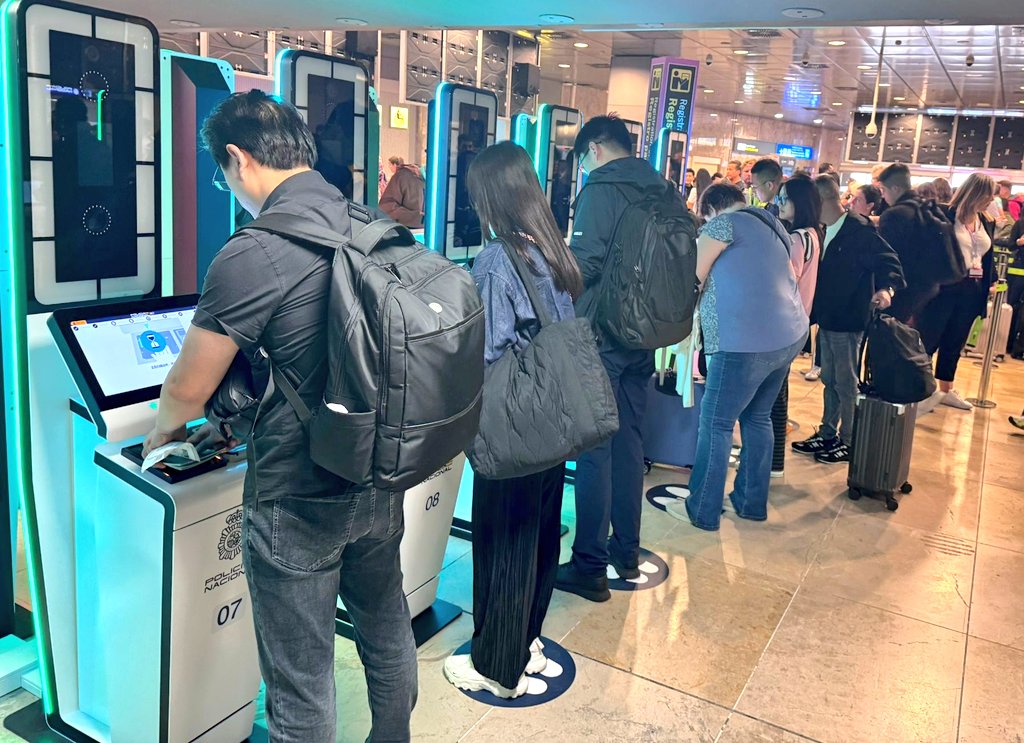
Under the EES, anyone from a non-Schengen or ‘third country’ – including the UK – must use biometric scanners upon entering and exiting the EU to keep track of the number of days they have spent in the bloc (ensuring they don’t exceed their 90 in 180 day limit).
As the system is being rolled out (having begun on October 12), Brits and others are using the machines for the first time, and are having to register their fingerprints and face scans, leading to delays when they are up and running at peak times.
Among the other problems exacerbating the main problem are teething problems using the new system, staff shortages, and airport overcrowding due to inadequate premises – despite infrastructure improvements – which taken together have actually led to passengers missing flights in some cases.
However passengers have claimed a lack of officers at passport control during the busiest times, broken machines and airport staff not being properly trained has added to the delays.