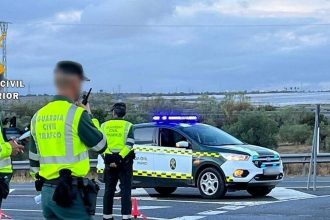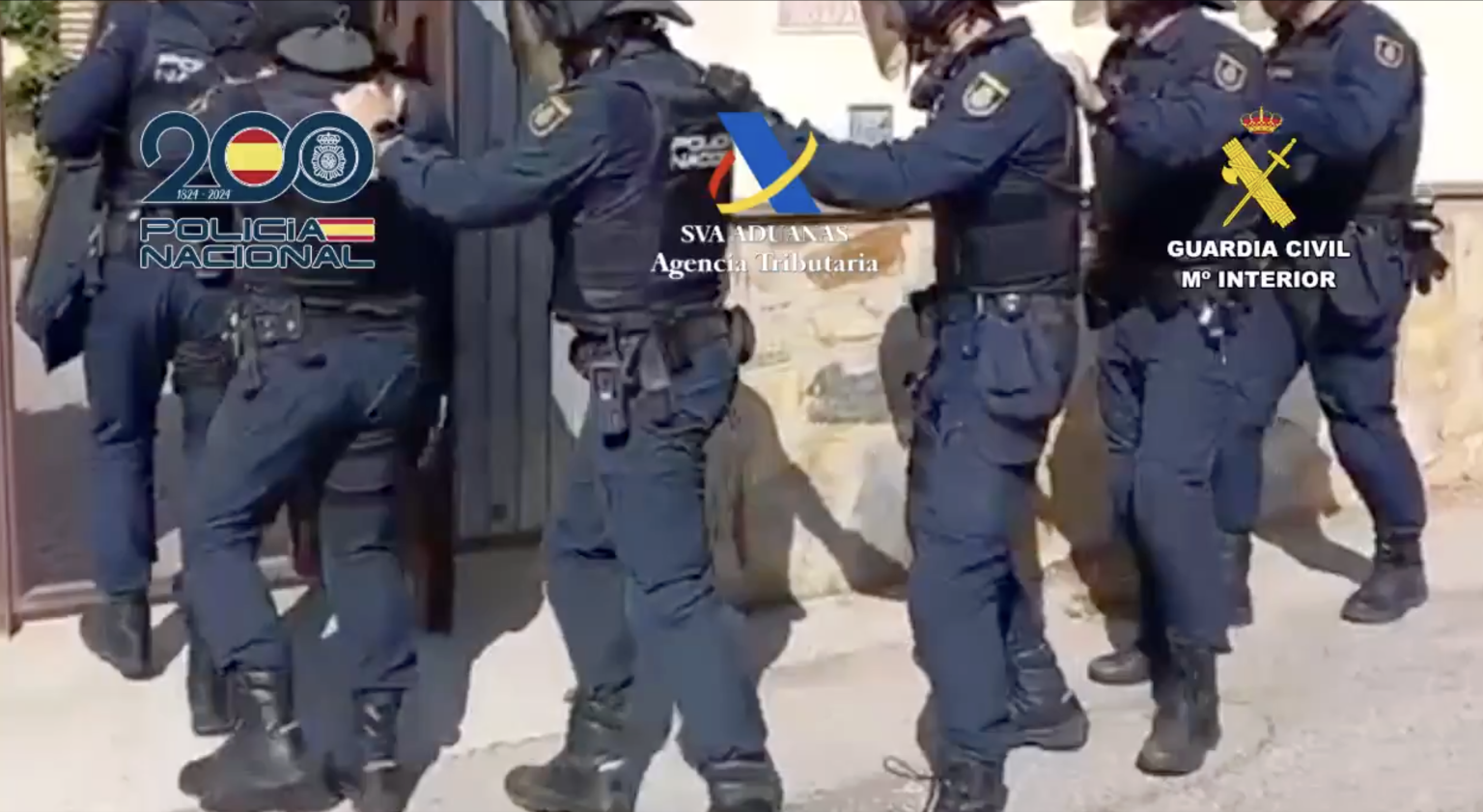

The feared Balkan Cartel has suffered a ‘major blow’ after a series of raids by Spanish authorities in the Campo de Gibraltar.
At least 30 people have been arrested while 2.55 tonnes of cocaine were seized following an investigation led by the Policia Nacional, Guardia Civil and Spain’s Tax Agency.
Investigators said the network used the River Guadalquivir as its main gateway for smuggling cocaine into the country.
High-speed boats transported the narcotics inland from the open sea to multiple points along the river, a method that reduced the risk of interception and made it easier to move the shipments onwards to distribution hubs.
Searches carried out in Malaga, Cadiz and Sevilla uncovered large sums of cash, weapons, technological equipment, extensive cartel documentation and more than 2.5 tonnes of cocaine.
The haul places the operation among the largest recent seizures linked to Balkan-origin trafficking networks.
Investigation ongoing
The investigation remains open, with police analysing seized documents to track financial movements, identify additional cells and map links between different branches of the organisation.
Authorities stress that the operation must also be viewed in a wider European context.
It coincided with a major Europol-coordinated crackdown across Germany, Bosnia and Herzegovina, Austria, Croatia and Serbia, involving more than 500 officers, searches at 45 properties, and the arrest of several high-value cartel figures.
Security agencies across Europe have warned in recent months of the growing power of Balkan criminal organisations.
Once operating mainly as support players, these groups are now believed to control key transcontinental cocaine routes, backed by direct contacts with producers in Colombia, Peru and Ecuador, and sophisticated financial structures using shell companies to move and launder profits.
The Campo de Gibraltar operation underlines the strategic importance of southern Spain in Europe’s fight against organised drug trafficking, particularly as criminal networks continue to adapt their routes and methods under increased police pressure.