
Spain’s Supreme Court has issued a landmark ruling that forces Malaga City Council to hand back a plot of land it expropriated three decades ago.
The judgement cited the fact that the site was never used to build a school, which was the very reason it was seized by the authorities.
The judgment, obtained by SUR, establishes a new precedent that could have far-reaching consequences for city councils across Spain.
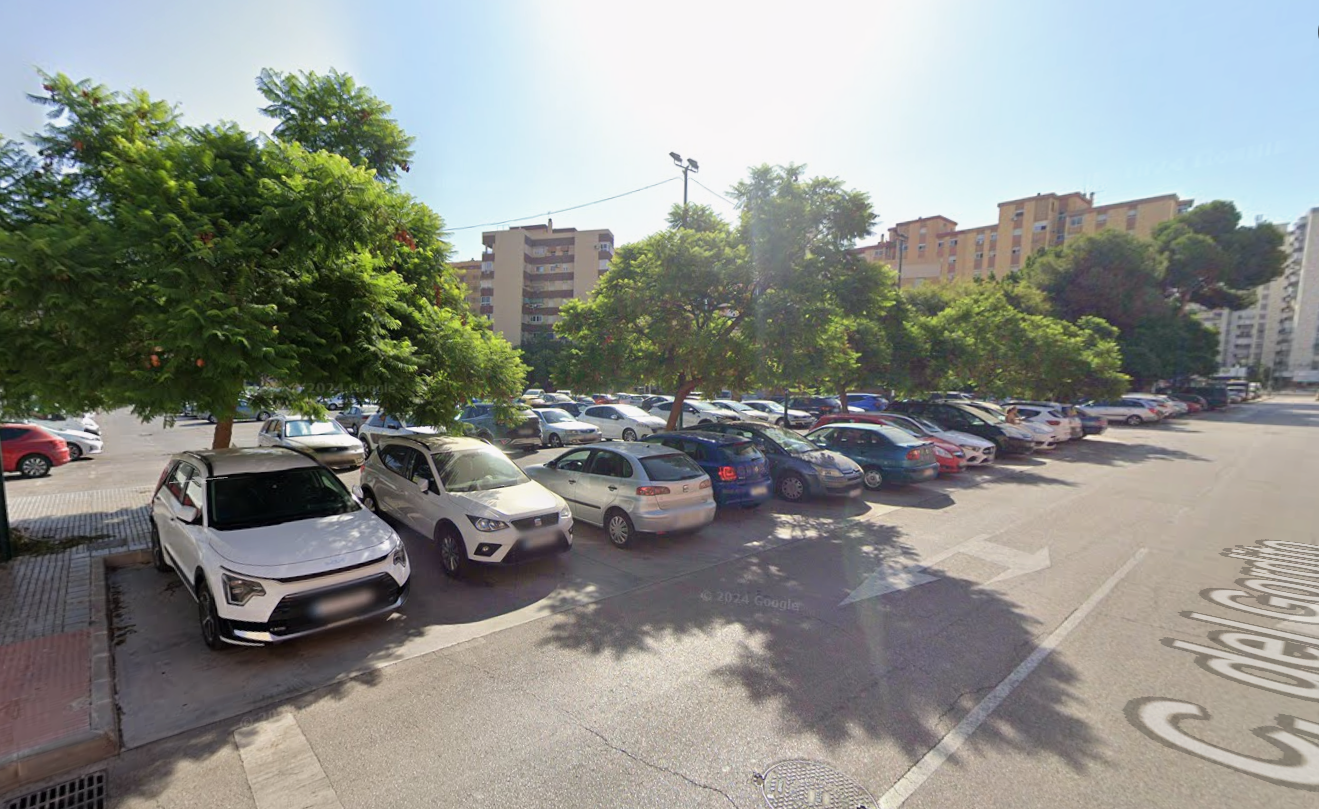
The case concerns a 3,428m2 plot on Calle El Gordito, near Avenida Virgen de Belen, which is now used as a car park and street market.
However, the 1983 General Plan had earmarked the site for expropriation to construct a school. The City Council, then run by the PSOE (Socialists), formally approved the takeover in 1994, and the 1997 PGOU maintained the educational objective.
In 2007, the former owners, Inmuebles Portillo, requested the land be returned, arguing the council had still not built the promised facility.
The Urban Planning Department rejected the request, and the courts initially upheld that decision. Malaga claimed the school could not be built due to a high-voltage underground power line and later reclassified the land as ‘social infrastructure’ in the 2011 PGOU.
In 2020, the company again applied for the land to be returned on the grounds that the legal deadline had long expired without the intended project being executed. The council again refused, and the owners again went to court – facing another initial setback at the Andalusian High Court (TSJA).
However, represented by lawyer Juan Ramon Fernandez-Canivell of Consulting de Derecho Urbanistico, the company appealed to the Supreme Court, and won.
The court ruled that the change from ‘educational’ to ‘social’ use does not shield the council from the legal obligation to return expropriated land if the new use has not materialised.
The ruling states that more than 10 years have passed ‘without any step being taken to initiate the execution of the social-use facility’, and that the council’s activity since 2011 has been ‘totally inactive’.
It also rejected Malaga’s argument that using the plot as a public car park amounted to fulfilling a public-service function.
The judgment orders Malaga City Hall to complete all necessary procedures to return the land to Inmuebles Portillo.
The company must repay what it originally received for the expropriation, adjusted for inflation – roughly €108,000.
However, the land remains zoned as a public facility. That means the owners could immediately demand that the city expropriate it again, but this time at current market value, which would be vastly higher.
The council previously warned of such a possibility, branding the scenario an ‘absurd’ cost to the taxpayer.
Legal experts believe the ruling could force Malaga to rethink significant urban projects. In particular, it may threaten the city’s plan to develop a year-round complex of offices, shops and a hotel on the Cortijo de Torres fairground – on land expropriated 30 years ago for Feria structures.
Because the planned new use differs from the original justification, former owners or their heirs could now potentially demand the return of the land under the same legal principle upheld by the Supreme Court.
The ruling sets a powerful precedent. It means that if a council does not use expropriated land for the specific purpose that justified seizing it, previous owners can reclaim it, even decades later.