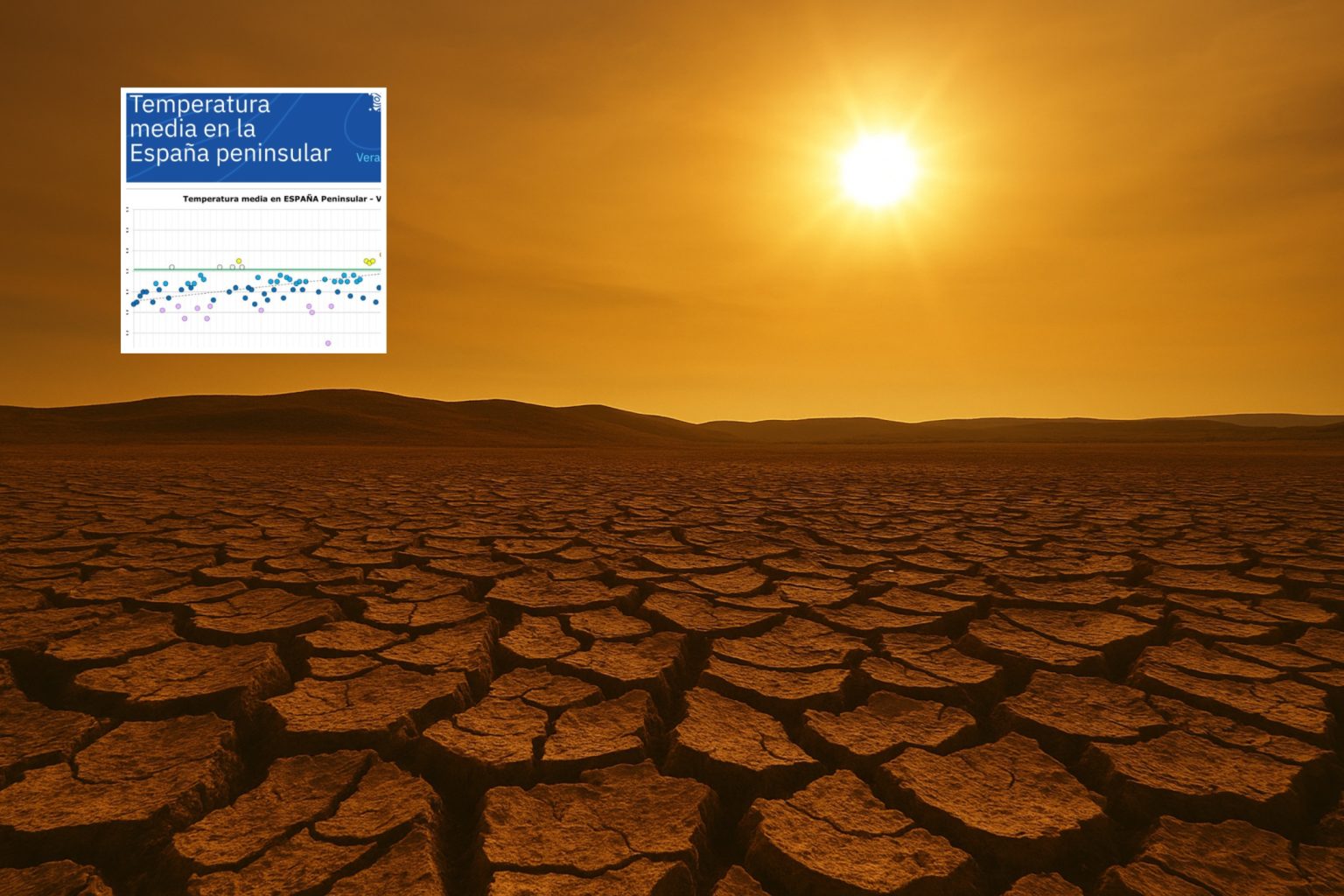

Spain has just endured the hottest summer since records began (1961), according to the national weather service Aemet.
Over the three summer months of 2025, the country experienced 33 separate days of heatwave conditions alongside widespread drought, painting a stark picture of how climate change is reshaping the Iberian climate.
Speaking at a press conference on Tuesday, Aemet spokesperson Ruben del Campo confirmed that this summer was even hotter than the infamous heatwaves of 2003 and 2022.
‘The national average temperature reached 24.2C, which is 2.1C above normal for this time of year,’ he said.
June was particularly extreme, breaking records as the hottest June in Spain’s history, averaging 3.6C above typical levels.
Hottest summer on record
The summer of 2025 edged 0.1C above 2022’s already record-breaking temperatures and 0.6C above the 2003 benchmark, cementing its place as the hottest on record.
Rainfall was also scarce. On average, Spain received just 57 litres per square metre over the three months, well below average.
The exception was the Canary Islands, which paradoxically recorded a ‘wet’ summer with 7 l/m² – a significant amount in a region where summer rainfall is usually almost non-existent.
The combination of intense heat and dryness has once again raised alarms over water scarcity, wildfire risk and the urgent need for climate adaptation policies.
Water balance this year
Looking beyond the summer, the hydrological year (from October 2024 to September 2025) has so far recorded 663 l/m² of rainfall, around 9% above average.
That figure is close to the 671 l/m² recorded last year, and with two weeks still left in the hydrological cycle, it could yet surpass 2024’s total.
This is welcome news for water planners, but experts warn that regional differences remain stark – some provinces have endured severe drought while others have seen rainfall well above seasonal norms.
Outlook for autumn
Looking ahead, Aemet expects the autumn of 2025 to be warmer than average, with a high probability of temperatures exceeding seasonal norms.
The forecast also points to a predominantly dry autumn, with only a 10% chance of conditions being cooler or wetter than usual.
The implications are significant for farmers, water managers and public health authorities.